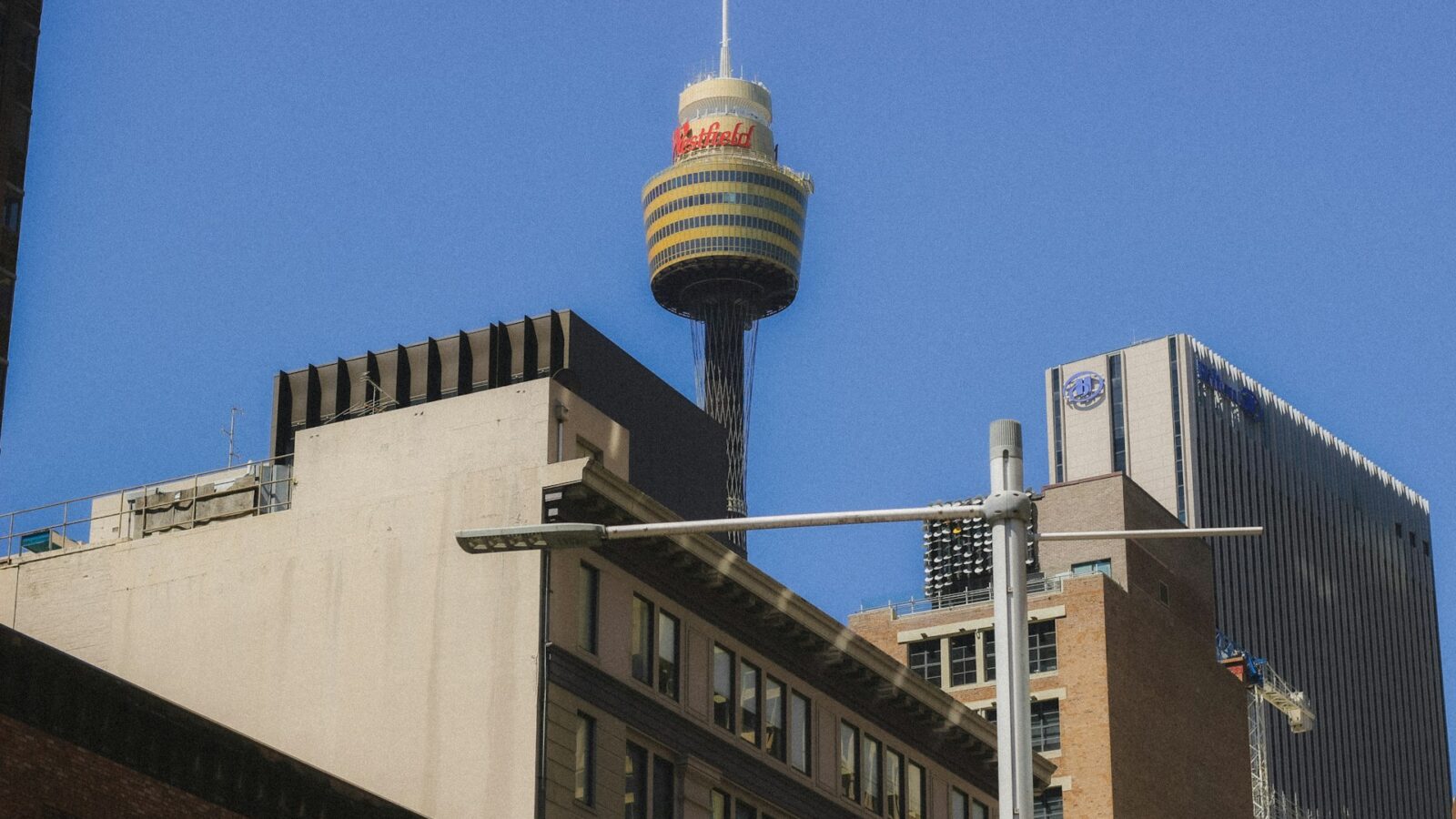
If you want to work in Australia, two questions come first: are you allowed to work, and how are your pay and rights protected? For holders of an ordinary PRC passport there is no “arrive first, find a job later” route. Almost everyone needs a visa with work rights before starting: the employer-sponsored subclass 482 Skills in Demand visa, the subclass 186 employer nomination permanent visa, the points-tested 189/190/491 skilled visas, the subclass 485 graduate visa, the capped subclass 462 Work and Holiday visa, or the limited work rights attached to a student visa. Your visa decides what work you can do, for how long, and how freely you can change employers.
The good news is that Australia’s minimum wage is among the highest in the world, and workplace law protects you exactly as it protects locals, whatever visa you hold. As of October 2026 the national minimum wage is A$26.44 an hour, and employers must pay an extra 12% of wages into superannuation. The challenge is a cooling job market: unemployment rose to 4.7% in September 2026, and the salary thresholds for sponsored visas went up again in July. Below we cover job hunting, visas, pay, contracts, tax and Chinese employers. RMB figures use the Reserve Bank of Australia rate of 22 October 2026 (A$1 ≈ ¥4.68) and are approximate.
Australia’s job market in 2026
The Australian Bureau of Statistics (ABS) reported on 15 October 2026 that the seasonally adjusted unemployment rate was 4.7% in September, with employment falling by about 39,000 in the month and the participation rate down to 66.8%. Compared with the “everyone is hiring” years, competition is noticeably tougher, especially for entry-level office jobs.
On pay, full-time adults earned an average of A$2,083.70 a week in ordinary time in May 2026 (about ¥9,760), up 3.7% year on year, the slowest growth since November 2022. Multiplied by 52 weeks that is roughly A$108,000 a year (about ¥508,000), but rents and living costs in Sydney and Melbourne are also far above China’s tier-one cities. Before choosing a city, see our Australia country guide.
Sectors that value Mandarin speakers
Australia has large Chinese communities plus many Chinese students and visitors, so Mandarin is a plus in some sectors, though it rarely carries a job on its own. Common areas include:
- Banking and finance: several Chinese banks hold Australian banking authorisations from the prudential regulator APRA, for example China Construction Bank, Industrial and Commercial Bank of China and Agricultural Bank of China. The big four local banks and wealth managers also have roles serving Chinese clients.
- Accounting, tax and migration law services: firms with many Chinese clients need bilingual staff, but practising accountants and registered migration agents need Australian credentials.
- Real estate, education and student services: agencies, private colleges and education consultants.
- Retail, tourism and hospitality: duty-free shops, travel agencies and Chinese restaurants. Entry is easy, but these are also hotspots for underpayment complaints.
- Aged care and community services: with more older Chinese Australians, bilingual carers and social workers are in demand, usually with a local qualification.
The jobs that really count as skill shortages and lead to sponsorship are mostly in nursing, engineering, IT, construction trades and cooking. Mandarin is a bonus; professional qualifications and English are what matter.
Main work visas at a glance
These are the most common work routes for Chinese citizens as of October 2026. Check criteria and fees on the Home Affairs website; for the full list of visa types see our Australia visa guide.
| Visa | Who it suits | Key points |
|---|---|---|
| 482 Skills in Demand | Professionals with an Australian job offer | Employer-sponsored; Core Skills salary at least A$79,423, Specialist Skills at least A$146,576 (from 1 July 2026) |
| 186 Employer Nomination | People who have worked for a sponsoring employer, or eligible direct applicants | Permanent visa; income thresholds also apply |
| 189 / 190 / 491 skilled | People with an occupation on the skilled lists and enough points | Expression of interest via SkillSelect; 189 needs no sponsor, 190 needs state nomination, 491 is a provisional regional visa |
| 485 Temporary Graduate | International students who completed an eligible Australian degree | Full work rights for several years after graduation, no sponsor needed |
| 462 Work and Holiday | Chinese citizens aged 18 to 30 | 5,000 places a year for China, entry via a pre-application ballot |
| 500 Student | Enrolled students | Up to 48 hours per fortnight during term, unlimited in scheduled breaks |
The thresholds come from the Home Affairs Legislation Amendment (2026 Measures No. 1) Regulations 2026, registered at the end of June 2026: the Core Skills Income Threshold (CSIT) rose from A$76,515 to A$79,423 (about ¥372,000) and the Specialist Skills Income Threshold (SSIT) from A$141,210 to A$146,576 (about ¥687,000). Note that the figure of A$79,499 seen in some online articles is not the legislated amount. As well as meeting the threshold, the salary must be at least the market rate paid to Australian workers in the same role.
From job hunt to visa: the sponsorship process
- Check occupation and credentialsConfirm the occupation is on the Core Skills Occupation List; prepare degree, work experience and English results; some occupations need a skills assessment
- Find a job and get an offerThe employer must be an approved sponsor; salary at least A$79,423 and in line with the market rate
- Employer lodges the nominationThe employer nominates the position and carries out the required local labour market testing
- Lodge your visa applicationSubmit health checks, police certificates and other documents
- Arrive and workYou may work only for your sponsor; a new employer must lodge a new nomination
Be wary of any agent charging large fees for a “guaranteed offer” or “guaranteed sponsorship”. In Australia it is unlawful to ask a worker to pay for sponsorship, and the visa can be cancelled as a result.
Salaries and the minimum wage
Under the Fair Work Commission’s 2026 Annual Wage Review, from 1 July 2026 the national minimum wage is A$1,004.90 a week (for a 38-hour week) or A$26.44 an hour (about ¥124). Casual employees get A$33.05 an hour including the 25% casual loading. Modern award minimum rates rose 4.75%, so in many industries the real minimum is above the national floor, with extra penalty rates for nights, weekends and public holidays.
Employment contracts and workplace rights
Australia’s Fair Work Act sets 11 National Employment Standards (NES) for all employees, including maximum weekly hours, paid annual leave, personal leave, notice of termination and public holidays. No contract, award or enterprise agreement can provide less. Employment is mainly full-time, part-time or casual; casuals get no paid annual leave, which is why they receive the 25% loading.
The Fair Work Ombudsman states that visa holders and migrant workers have the same workplace entitlements as other employees, and a contract cannot take them away. Contacting the Ombudsman will not get your visa cancelled, and your employer has no power to cancel your visa. Visa holders pursuing an exploitation claim may also be able to use pilot programs that protect them from cancellation for breaching a work condition, or extend their stay for a short period. The Ombudsman offers information in Simplified Chinese and a free interpreter service on 13 14 50.
You should receive a payslip every pay period showing hours, hourly rate, tax withheld and super. Cash-only pay, no payslips or an hourly rate below the minimum wage are classic signs of underpayment, so keep your rosters and chat screenshots.
Income tax and superannuation
The Australian Taxation Office (ATO) resident rates for 2026–27 are: nil up to A$18,200; 15% on A$18,201–45,000; 30% on A$45,001–135,000; 37% on A$135,001–190,000; and 45% above A$190,000, plus the 2% Medicare levy. Foreign residents get no tax-free threshold: under the ATO’s 2025–26 table they pay 30% on every dollar up to A$135,000, with no Medicare levy. Tax residency does not map directly onto visa type; it depends on your actual circumstances. See our Australia tax guide.
Superannuation is paid by the employer on top of wages: 12% of ordinary time earnings from 1 July 2025, into a super fund you choose. Temporary visa holders can generally claim their super balance after leaving Australia, minus tax.
Where to look for jobs
- Job boards: SEEK, LinkedIn and Indeed are the main channels; most office jobs are posted there.
- Government channels: the federal Workforce Australia job platform, and government job sites at each level (public service roles usually require citizenship).
- Chinese-language channels: community websites and WeChat groups carry many listings, but also fake ads and below-minimum-wage cash jobs. Always check the employer’s ABN (Australian Business Number).
- Universities and industry bodies: students can use careers centres, internships and professional association events.
Chinese degrees usually need English-language certification when job hunting in Australia, and some occupations require a formal skills assessment. To compare other English-speaking destinations, see our Canada work guide and Singapore work guide.
FAQ
Can I go to Australia first and look for a job?
You cannot work on a visitor visa. Without employer sponsorship, Chinese citizens can only use the skilled visas (189/190/491), the 462 Work and Holiday visa (5,000 places a year, by ballot) or a 485 graduate visa after studying in Australia.
What is the salary threshold for the 482 visa?
From 1 July 2026 it is A$79,423 a year for Core Skills and A$146,576 for Specialist Skills, and the salary must also meet the market rate. Thresholds are indexed every July, so check Home Affairs before applying.
How many hours can I work on a student visa?
Up to 48 hours per fortnight during term, unlimited during scheduled course breaks. Working more breaches your visa conditions and can lead to cancellation.
What if I am underpaid?
Keep your payslips, rosters and messages and raise the issue with your employer in writing. If that fails, complain to the Fair Work Ombudsman, which provides Mandarin interpreters. Your visa status does not affect your right to complain.
Sources
- Fair Work Ombudsman – Minimum wage increase starts today (1 July 2026) (accessed October 2026)
- Fair Work Ombudsman – Visa protections and pilot programs (accessed October 2026)
- Fair Work Ombudsman – 简体中文 language help (accessed October 2026)
- Federal Register of Legislation – Home Affairs Legislation Amendment (2026 Measures No. 1) Regulations 2026 (F2026L00874), explanatory statement (accessed October 2026)
- Department of Home Affairs – Status of country caps (Working Holiday Maker program) (accessed October 2026)
- Department of Home Affairs – Temporary Graduate visa (subclass 485) (accessed October 2026)
- Australian Bureau of Statistics – Unemployment rate at 4.7% in September (15 Oct 2026) (accessed October 2026)
- Australian Bureau of Statistics – Average weekly earnings growth lowest since 2022 (13 Aug 2026) (accessed October 2026)
- Australian Taxation Office – Tax rates for Australian residents (accessed October 2026)
- Australian Taxation Office – Tax rates for foreign residents (accessed October 2026)
- Australian Taxation Office – The final SG rate increase is coming on 1 July (accessed October 2026)
- Reserve Bank of Australia – Exchange rates, historical daily data (F11.1) (accessed October 2026)
- APRA – List of registered authorised deposit-taking institutions (accessed October 2026)