
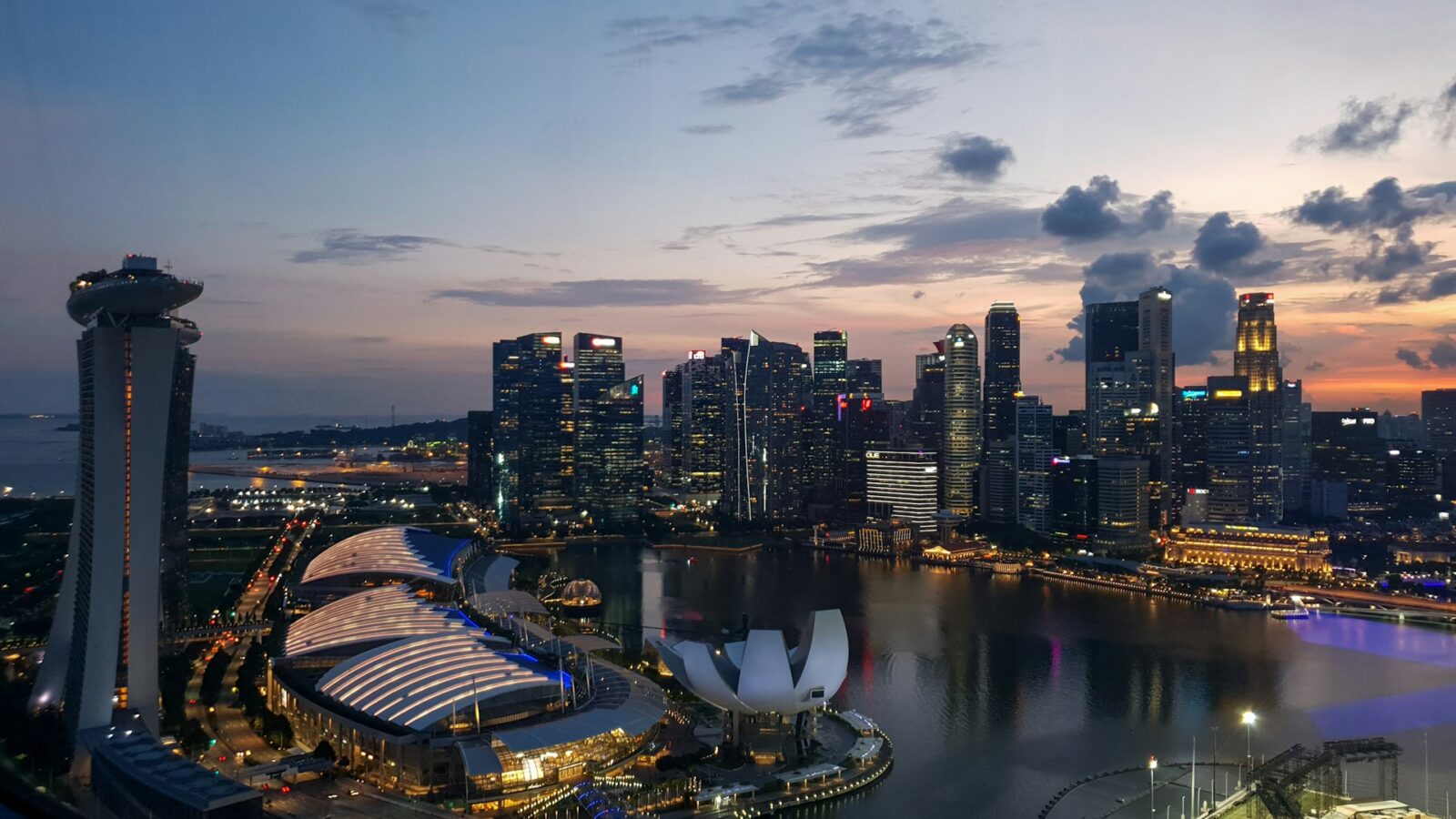


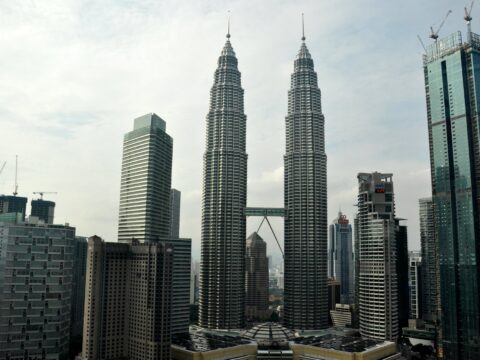



Compared with Europe and North America, Asia is the closest destination to China and the one with the smallest cultural gap. Tokyo, Seoul, Singapore, Kuala Lumpur and Bangkok are only a few hours’ flight away, with a time difference of an hour or two at most, similar food habits, and many cities where you can get things done in Chinese. In the past two years Singapore, Malaysia and Thailand have each agreed mutual visa exemption with China, and the UAE did so as early as 2018, so it has become much easier to “go and live there for a while first”.
But immigration systems in Asia vary enormously. Japan and South Korea have mature work and permanent-residence systems yet still require ordinary Chinese passports to get a visa; Singapore and the UAE are easy to enter, but long-term residence is tied closely to a job or investment; Thailand and Malaysia suit retirees and remote workers, but restrict foreigners’ employment and land ownership. This guide compares Japan, Singapore, Malaysia, Thailand, the United Arab Emirates and South Korea from a Chinese citizen’s point of view – entry rules, long-stay routes, cost of living, Chinese communities and safety – to help you decide which Asian country suits you.
The six countries at a glance
| Country | Entry on an ordinary Chinese passport | Main long-stay routes | Chinese community | Monthly cost level |
|---|---|---|---|---|
| Japan | Visa required; from July 2026 CNY 715 single-entry, CNY 1,430 multiple-entry; tourist visas via designated travel agencies | Study, Engineer/Specialist in Humanities/International Services, Highly Skilled Professional, Business Manager | 930,428 Chinese nationals (end of 2025) | Medium-high |
| Singapore | Visa-free up to 30 days (since 9 Feb 2024); SG Arrival Card within 3 days before arrival | Employment Pass, S Pass, ONE Pass, Student’s Pass | Chinese are 73.9% of residents (2026) | High |
| Malaysia | Mutual visa exemption (since 17 July 2025): max 30 days per stay, 90 days in 180; MDAC before arrival | Employment Pass, Malaysia My Second Home (MM2H), Student Pass | ~7.64m ethnic Chinese, 22.4% (end of 2024) | Low |
| Thailand | Mutual visa exemption (since 1 March 2024): max 30 days per stay, 90 days in 180; TDAC before arrival | DTV, work visa, retirement visa, LTR, Thailand Privilege | No official ethnic statistics; commonly estimated at over 10% of the population | Low |
| UAE | Mutual visa exemption (since 16 Jan 2018) | Employer-sponsored work residence, Green Visa, Golden Visa | No authoritative statistics | High |
| South Korea | Visa normally required; groups of 3+ via designated agencies visa-free for 15 days; direct flights to Jeju visa-free for 30 days | Study D-2, professional E-7, marriage migrant F-6, points-based F-2 / permanent F-5 | ~981,000 Chinese nationals incl. ethnic Koreans (end of 2025) | Medium-high |
Which Asian countries are visa-free for Chinese citizens?
Of the six countries covered on this site, Singapore, Malaysia, Thailand and the UAE currently waive visas for ordinary Chinese passports, while Japan and South Korea generally still require one. A few details are easy to miss:
- Singapore: visa-free for up to 30 days since 9 February 2024; you must submit the SG Arrival Card online within 3 days before arrival.
- Malaysia: the China–Malaysia mutual visa exemption agreement took effect on 17 July 2025 – up to 30 days per stay and no more than 90 days in any 180-day period. Fill in the Malaysia Digital Arrival Card (MDAC) online before arrival.
- Thailand: the China–Thailand mutual visa exemption agreement took effect on 1 March 2024 – up to 30 days per stay and 90 days in every 180 days. The Thailand Digital Arrival Card (TDAC) is required before arrival. Thailand changed its unilateral visa-free rules for other countries in 2026; Xinhua reported in September 2026 that Chinese citizens can still enter visa-free.
- UAE: full mutual visa exemption since 16 January 2018. The permitted stay is set by UAE immigration at entry; according to information published by Emirates airline it is up to about 90 days in total.
- South Korea: since 29 September 2025, groups of three or more Chinese tourists organised by designated travel agencies can stay visa-free for 15 days, reportedly extended to 31 December 2026 according to Korean media; direct flights to Jeju allow 30 days visa-free, but you cannot travel on to the mainland.
- Japan: visa required. From 1 July 2026 the fee is CNY 715 for single entry and CNY 1,430 for multiple entry, and tourist visas can only be lodged through travel agencies designated by the embassy.
Visa-free entry is only for tourism, family visits and short business trips – not work. Job ads promising “go visa-free, work first, sort out papers later” are often traps leading to illegal work or even scam compounds; be especially wary of “high-paying jobs” linked to the Thai–Myanmar border.
Before you travel, check the latest entry rules and safety alerts on China Consular Service.
Changes to watch in 2025–2026
Japan: from October 2025 the Business Manager status requires ¥30 million in capital and at least one full-time employee; from 1 October 2026 residence procedure fees rose, with the permanent residence application fee going from ¥10,000 to ¥200,000. On 14 November 2025 China’s Foreign Ministry and missions in Japan advised Chinese citizens to avoid travelling to Japan for the time being – check whether the advisory is still in force before you go.
Thailand: the DTV “Destination Thailand Visa” requires a police certificate from 31 August 2026. Singapore: the Employment Pass salary threshold is now S$5,600 a month (S$6,200 in financial services). UAE: during the regional conflict of April–May 2026, the Chinese embassy and consulate repeatedly urged Chinese citizens in the UAE to step up security precautions.
Cost of living compared
Living costs in these six countries are polarised: rents in Singapore and Dubai are far above Shanghai, while total spending in Kuala Lumpur and Bangkok is lower than in Shanghai. Figures in Chinese yuan, with Shanghai as a benchmark:
Adding rent and living costs, one person living in central Singapore spends about CNY 28,000 a month, Dubai about CNY 24,000, Tokyo about CNY 14,000, Seoul about CNY 13,000, Bangkok about CNY 9,200 and Kuala Lumpur about CNY 8,100, against about CNY 11,000 in Shanghai. City-centre rents in Tokyo and Seoul are similar to or slightly above Shanghai, but daily costs are higher. If you plan to buy a home, check the rules for foreign buyers first – for example Buying property in Thailand.
Chinese life in Asia
Singapore and Malaysia have the highest Chinese shares: Chinese make up 73.9% of Singapore’s residents and Mandarin is widely spoken; Malaysia has about 7.64 million ethnic Chinese and a complete Chinese-language school system, with Cantonese and Hokkien common in Kuala Lumpur and Penang. Thai Chinese are highly assimilated, Bangkok’s Chinatown has a long history, and newer arrivals tend to live around Huai Khwang and Ratchada.
In Japan and South Korea the Chinese are mainly recent migrants. Japan’s roughly 930,000 Chinese nationals are the largest foreign group, with Chinese restaurants and supermarkets concentrated around Ikebukuro in Tokyo and Nishi-Kawaguchi in Saitama. Of South Korea’s roughly 981,000 Chinese nationals, a large share are ethnic Koreans, and Chinese signs are everywhere around Daerim-dong in Seoul. Chinese in the UAE are mostly traders and expatriate staff, with Dragon Mart and International City in Dubai as the main Chinese business hubs.
Alipay and WeChat Pay are accepted at some merchants in Singapore, Malaysia, Thailand and the UAE, but opening a local bank account and getting a local SIM are still the first things to do on arrival.
Safety
Street safety in Singapore, Japan, South Korea and the UAE is among the best in the world, with strict law enforcement. The main risks in Singapore and Korea are phone and investment scams; in Japan, take earthquakes and typhoons seriously and find your nearest evacuation shelter after moving in. Thailand and Malaysia are generally friendly to foreigners, but traffic accidents, tourist scams and theft are fairly common, and Thailand’s drug laws are extremely harsh.
In June 2026 the Chinese Embassy in Thailand warned against “high-paying jobs in Thailand” or offers of free flights and accommodation, which are often used to move people to border areas. Chinese citizens who have been to border areas such as Tak or whose travel looks unusual may face closer checks when re-entering Thailand.
Climate
Singapore, Malaysia and Thailand are hot and humid all year, with dry and rainy seasons; summer temperatures in the UAE often exceed 40°C, so avoid outdoor activity around midday; Japan and South Korea have four distinct seasons, with cold winters in the north and muggy summers with typhoons. If you dislike heat, be prepared in South-East Asia and the Gulf; if you dislike cold, South-East Asia will suit you better.
Pros and cons
Pros
- Close to China, with frequent flights and small time differences
- Four countries are visa-free for ordinary Chinese passports, so you can visit first
- Large Chinese communities and widespread Chinese in Singapore and Malaysia
- No personal income tax in the UAE, low tax rates in Singapore
- Kuala Lumpur and Bangkok are cheaper than Shanghai
Cons
- Few countries offer “direct immigration”; residence is tied to work or investment
- High rents in Singapore and Dubai
- Thailand and Malaysia restrict foreigners’ jobs and land ownership
- High language barrier in Japan and Korea; naturalisation means giving up Chinese nationality
- Geopolitical and security risks in some areas
Which Asian country is best for you?
- Study, then work, then permanent residence: Japan has the most mature system – see Moving to Japan; South Korea suits people with some Korean or ethnic Korean heritage – see Moving to South Korea.
- High-earning professionals who value bilingual schooling: Singapore fits best, though pass thresholds keep rising – see Moving to Singapore.
- Retirement, accompanying children at school, or a tight budget: Malaysia’s MM2H programme and Chinese-language schools are attractive – see Moving to Malaysia.
- Remote work and freelancing: Thailand’s DTV allows long stays – see Moving to Thailand.
- Business, trade or well-paid expatriate jobs: the UAE has low taxes and excellent flight links – see Moving to the UAE.
Whichever country you choose, sort out degree authentication, police certificates and currency exchange in China early – see the Leaving China checklist – and follow visa changes in our news.
FAQ
What are the requirements for moving to Asia?
Most Asian countries have no “immigrant visa” for ordinary applicants. In Japan, South Korea and Singapore you usually live there for several years on a study or work status before applying for permanent residence; Malaysia and Thailand rely on long-stay visas such as MM2H, the DTV or retirement visas, while permanent residence is hard to obtain; the UAE offers almost only renewable residence visas, with the Golden Visa lasting up to 10 years.
Which Asian countries are visa-free for Chinese citizens?
Of the six countries on this site, Singapore (30 days), Malaysia (30 days per stay), Thailand (30 days per stay) and the UAE are visa-free for ordinary Chinese passports; South Korea only waives visas for designated tour groups and direct flights to Jeju; Japan requires a visa.
Is daily life easy for Chinese people in Asia?
In Singapore and Malaysia you can live almost entirely in Chinese; Tokyo, Seoul, Bangkok and Dubai also have well-established Chinese communities, but work and official business still require the local language or English.
Do I have to give up Chinese nationality to naturalise in Asia?
China does not recognise dual nationality: a Chinese citizen who voluntarily acquires a foreign nationality automatically loses Chinese nationality. Japan, South Korea and Singapore also generally require you to renounce your previous nationality. See Dual nationality and Chinese nationality law.
Sources
- Immigration Services Agency of Japan: Foreign residents as of end-2025 (accessed October 2026)
- Embassy of Japan in China: Notice on visa fee changes (24 June 2026) (accessed October 2026)
- Xinhua: MFA and Chinese missions advise citizens to avoid travel to Japan (14 Nov 2025) (accessed October 2026)
- ICA Singapore: Visa requirements for entering Singapore (accessed October 2026)
- Singapore Department of Statistics: Population Trends 2026 (accessed October 2026)
- Ministry of Manpower: Employment Pass eligibility (accessed October 2026)
- Xinhua: China–Malaysia mutual visa exemption agreement takes effect (17 July 2025) (accessed October 2026)
- MOFCOM Country Guide: Malaysia (2025) (accessed October 2026)
- Malaysia My Second Home (MM2H): Silver category (accessed October 2026)
- Xinhua: Chinese citizens can still enter Thailand visa-free (2 Sep 2026) (accessed October 2026)
- China Consular Service: Entry information for Thailand (accessed October 2026)
- China Daily: Chinese Embassy in Thailand urges caution near the Thai–Myanmar border (24 June 2026) (accessed October 2026)
- Chinese MFA: China–UAE relations (accessed October 2026)
- UAE Government portal: Golden visa (accessed October 2026)
- PwC Worldwide Tax Summaries: UAE individual taxes on personal income (accessed October 2026)
- Chinese Embassy in the UAE: Renewed reminder to strengthen security precautions (6 April 2026) (accessed October 2026)
- Emirates: UAE visa information (airline information, backup source) (accessed October 2026)
- Korea.net: Visa-free entry for Chinese tour groups from 29 September (Sept 2025) (accessed October 2026)
- SBS: Visa-free entry for Chinese tourists extended to end of December (23 June 2026, media report) (accessed October 2026)
- SeoulStart: Korea foreign resident figures (citing Ministry of Justice end-2025 data; backup source) (accessed October 2026)
- Numbeo: Cost of living in Tokyo (shown in CNY) (accessed October 2026)
- Numbeo: Cost of living in Singapore (shown in CNY) (accessed October 2026)
- Numbeo: Cost of living in Kuala Lumpur (shown in CNY) (accessed October 2026)
- Numbeo: Cost of living in Bangkok (shown in CNY) (accessed October 2026)
- Numbeo: Cost of living in Dubai (shown in CNY) (accessed October 2026)
- Numbeo: Cost of living in Seoul (shown in CNY) (accessed October 2026)
- Numbeo: Cost of living in Shanghai (accessed October 2026)