
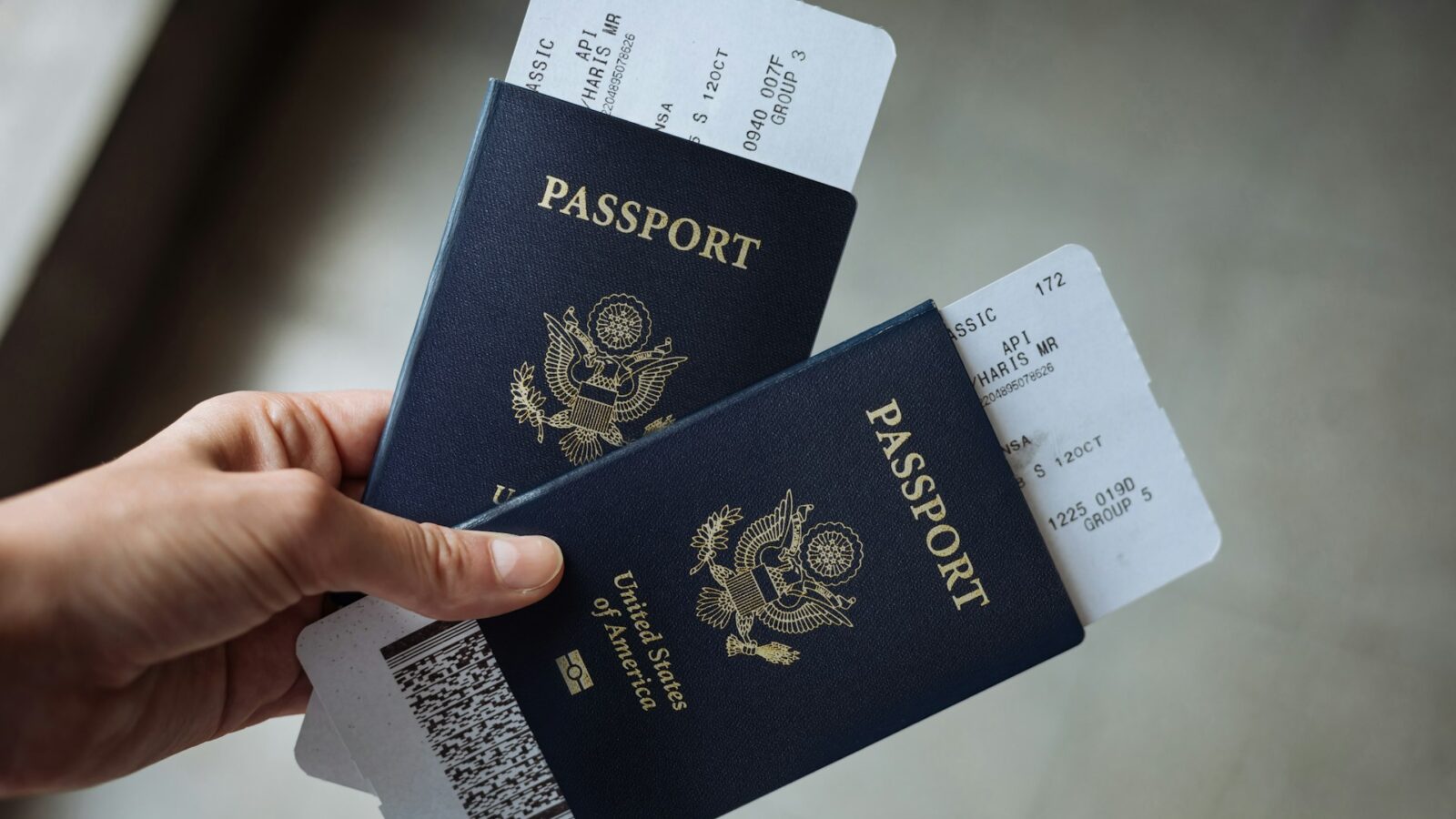
Once they have permanent residence abroad, many people start thinking about citizenship. For Chinese citizens this step carries more weight than it seems. China does not recognise dual nationality: a Chinese citizen settled abroad who voluntarily acquires a foreign nationality loses Chinese nationality automatically, with no application or approval. Your Chinese passport can no longer be used, your hukou has to be cancelled, you need a visa to go back, and your pension, property and inheritance have to be handled as a foreigner.
This guide is based on the text of the Nationality Law of the PRC and on public guidance from the Ministry of Foreign Affairs, Chinese consulates, public security bureaus and the tax and social security authorities. It sets out what happens when you naturalise, which procedures follow, and briefly how foreign nationals of Chinese origin can return with visas or visa-free entry. Information is current as of October 2026; for individual cases, the consulate and police decide.
Does China recognise dual nationality? What the law says
No. Article 3 of the Nationality Law states: “The People’s Republic of China does not recognise dual nationality for any Chinese national.” The articles relevant to naturalisation are:
| Article | Key point |
|---|---|
| Article 3 | Dual nationality is not recognised for Chinese citizens |
| Article 5 | A child born abroad to one or two Chinese-citizen parents has Chinese nationality, unless the parents are settled abroad and the child acquires a foreign nationality at birth |
| Article 9 | A Chinese national settled abroad who voluntarily acquires a foreign nationality automatically loses Chinese nationality |
| Articles 10 and 12 | Close relatives of foreigners, people settled abroad and others with legitimate reasons may apply to renounce; state officials and active military personnel may not |
| Article 13 | Foreigners who once held Chinese nationality may apply to restore it for legitimate reasons, and must then give up their foreign nationality |
Two terms matter here. A Chinese citizen with permanent residence abroad who keeps Chinese nationality is a huaqiao (华侨), an overseas Chinese citizen. Someone who has naturalised is a waiji huaren (外籍华人), a foreign national of Chinese origin, and is a foreigner under Chinese law. A green card or permanent residence does not affect nationality; naturalisation is the dividing line.
What happens when you naturalise
- Chinese nationality lapses automaticallyUnder Article 9 it ends when you acquire the foreign nationality; there is nothing to apply for, and you cannot later “choose” to keep it.
- Your Chinese passport stops being valid for travelYou can no longer apply for a Chinese passport or travel document, and even an unexpired passport cannot be used to enter or leave China.
- Cancel your hukou and return your ID cardApply to the police station where your hukou is registered; settle your individual income tax first.
- Return to China as a foreignerEnter on your foreign passport with a Chinese visa or under a visa-free scheme; your stay is governed by the rules for foreigners.
- Rearrange assets and social insurancePension, property, bank accounts and inheritance are handled under the rules for foreign nationals.
Your Chinese passport after naturalisation
The Chinese Consulate-General in Alexandria puts it plainly in its 2026 FAQ: Chinese citizens (other than those on official business) who acquire a foreign nationality automatically lose Chinese nationality and cannot apply for a Chinese passport or travel document, and a Chinese passport, valid or not, can no longer be used to enter or leave China. The Ministry of Foreign Affairs’ consular department has also said publicly that some people keep using their old Chinese passports after naturalising, but that they are no longer Chinese nationals and are breaching the Nationality Law and the Passport Law. If you have not naturalised and only hold permanent residence, you can renew your Chinese passport at a consulate abroad; see Chinese Passport: Application, Renewal and Expedited Service.
Do not plan to “alternate two passports”. If you travel on a Chinese passport and are found to hold a foreign one, the document can be confiscated and invalidated, and you may face problems crossing the border and with later visa applications. Think it through before naturalising: it is largely irreversible, because restoring Chinese nationality needs approval and means giving up the foreign one.
Cancelling your hukou after naturalisation
According to the Fuzhou Public Security Bureau’s service guide, for example, people who have acquired a foreign nationality and lost Chinese nationality cancel their hukou at the police station where it is registered, with:
- a valid foreign passport and Chinese visa, with a translation from a qualified translation agency;
- the resident ID card, which must be handed in (sign a declaration if it is lost);
- the household register (hukou booklet), collected after cancellation if you are the only member.
If you are abroad, a relative or friend in China can act for you; the police may verify with you by video call. The Shanghai Public Security Bureau also notes that people who enter on a foreign passport without having cancelled their hukou should cancel it at the hukou police station, and must show the cancellation certificate when applying for residence in China.
Before cancelling your hukou you also need to settle your taxes. Article 13 of the Individual Income Tax Law requires taxpayers who cancel their hukou on emigrating to settle their taxes first, and State Taxation Administration Announcement No. 62 of 2018 requires a filing with the hukou tax office covering the year’s comprehensive, business and other income, and payment of any arrears. See Tax residency changes and Hukou and social insurance.
Returning to China: visas and visa-free entry
After naturalising, you enter China as a citizen of your new country:
- Q visas: Q1 is issued to family members of Chinese citizens coming to live in China for family reunion, who must apply for a residence permit within 30 days of entry; Q2 is for short visits (up to 180 days) to relatives who are Chinese citizens living in China.
- Measures for people of Chinese origin: under Ministry of Public Security measures in force since 1 February 2018, residence permits for foreign nationals of Chinese origin can be issued for up to 5 years instead of 3. According to the immigration law firm BAL, former Chinese nationals and their foreign descendants can also apply for multiple-entry visas valid for up to 5 years.
- Unilateral visa-free entry: according to information published by the National Immigration Administration in November 2025, ordinary passport holders from 48 countries including France and Germany can enter visa-free for up to 30 days for business, tourism, visiting family and friends, exchanges or transit, for most countries on a trial basis until 31 December 2026. The same policy has applied to the UK and Canada since 17 February 2026. We track changes in our news section.
- Visa-free transit: as of June 2025, 240-hour visa-free transit covered 55 countries, including the United States; on 20 August 2026 the NIA announced that Kyrgyzstan and Vietnam would be added. It applies to travellers going on to a third country or region through designated ports.
Some Chinese consulates ask first-time applicants born in China to present their old Chinese passport or sign a nationality status declaration. For residence and citizenship in your new country, see country pages such as Canada.
Property, pensions and inheritance
Pension: under Article 6 of MOHRSS Order No. 13, the individual account of the basic pension cannot be withdrawn early. If you settle abroad before reaching pension eligibility, the account is kept and you receive benefits once eligible. If you lose Chinese nationality, you may apply in writing, when leaving or later, to end your pension insurance; after the agency explains the consequences in writing and you confirm, the account balance is paid to you in a lump sum. Once ended, you cannot draw a monthly pension, so do the sums first.
Property: naturalisation does not automatically change ownership of registered property, but selling, transferring or mortgaging it will require your foreign passport and evidence linking it to your former ID card. To send sale proceeds abroad, pay your taxes and apply to the SAFE branch where your hukou was registered for an emigrant’s property transfer; see China’s USD 50,000 FX quota and legal ways to move money abroad.
Inheritance: foreign nationals of Chinese origin can inherit from relatives in China. To send inherited assets abroad, the heir applies for an inheritance transfer to SAFE where the deceased’s hukou was registered; heirs inheriting from several relatives can file all applications at one of those offices.
Hong Kong and Macao
Chinese citizens in Hong Kong and Macao are covered by special NPC Standing Committee interpretations of the Nationality Law. For Hong Kong, the 1996 interpretation states that Hong Kong Chinese compatriots are Chinese citizens whether or not they hold British Dependent Territories Citizen or British National (Overseas) passports; they may use these documents for travel abroad but are not entitled to British consular protection in Hong Kong or the mainland, and a change of nationality may be declared to the Hong Kong authority handling nationality applications. These rules do not apply to mainland residents.
FAQ
Do I lose Chinese nationality if I get a green card or permanent residence?
No. Permanent residence is not citizenship; a Chinese citizen with permanent residence abroad remains an overseas Chinese citizen and can keep using a Chinese passport. Only voluntary naturalisation causes automatic loss.
My child was born abroad. What nationality do they have?
It depends on the parents’ nationality and whether they are settled abroad. A child born abroad to one or two Chinese-citizen parents generally has Chinese nationality, unless the parents are settled abroad and the child acquired a foreign nationality at birth. Chinese consulates assess the parents’ nationality, residence status and place of birth.
Sources
- National Immigration Administration: Nationality Law of the PRC (accessed October 2026)
- China Consular Service: Nationality Law of the PRC (accessed October 2026)
- China Consular Service: FAQ on Chinese nationality (accessed October 2026)
- Chinese Consulate-General in Alexandria: Frequently asked questions (Apr 2026) (accessed October 2026)
- Chinese Consulate-General in Edinburgh: Notes on nationality determination (accessed October 2026)
- Fuzhou Public Security Bureau: How to cancel your hukou after acquiring foreign nationality (accessed October 2026)
- Shanghai Public Security Bureau: Can foreign-passport holders who still have a hukou apply for visas and permits? (accessed October 2026)
- State Taxation Administration: Individual Income Tax Law of the PRC (accessed October 2026)
- gov.cn: STA Announcement No. 62 of 2018 on individual income tax self-filing (accessed October 2026)
- Chinese Embassy in Papua New Guinea: Q1 and Q2 visas (accessed October 2026)
- Overseas Chinese Affairs Office website (People’s Daily): Residence permits for foreign nationals of Chinese origin extended to 5 years (2 Apr 2018) (accessed October 2026)
- BAL (immigration law firm, secondary source): 5-year visas and residence permits for foreigners of Chinese descent (22 Feb 2018) (accessed October 2026)
- Yangtse Evening Post (citing NIA): Unilateral visa-free entry for 48 countries (23 Nov 2025) (accessed October 2026)
- China News Service: First day of visa-free entry for UK and Canadian citizens (17 Feb 2026) (accessed October 2026)
- gov.cn: China’s 240-hour visa-free transit extended to 55 countries (June 2025) (accessed October 2026)
- Provisions on Implementing the Social Insurance Law (MOHRSS Order No. 13) (accessed October 2026)
- SAFE Tianjin Branch: Q&A on personal property transfers (7) (19 Mar 2026) (accessed October 2026)
- NPCSC Interpretation on Implementing the Nationality Law in the Hong Kong SAR (1996) (accessed October 2026)
- National Immigration Administration: Notice adding Kyrgyzstan and Vietnam to the 240-hour visa-free transit policy and Hainan 30-day visa-free entry (20 Aug 2026) (accessed October 2026)