
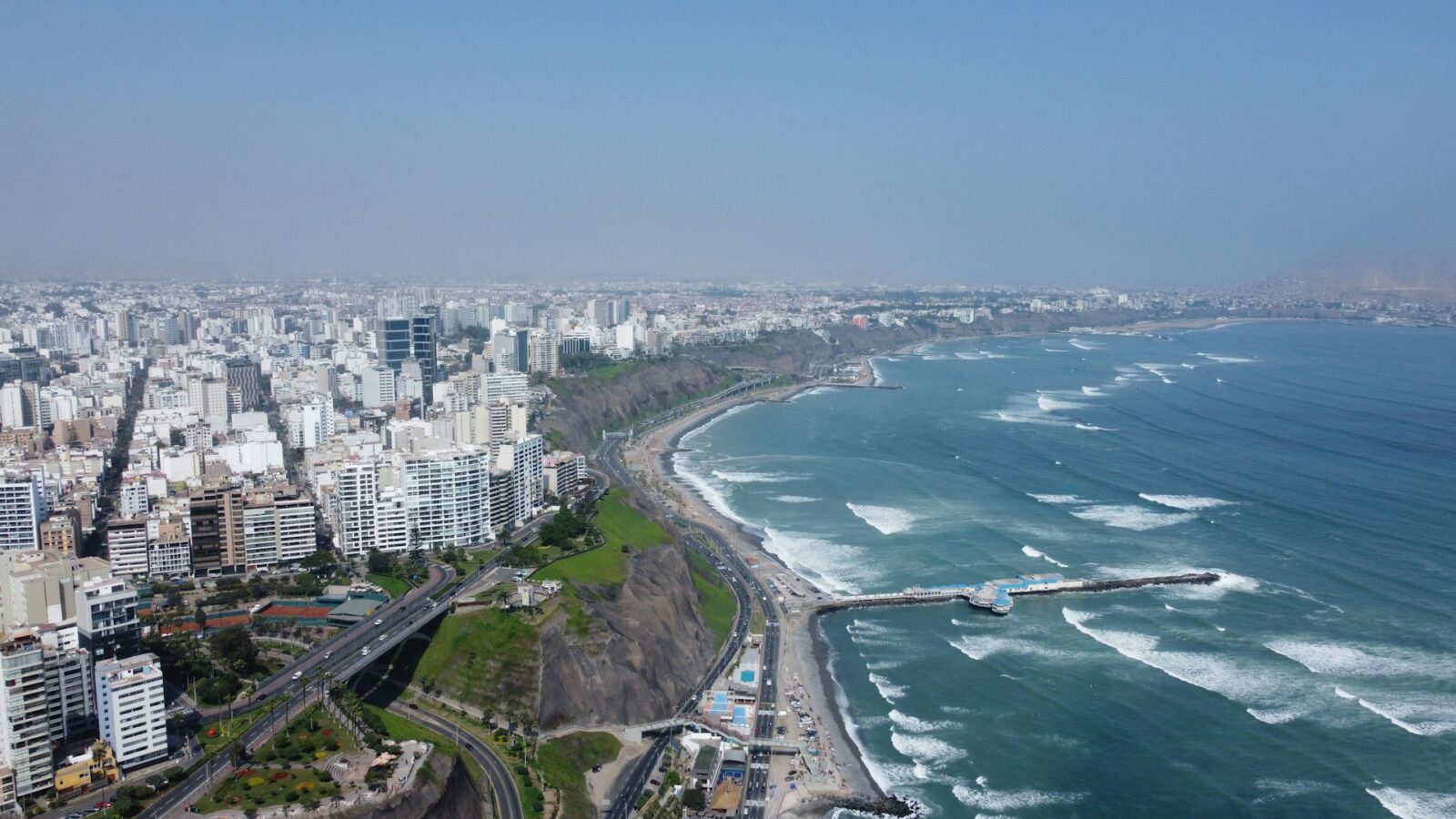




Peru has one of the oldest Chinese communities in Latin America. The first Cantonese contract labourers arrived in 1849, Lima is full of Chinese-Peruvian “chifa” restaurants, and many Peruvian families have Chinese ancestry somewhere in the tree. For someone moving from China, the country feels both foreign and oddly familiar.
This guide looks at Peru from the point of view of a PRC citizen: culture, the economy and jobs, cost of living, healthcare, the Chinese community, visa routes and safety, compared with life back home, so you can judge whether moving to Peru makes sense for you and your family.
Why Peru
Peru sits on the west coast of South America. The capital, Lima, holds roughly a third of the population and most foreign companies. The economy rests on mining (copper, gold, zinc), agricultural exports and fishing. China is one of Peru’s most important trading partners: the bilateral free trade agreement took effect in 2010; an upgrade protocol was signed on 14 November 2024, Peru completed its ratification in July 2026, and the entry-into-force date is still to be announced. In November 2024 the port of Chancay, 60% owned by COSCO Shipping and some 60–80 km north of Lima, opened as a new logistics gateway between China and South America.
For Chinese movers Peru has three main draws: jobs and business linked to Chinese companies and trade with China; living costs clearly below China’s tier-one cities; and a long-established, well-accepted Chinese community where Chinese food and services are easy to find. The flip side is just as real: average income is less than 70% of China’s, politics are volatile and crime is a serious problem.
Culture and etiquette
Spanish is the official language; Quechua and Aymara are widely spoken in the Andes. English works in Lima’s upper business circles and tourist areas, but government offices, hospitals and daily life run in Spanish. Plan on at least six months of basic Spanish before you go and keep taking classes after you arrive.
Peruvians shake hands when they meet; women who know each other greet with a kiss on the cheek. Addressing people as “Señor/Señora” plus surname is polite. Time is flexible, and business meetings often start 10–15 minutes late, but government appointments and visa interviews require punctuality. Family and religious holidays matter; most people are Catholic, and many offices close around Holy Week (Semana Santa) and the national holiday on 28 July.
Peruvian cuisine is a world-famous fusion, and dishes such as lomo saltado show clear Chinese influence. Food is probably the easiest part of the adjustment for Chinese arrivals.
Economy and jobs
Peru is a mid-sized Latin American economy that leans heavily on mining exports, so growth tracks copper prices and Chinese demand. The labour market has a large informal sector, formal wages are modest, and Spanish usually decides whether you can get into a local company.
Common paths for PRC citizens include postings with Chinese mining, power and infrastructure firms; jobs around the Chancay port in logistics and trade; Chinese teaching and translation; and restaurants, import-export and retail within the Chinese community. Legislative Decree 689 caps foreign staff at 20% of a company’s headcount and 30% of its payroll, so local employers are cautious about hiring foreigners; exemptions include foreigners married to Peruvians and investors with at least 5 UIT (tax units) invested.
If you plan to set up a company or trade, get to know the rules of SUNAT, the national tax and customs authority. For bank accounts and related paperwork, see Banking in Peru.
Cost of living
Day-to-day costs in Lima are lower overall than in Beijing or Shanghai, but imported goods, cars and rent in the better districts are not cheap. According to Numbeo data updated on 2 October 2026, a single person spends about S/2,005 (about US$583) a month excluding rent, and a family of four about S/7,339 (about US$2,132).
A meal in a cheap restaurant costs about S/15. Chinese residents tend to live in safer districts such as Miraflores, San Isidro, San Borja and Surco, where rents are above average. When moving money out of China you must follow the rules on the US$50,000 annual personal FX quota; see Foreign exchange and transfers when leaving China. For a detailed breakdown, see Cost of living in Peru.
Healthcare
Peru’s healthcare has three parts: public hospitals run by the Ministry of Health (MINSA); EsSalud, the social-security health system for formal employees, funded by employer contributions; and private clinics (clínicas). SIS, a comprehensive health insurance scheme, covers low-income people. Public hospitals have long waits and uneven equipment, so foreigners usually use private clinics or buy international health insurance.
Private care in Lima is good, and serious illness and emergencies can be handled in private clinics. In highland areas such as Cusco, watch out for altitude sickness, and medical resources in remote areas are very limited. Before visiting the Amazon, consider a yellow fever vaccination: the Chinese embassy in Peru notes that some countries list Peru as a yellow fever risk country and that the vaccine must be given at least 10 days before travel. For coverage options, see Health insurance in Peru.
The Chinese community
Chinese Peruvians fall into two groups. The first are descendants of 19th-century labourers, called “tusán”; most no longer speak Chinese and many do not carry Chinese surnames. The second are newer migrants from Guangdong, Fujian and elsewhere since China’s reform era, plus staff of Chinese companies. In Peru’s 2017 census only 14,307 people self-identified as Chinese or tusán, yet researchers estimate that 2–3 million Peruvians have Chinese ancestry. The gap reflects self-identification versus ancestry.
Calle Capón in central Lima is one of the oldest Chinatowns in the Western Hemisphere, with Chinese signs, supermarkets and association halls. Chinese associations in Peru have a long history and are active in festivals, mutual aid and business networking. Newcomers can quickly find housing and job leads through associations, hometown groups and WeChat groups, but should watch out for investment and loan scams run in the name of “fellow countrymen”. See The Chinese community in Peru.
Visa and residence routes
PRC citizens with ordinary passports generally need a visa for Peru. However, if you hold a US, Canadian, UK, Australian or Schengen visa (or permanent residence) with at least six months of remaining validity, you can enter visa-free for up to 180 days. Living in Peru long term requires a residence category.
| Route | Who it suits | Key points |
|---|---|---|
| Tourist/business visa | Scouting trips, short business travel | Apply at a Peruvian mission in China; no local work |
| Third-country visa exemption | Holders of valid US, CA, UK, AU or Schengen visas or PR | Up to 180 days, tourism or business only |
| Worker residence (Trabajador) | Chinese-company postings, local hires | Needs an employment contract; foreign-staff caps apply |
| Student residence (Estudiante) | Students at Peruvian institutions | Needs an admission letter |
| Family residence (Familiar de residente) | Spouses and children of Peruvians or residents | Needs legalised relationship documents |
| Investor / retiree residence | Investors, people with a stable pension | Investors: at least S/500,000 invested; pension/income thresholds per current Migraciones rules |
For documents, fees and procedures, see the Peru visa guide.
Safety
Crime is the main reason many people hesitate. Robbery, pickpocketing and phone scams are common in Lima, extortion of businesses has risen in recent years, and the government has repeatedly declared and extended states of emergency in Lima and Callao (for example, Supreme Decree 006-2026-PCM extended it for another 30 days in January 2026). Chinese shop owners can be targeted because of the stereotype that they handle a lot of cash.
Use Uber, Cabify or registered taxis, and do not show phones or cash on the street. Shop owners should install CCTV and keep little cash on site. In an emergency, call the Chinese embassy’s 24-hour consular protection line: +51 995 203 968.
Peruvian politics are also volatile: over the past decade several presidents have been removed or resigned; Keiko Fujimori, sworn in on 28 July 2026, is by AP’s count the ninth person to take the oath in a decade. Protests can block roads and delay flights. Long-term residents should follow safety notices from the Chinese embassy in Peru. On the leisure side, casinos and betting in Peru are covered by specific legislation; for what is legal and how it affects Chinese citizens, see Gambling laws in Peru.
Pros and cons
Pros
- Long Chinese history, plenty of Chinese food and community resources
- Close economic ties with China; Chinese firms and Chancay port create opportunities
- Living costs below China’s tier-one cities
- Mild climate in Lima, with no extreme heat or cold
- Visa-free scouting trips for holders of US, CA, UK, AU or Schengen visas
Cons
- Poor security, high risk of extortion and robbery
- Political instability and weak policy continuity
- Modest formal wages; caps on foreign employees
- Spanish is essential; slow bureaucracy
- Far from China with no direct flights
Before you leave China
Peruvian residence applications usually ask for a criminal record certificate and documents such as birth or marriage certificates, all legalised and translated into Spanish. China and Peru are both parties to the Apostille Convention, so Chinese documents can be apostilled, which is quicker than the old consular legalisation. Sort out the following before you leave:
- PassportCheck it has plenty of validity left; long-stay applications usually require more
- Criminal record certificateIssued by the public security bureau where your hukou is or where you live, then notarised and apostilled
- Degrees and family documentsNotarise and apostille diplomas, marriage and birth certificates at the same time
- Funds and transfersPlan your FX quota and cross-border transfer route in advance
- Health and vaccinesGet a yellow fever shot if needed and pack regular medication
See the Apostille guide, or start with the South America overview and compare Peru with neighbouring Chile.
FAQ
Is moving to Peru a good idea?
It depends on where your income comes from. With a Chinese-company posting, a China-trade business or remote income, Peru’s costs and Chinese environment are a plus. If you plan to find an ordinary local job, expect to earn noticeably less than in China.
Are Peru’s immigration requirements demanding?
Peru has no points system. You apply under a residence category such as work, study, family or investment. The bar is not especially high, but documents must be legalised and translated and the process is slow.
Can I live in Peru speaking only Chinese?
Within Lima’s Chinese community you can manage some daily needs, but healthcare, renting, residence permits and banking all require Spanish. Start learning early.
Can I drive in Peru with a Chinese licence?
Short-term visitors usually need a recognised translation or the documents required locally; long-term residents should plan to obtain a Peruvian licence under local rules.
Sources
- Embassy of the PRC in Peru – Entry guide for Chinese citizens (July 2026) (accessed October 2026)
- World Bank – Population, total (Peru, Chile) (accessed October 2026)
- World Bank – GDP per capita, current US$ (Peru, Chile, China) (accessed October 2026)
- Numbeo – Cost of Living in Lima (updated 2 Oct 2026) (accessed October 2026)
- Wikipedia – Chinese Peruvians (secondary source) (accessed October 2026)
- Wikipedia – Port of Chancay (secondary source) (accessed October 2026)
- BAL – Peru to ease entry for some Chinese travelers (2016 decree, law-firm summary) (accessed October 2026)
- Peru – Legislative Decree 689, Law on hiring foreign workers (gob.pe) (accessed October 2026)
- MOFCOM China FTA Network – China and Peru sign FTA upgrade protocol (Nov 2024) (accessed October 2026)
- Andina – Peru completes internal procedures to optimize FTA with China (Aug 2026) (accessed October 2026)
- AJOT – COSCO megaport open for business in Peru (Nov 2024, media) (accessed October 2026)
- Migraciones Peru – Resolution 277-2018 citing the S/500,000 investor requirement (accessed October 2026)
- SAFE Tianjin branch – Personal FX Q&A (Jul 2026) (accessed October 2026)
- Infobae – Emergency numbers in Peru (Jun 2026, media) (accessed October 2026)
- Andina – State of emergency in Lima and Callao extended 30 days (Jan 2026) (accessed October 2026)
- AP – Keiko Fujimori inaugurated as Peru’s president (Jul 2026, syndicated) (accessed October 2026)