
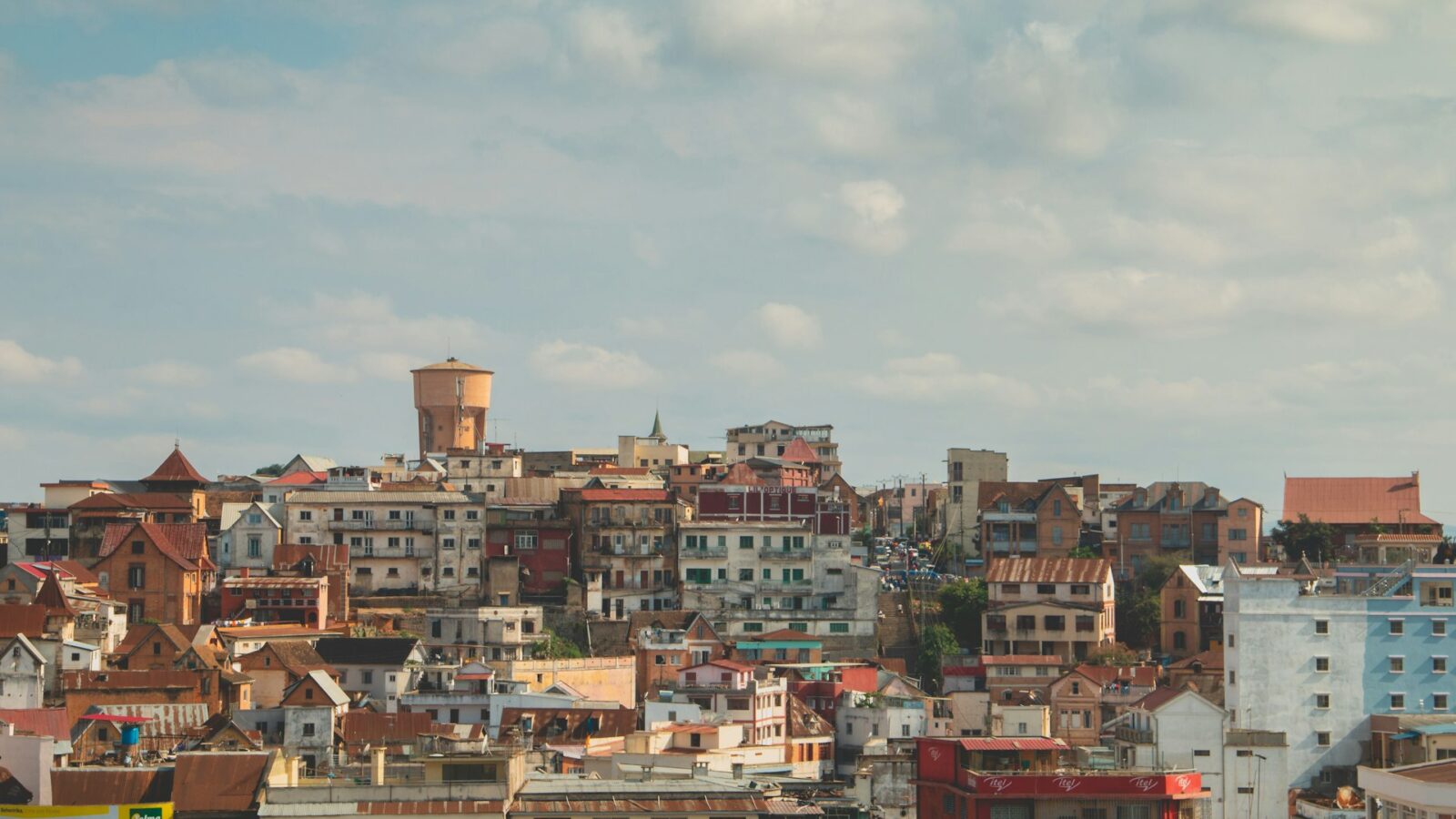
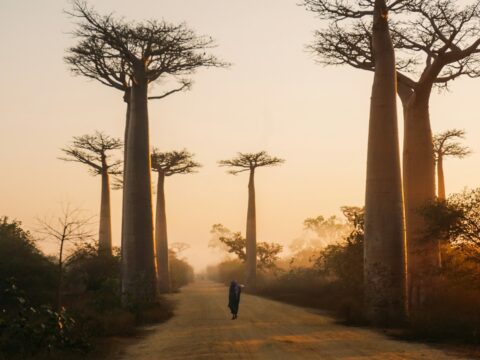
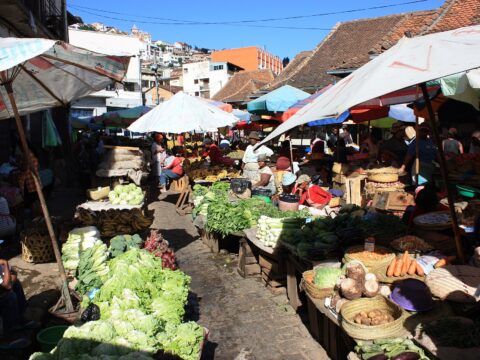
Madagascar is the world’s fourth-largest island, lying in the Indian Ocean off south-east Africa, with a population of about 32 million. It is famous for lemurs, baobabs and vanilla, and far less known in China than Mauritius – yet it is home to one of the largest Chinese communities in Africa. Figures from the Chinese Embassy and the Ministry of Commerce put the number of overseas Chinese at around 50,000, about 40,000 of them new migrants who arrived after China’s reform and opening-up, mostly working in wholesale and retail, restaurants and construction.
For anyone thinking of moving to Madagascar, both the opportunities and the risks are stark. The market has big gaps, competition is relatively light and living costs are low; but this is also one of the least developed countries in the world, with poor healthcare, unstable security and politics, and in 2025 it went through mass protests and a change of government. This guide looks at Madagascar from the point of view of someone moving from China: culture, economy, living costs, healthcare, the Chinese community, visas and residence, and safety, to help you judge whether it suits you.
Why choose Madagascar
According to China’s Ministry of Commerce (MOFCOM) Country Investment Guide (2025 edition), citing the World Bank, Madagascar’s GDP was about USD 17.42 billion in 2024, up 4.2% on the year, or only about USD 545 per person. Mining, tourism and agriculture are the main pillars, and resources such as vanilla and nickel matter on world markets.
China has been Madagascar’s largest trading partner and biggest source of imports since 2015, with bilateral trade of about USD 1.68 billion in 2024. Chinese goods, Chinese contractors and Chinese traders are therefore a familiar sight – which is exactly why many new migrants come here to do business: demand for household goods, clothing, building materials and electrical appliances is high, and local supply falls short.
Culture and etiquette
Malagasy people are mainly of mixed Malayo-Indonesian and African descent. The MOFCOM guide says there are 18 ethnic groups, with the Merina making up about 26% of the population and the Betsimisaraka about 14%. About 52% follow traditional religions, about 41% are Christian and about 7% Muslim.
The official languages are Malagasy and French. French is widely used in the capital and in business, English much less so, and rural areas speak almost only Malagasy. For newcomers from China, French is more useful than English, and learning a few Malagasy greetings goes a long way.
Society places great weight on ancestors and family, and many places have traditional taboos known as “fady”, which differ from region to region – for example, some foods or behaviours may be forbidden in one area. When you arrive somewhere new, ask local staff or friends first. Patience, respect and avoiding public criticism matter a lot; hurrying people loudly or criticising staff in front of others, which is common in China, can easily cause conflict here.
Economy and jobs
Madagascar’s economy is mainly agricultural, with much of the population in subsistence farming, few formal jobs and low wages. For foreigners it is generally not a place to “find a job” but a place to “do business” or be posted.
The Chinese in Madagascar fall into three broad groups: independent traders in wholesale and retail, concentrated in the capital Antananarivo and the east-coast port of Toamasina; employees of Chinese companies working on construction, mining and other projects; and descendants of earlier migrants who run import-export, retail and other businesses. According to Johns Hopkins SAIS-CARI data, only 553 Chinese contract workers were in Madagascar at the end of 2024, which shows that most Chinese there are self-employed traders rather than posted workers.
If you plan to run a business, start by understanding company registration, foreign ownership and labour law – see Doing business in Madagascar.
Cost of living
Local prices are low, but the combination most foreigners want – secure housing, imported food and private healthcare – is not cheap. According to Numbeo data updated in October 2026, a single person in Antananarivo spends about 1.83 million ariary (about USD 409) a month, excluding rent.
Note that internet and utilities are expensive relative to local incomes, and power and water cuts are not unusual – many Chinese businesses keep their own generators and water tanks. For safety reasons, foreigners usually choose housing with walls and guards, which tends to cost more than average.
Healthcare
Healthcare is the area that needs the most preparation before a move. The MOFCOM guide says Madagascar has about 6,000 registered doctors, about 4,000 of them in Analamanga, the region around the capital, and that many rural health centres have no doctor at all.
Infectious disease risks are also much higher than in China. From January to April 2025, 1.35 million malaria cases were recorded nationwide; a plague outbreak from August to November 2017 killed more than 200 people; and a measles outbreak from September 2018 to mid-2019 killed more than 1,000. Before leaving, consult an international travel health clinic, get the recommended vaccinations and prepare antimalarials.
There are private clinics in the capital, but for serious illness, surgery or complex tests foreigners often have to go abroad. Make sure you have international health insurance that includes medical evacuation – see Insurance in Madagascar for how to choose.
Chinese community
Madagascar’s Chinese community has a long history. Earlier migrants were mostly from Shunde and other parts of Guangdong and settled around Toamasina on the east coast, where the Toamasina Overseas Chinese School was founded in 1938. Newer arrivals live mainly in Antananarivo. The MOFCOM guide puts the number of overseas Chinese at about 50,000, of whom about 40,000 are new migrants and about 10,000 from the older community, mostly in trade and catering; the 2020 edition gave about 60,000, so the number of new migrants has fallen by about 10,000.
If everyone with some Chinese ancestry is counted, the figure is much larger: a September 2026 report on the Chinese MFA website says “it is estimated that there are 500,000–600,000 people of Chinese descent in Madagascar”, though most of them no longer speak Chinese. At the other end, UN DESA counts only 2,382 residents with PRC citizenship (2024) – clearly too low, which suggests many people are not captured in the statistics.
The community has real local influence and is active in charity. In February 2026 the Chinese community in Toamasina donated 136 million ariary to cyclone victims, and after the early-2026 cyclone the Chinese Embassy organised visits to support overseas Chinese. For associations, Chinese food and Chinese-language services, see The Chinese community in Madagascar.
Visa and residence routes
The China–Madagascar mutual visa exemption agreement (in force since 4 November 2023) covers only diplomatic, service and similar passports, so PRC ordinary passport holders need a visa for Madagascar. The common routes are:
| Route | For whom | Key points |
|---|---|---|
| Short-stay tourist visa | Tourism, exploratory trips | Apply online through the official e-visa system or on arrival; 15, 30, 60 or 90 days, EUR 30–50 from February 2026; passport must be valid for at least six months on entry |
| Transformable visa | People planning to live in Madagascar | Applied for at a Malagasy embassy before travel (valid one month), then converted into a long-stay visa at the Ministry of the Interior’s immigration service within one month of arrival; tourist visas cannot be converted |
| Worker residence | Employees of local or Chinese companies | Requires a work authorisation via the employer and the labour authorities |
| Investor residence | People setting up a company or investing | Company registration and investor visas handled by the EDBM one-stop shop |
| Family residence | Spouses and children of residents | Processed together with the main applicant |
Conditions, documents and procedures for each are covered in our Madagascar visa guide.
Safety and security
Safety is the top concern for Chinese in Madagascar. According to UK government travel advice, major protests broke out in Antananarivo and elsewhere from late September to early October 2025, with violence and looting; a new transitional government was formally established on 17 October. During the protests a Chinese-run shopping centre in the capital was looted and burned, with losses estimated by one trader at RMB 50–60 million, and some traders later returned to China.
Day to day, robbery and theft are common throughout the country. UK advice is to avoid walking after dark, keep car doors locked and windows closed in Antananarivo, and avoid driving at night, as armed robberies on main roads are frequent at night, especially outside major towns. Occasional kidnappings for ransom also occur. The MOFCOM guide adds that drugs, smuggling and armed gangs remain unresolved problems. The cyclone season runs from November to April, with coastal areas at greatest risk.
Business owners in particular should not keep large amounts of cash in their shops, should avoid displaying wealth, hire reliable security, stay away from rallies and demonstrations when politics is tense, register on the “China Consular” app and follow the Chinese Embassy’s safety alerts.
The police number is 117; the Chinese MFA Global Consular Protection and Service hotline is +86-10-12308. Whether gambling is legal locally and what legal risks PRC citizens face are covered in Gambling laws in Madagascar.
Pros and cons
Advantages
- Strong demand; room for business in household goods, building materials, clothing and more
- Low local prices and labour costs
- A large, long-established Chinese community, so newcomers can find fellow Chinese and partners
- China is the biggest trading partner; Chinese goods and projects are widely accepted
- Unique natural and tourism resources
Challenges
- A poor economy with low purchasing power and few formal jobs
- Weak healthcare and high risk of malaria and other infectious diseases
- Poor security; Chinese shops were looted during the 2025 protests
- Political instability and fast-changing policies
- Ordinary passports need a visa, long-term residence involves a lot of paperwork, and French is almost essential
FAQ
Do Chinese citizens need a visa for Madagascar?
Yes. The China–Madagascar mutual visa exemption agreement covers only diplomatic, service and similar passports. With an ordinary passport you can get a tourist visa through the official e-visa system or on arrival (EUR 30 for up to 15 days, EUR 50 for up to 90 days, from February 2026); for long-term residence you need to apply for a transformable visa before you travel.
What are the requirements to emigrate to Madagascar?
Madagascar has no general “immigration visa” for ordinary applicants. The usual approach is to obtain a residence visa as an investor, worker or family member and renew it on time.
Is moving to Madagascar a good idea?
It suits people with business experience who can tolerate high risk and believe in the local market. It does not suit families who place a high priority on healthcare, security and children’s education, or who want a settled life. If you are still comparing, start with our Africa overview and Moving to Mauritius.
How do I exchange and transfer money in Madagascar?
The local currency is the ariary; US dollar and euro cash can be exchanged in the main cities. Sending money out of China must follow China’s foreign-exchange rules – annual purchase quotas and reporting requirements are explained in Personal foreign exchange and cross-border transfers.
Sources
- MOFCOM Country Investment Guide: Madagascar (2025 edition) (accessed October 2026)
- Chinese MFA: Madagascar country profile (accessed October 2026)
- Chinese MFA: Ambassador Ji Ping visits overseas Chinese in Fenerive-Est and Toamasina (Sep 2026) (accessed October 2026)
- Chinese MFA: List of Agreements on Mutual Visa Exemption (accessed October 2026)
- UK FCDO: Madagascar safety and security (accessed October 2026)
- UK FCDO: Madagascar entry requirements (accessed October 2026)
- Numbeo: Cost of Living in Antananarivo (accessed October 2026)
- UN DESA International Migrant Stock 2024 (destination and origin) (accessed October 2026)
- SAIS-CARI: Chinese Workers in Africa data (accessed October 2026)
- The Standard: Madagascar protests, Chinese mall looted (2025) (accessed October 2026)
- L’Express de Madagascar: Toamasina Chinese community donation (Feb 2026) (accessed October 2026)
- Madagascar official e-visa website (evisamada.gov.mg) (accessed October 2026)
- Travelnews (South African travel trade media): Madagascar triples e-visa fee (February 2026) (accessed October 2026)
- Embassy of Madagascar in London: transformable visa checklist (January 2026) (accessed October 2026)
- Embassy of Madagascar in Germany: tourist visa requirements (accessed October 2026)
- Chinese Embassy in Madagascar: safety reminder for the Mid-Autumn and National Day holidays (21 September 2026) (accessed October 2026)
- L’Express de Madagascar (local press): investor visas moved to the EDBM one-stop shop (October 2024) (accessed October 2026)