
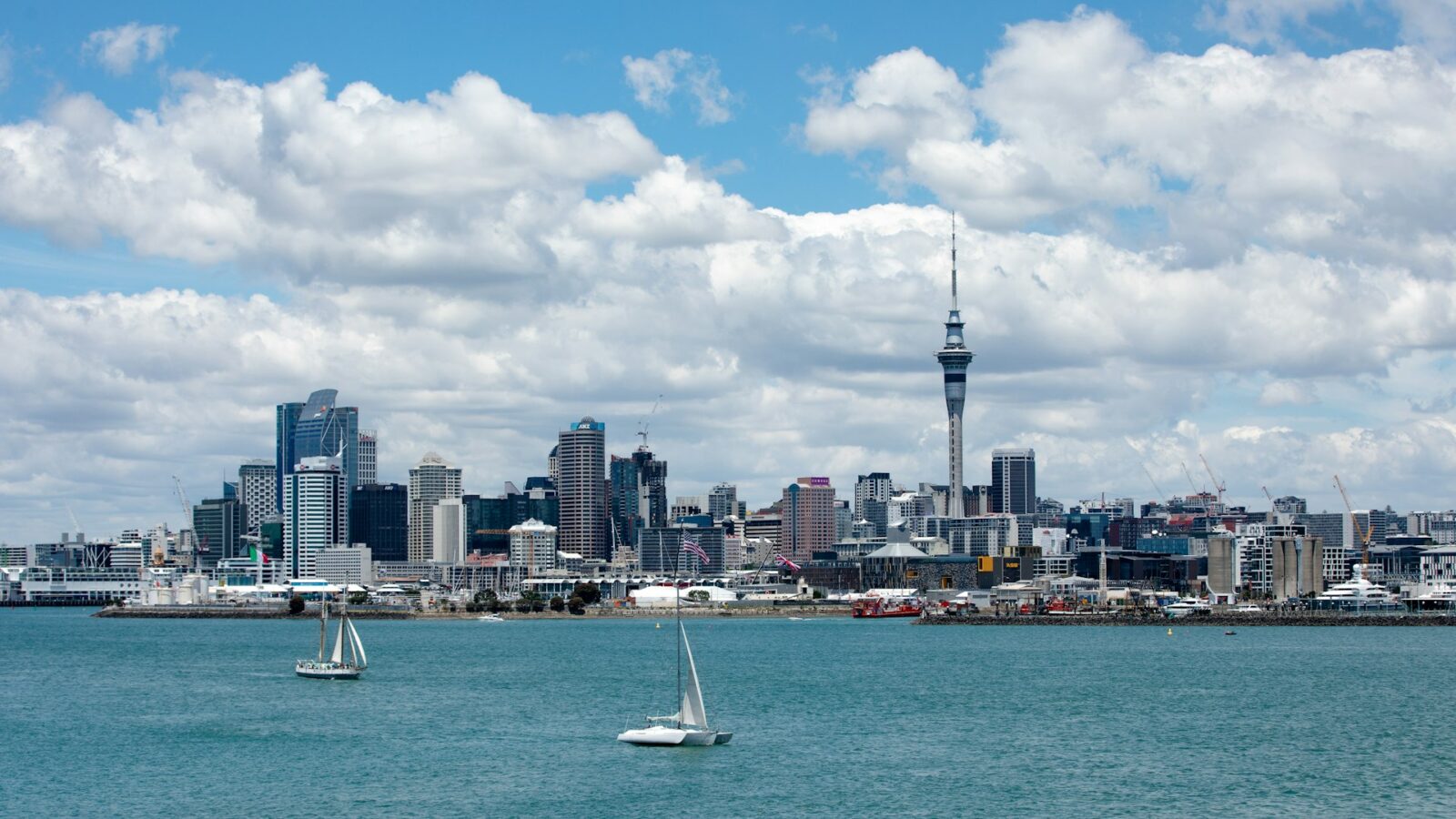




New Zealand has only a little over five million people, yet it is one of the popular places for Chinese families to settle: clean air, a relaxed pace, relatively low crime, and a sizeable Chinese community in Auckland. In the 2023 Census about 260,000 people identified as ethnically Chinese and about 145,000 residents were born in China. For people thinking of moving to New Zealand, the slower life is the biggest attraction and also the thing to weigh most carefully.
The economy has been weak for the past two years, unemployment has risen and many locals have left for Australia. Meanwhile Immigration New Zealand has reworked skilled-migrant points, the employer-sponsored work visa and parent visas, and is trialling entry on an electronic travel authority for Chinese citizens who hold Australian visas. This guide looks at New Zealand from the point of view of someone moving from China: culture, economy and jobs, cost of living, healthcare, the Chinese community, visa routes and safety, to help you decide whether New Zealand suits your family.
Why New Zealand
Wellington is the capital and Auckland the largest city; other main cities are Christchurch, Hamilton, Tauranga and Dunedin. Stats NZ’s provisional estimate put the population at 5,357,300 on 30 June 2026, up just 0.7% in a year with net migration of about 17,600, a clear slowdown.
For Chinese migrants the main advantages are the environment, a relatively calm society, public healthcare and schooling for residents, and an open, transparent immigration system. New Zealand is four hours ahead of Beijing (five in daylight saving time), which takes some getting used to when keeping in touch with home.
The trade-offs: fewer jobs and lower pay than Australia, small industries with slow promotion, house prices that are still high relative to income, and far less convenience, delivery and nightlife than a big Chinese city. It suits families who want stability, good schools and nature more than people chasing fast career growth.
Culture and etiquette
New Zealand society is very informal. Titles matter little at work, colleagues use first names, and modesty goes down better than self-promotion. Māori culture is central to national identity: the greeting “Kia ora” is everywhere, government agencies use Māori names, and formal occasions may include a Māori welcome; just follow your hosts and be respectful.
A few rules that catch newcomers:
- Biosecurity checks are very strict. Declare food, herbal medicines, seeds and wooden items on arrival; failing to declare can mean an on-the-spot fine.
- Traffic drives on the left; rural roads are winding with frequently changing speed limits, and many crashes involve drivers unfamiliar with the conditions.
- Shop hours are short, some services pause on Sundays and public holidays, and many things need an online booking.
Rugby is the national sport, and hiking, fishing and camping are the main pastimes. Casinos and gambling are regulated under the Gambling Act 2003; for what is legal and how it affects Chinese citizens, see Gambling laws in New Zealand.
Economy and jobs
New Zealand’s economy is based on agriculture and services. Dairy, meat, forestry, tourism and international education earn most foreign exchange, and China is one of its most important trading partners. Stats NZ put unemployment at 5.6% in the June 2026 quarter, up from 5.4% in March, so the job market is still cooling.
Common problems for Chinese migrants looking for work:
- There are few jobs overall, and employers value local experience, referees and spoken English.
- Most foreigners first need a work visa through an accredited employer, which must be accredited and pass a job check.
- Doctors, nurses, teachers and engineers need New Zealand registration or qualification assessment.
Demand is fairly steady in construction, health care, education, engineering and some technical jobs. Many Chinese work in or start businesses in hospitality, retail, real estate and migration and education services linked to the community. For details on jobs, starting a business and tax, see Working in New Zealand and the related sections.
Cost of living
According to Numbeo, a one-bedroom flat in central Auckland rents for about NZ$2,300 a month, a single person needs about NZ$1,850 a month on top of rent, and the average net monthly salary is about NZ$5,200. Rents outside Auckland are generally lower, but so are job opportunities. Many New Zealand homes are poorly insulated, so winter heating costs are easy to underestimate; check whether a rental meets the Healthy Homes standards.
Supermarket prices are high; dairy and meat are good quality, and fruit and vegetable prices swing with the seasons. Chinese ingredients are easy to find in Auckland but limited in smaller towns. For how much money you can move from China and how, see Currency exchange and transfers.
Healthcare
New Zealand’s public health system is government-funded: eligible people get public hospital care and emergency treatment largely free, pay part of the cost of GP visits, and get subsidised prescriptions. Eligible people include citizens, resident visa holders and holders of work visas valid for two years or more; Chinese citizens on visitor or student visas are generally not eligible.
- The Accident Compensation Corporation (ACC) runs a no-fault accident scheme: anyone injured in New Zealand, including visitors, can get help with treatment costs.
- International students must hold medical and travel insurance that meets their institution’s requirements.
- For non-emergencies, enrol with a GP first; waits for specialists and elective surgery can be long. In an emergency call 111.
So anyone who has just arrived and is not yet eligible for public healthcare must have private health insurance. See Insurance in New Zealand.
The Chinese community
Chinese New Zealand history goes back to the gold miners of Otago in the 1860s, who were later charged a discriminatory poll tax; the New Zealand government formally apologised in 2002. Today’s community is made up mostly of migrants who arrived after the 1980s, the majority from mainland China, with others from Hong Kong, Taiwan, Malaysia and elsewhere.
The data shows Chinese New Zealanders are heavily concentrated in Auckland, followed by Christchurch, Wellington and Hamilton. In the 2023 Census about 104,000 people in the Asian population spoke Northern Chinese, which includes Mandarin. Auckland has several Chinese shopping areas with supermarkets, restaurants, clinics, lawyers and accountants, plus active Chinese media and associations. China has an embassy in Wellington and consulates-general in Auckland and Christchurch.
For associations, Chinese schools and religious groups in each city, see The Chinese community in New Zealand.
Visa and residence routes at a glance
PRC ordinary passport holders generally need a visa for New Zealand. Under a trial running since 3 November 2025, Chinese citizens with a valid Australian visa travelling from Australia can instead get a New Zealand Electronic Travel Authority (NZeTA) and stay up to three months; in June 2026 the government said it would decide on next steps after a full evaluation at the end of the 12-month trial. The table shows common routes, with fees as the “from” prices listed by Immigration New Zealand (INZ), in NZD.
| Route | For | Key points | Fee from |
|---|---|---|---|
| Visitor Visa | Tourism, family visits | Show at least NZ$1,000 a month for living costs; online applications only from 1 October 2026 | NZ$441 (including the visitor levy, IVL) |
| Student Visa | Study | Up to 4 years; up to 25 hours’ work a week during study | NZ$850 |
| Accredited Employer Work Visa (AEWV) | Job offer from an accredited employer | Up to 5 years; 2 years’ relevant experience or a matching qualification | NZ$1,540 |
| Skilled Migrant Category (SMC) | Skilled workers | 6 points; 55 or younger; English | NZ$6,450 |
| Partner resident visa | Partners of NZ citizens or residents | At least 12 months living together | NZ$5,360 |
| Parent Boost Visitor Visa | Parents of NZ citizens or residents | Up to 5 years, multiple entry, high insurance cover required, no path to residence | NZ$3,100 |
| Active Investor Plus (AIP) | Investors | Growth category at least NZ$5 million for 3 years | NZ$27,470 |
For documents, steps and where to apply in China, see the New Zealand visa guide; the Immigration New Zealand website is the final word on visa rules.
Safety
New Zealand is generally safe and the risk of violent crime is low, but burglary, theft from cars (especially at tourist car parks) and online scams do happen. Natural hazards deserve more attention: New Zealand sits on an earthquake zone, and the 2011 Christchurch earthquake caused heavy losses; some areas have volcanic and flood risks, so check weather and track information before heading outdoors.
Watch out for phone scams by people posing as Chinese diplomatic staff, police or courier companies; embassies never ask you to transfer money or give bank details over the phone. In an emergency call 111; for consular help contact the Chinese Embassy in New Zealand or the consulates-general in Auckland and Christchurch, or call the MFA global emergency hotline (+86 10 12308 from abroad).
Driving is where many newcomers and tourists get into trouble: keep left, and take care on one-lane bridges, mountain roads and long drives when tired.
Pros and cons
Pros
- Beautiful nature, clean air and a slow pace of life
- A generally calm society with transparent policies
- Residents get public healthcare and free state schooling
- An established Chinese community in Auckland with Chinese-language services
- Chinese citizens with Australian visas can currently enter on an NZeTA under a trial
Cons
- A weak economy, with unemployment up to 5.6% in 2026
- A small market with lower pay and fewer promotions than Australia
- High house prices relative to income and many poorly insulated homes
- Far from China, with limited direct flights
- China does not recognise dual nationality, so naturalising means losing Chinese nationality
FAQ
What are the requirements to migrate to New Zealand?
It depends on the route. Skilled migrants need 6 points, must be 55 or younger and meet the English requirement, and usually already have a skilled job in New Zealand; work visas require an offer from an accredited employer; partner visas depend on the relationship and investor visas on funds. Most people start on a work or student visa and then apply for residence.
Do Chinese citizens need a visa for New Zealand?
Generally yes. The Visitor Visa costs from NZ$441 and is applied for online. If you hold a valid Australian visitor, student, work or family visa and travel from Australia, you can apply for an NZeTA instead during the trial.
New Zealand or Australia: which suits Chinese migrants better?
If you want more jobs and higher pay, Australia is usually the better fit; if you value a quiet life and nature, New Zealand is more attractive. Compare with Moving to Australia, or start with the Oceania overview.
Can I keep Chinese nationality after moving to New Zealand?
A resident visa does not affect Chinese nationality, but becoming a New Zealand citizen means automatically losing Chinese nationality under the PRC Nationality Law; see Dual nationality.
Sources
- Stats NZ – National population estimates: At 30 June 2026 (accessed October 2026)
- Stats NZ – People of Asian ethnicities living in Aotearoa New Zealand (2023 Census infographic) (accessed October 2026)
- Figure.NZ – Chinese people in New Zealand by territorial authority (Stats NZ 2023 Census data) (accessed October 2026)
- Figure.NZ – People living in New Zealand born in Asia and the Middle East (Stats NZ 2023 Census data) (accessed October 2026)
- Stats NZ – Labour market statistics: June 2026 quarter (accessed October 2026)
- Numbeo – Cost of Living in Auckland (updated 5 Oct 2026) (accessed October 2026)
- Immigration New Zealand – Visitor Visa (accessed October 2026)
- Immigration New Zealand – NZeTA background and Australian visa recognition trial (accessed October 2026)
- Immigration New Zealand – Accredited Employer Work Visa (accessed October 2026)
- Immigration New Zealand – Skilled Migrant Category Resident Visa (accessed October 2026)
- Immigration New Zealand – Fee Paying Student Visa (accessed October 2026)
- Immigration New Zealand – Parent Boost Visitor Visa (accessed October 2026)
- 中华人民共和国驻新西兰大使馆 (accessed October 2026)
- Immigration New Zealand – Fact sheet: Trial of Australian visa recognition for eligible Chinese visitors (accessed October 2026)
- NZ Ministers Erica Stanford & Louise Upston – “$215 million boost from new travel option” (25 Jun 2026; release as published on national.org.nz) (accessed October 2026)