Japan sits just across the sea from China. Shanghai to Tokyo is a flight of under three hours, and the written characters, food and festivals feel familiar from the first day. That helps explain why Chinese nationals have long been the largest group of foreign residents in Japan: at the end of 2025, 930,428 Chinese citizens lived in Japan legally, roughly a quarter of all foreign residents. For many Chinese families, Japan offers a safe society, well-run public services and big-city life that is relatively affordable by developed-country standards.
Moving to Japan, however, is not a matter of getting one visa. Japan has no general “immigrant visa”. Foreigners first obtain a status of residence as a student, employee, business manager or family member, build up years of residence, and only then apply for permanent residence or naturalisation. In 2025 and 2026 Japan tightened the Business Manager status, raised visa fees fivefold and sharply increased residence-procedure fees, while shifts in China–Japan relations have affected travel and study plans. This guide looks at Japan from a PRC citizen’s point of view: culture, economy, healthcare, the Chinese community and the routes to long-term residence.
Why choose Japan
Japan’s appeal rests on three things. First, order: punctual public transport, clean cities and one of the lowest crime rates in the developed world. Second, demand for foreign workers: an ageing population leaves care, hospitality, construction and IT short of staff, and the foreign-resident population grew by about 356,000 in 2025 alone. Third, proximity and cultural closeness, which make trips home and visits from parents easy.
The flip side is a slower pace, many rules and a real language barrier. Without some Japanese, job hunting, renting and paperwork are all harder. PRC passport holders still need a visa for Japan, and since 2026 it costs noticeably more.
Culture and etiquette
Social life in Japan revolves around not causing trouble for others. Taking calls or talking loudly on trains is considered rude. Rubbish must be sorted into burnable, non-burnable and recyclable categories and put out on set days and times; rules differ by ward, so the first thing to do after moving is to pick up the local sorting guide.
- Punctuality and appointments: doctors, government offices and repairs almost always need a booking, and lateness is taken seriously.
- Workplace culture: constant reporting, liaising and consulting; decisions are slow but execution is careful, and newcomers start with basic tasks.
- Gifts: greeting neighbours with a small gift when you move in is still common, and gifts are usually reciprocated.
- Cash and cards: cashless payment is widespread in big cities, but some small shops and clinics take cash only.
Compared with China, Japanese people tend to say no indirectly: “I’ll think about it” often means no. Understanding this style of communication will help you settle in as much as grammar lessons.
Economy and jobs
Japan is one of the world’s largest economies, but wages have grown slowly for decades. The FY2026 national weighted average minimum wage is ¥1,176 an hour, up ¥55 on the previous year; Tokyo’s is ¥1,281. Starting salaries are not high compared with China’s tier-one cities, but social insurance is comprehensive, overtime pay is regulated by law and income tends to be stable.
The most common work status for foreigners is “Engineer / Specialist in Humanities / International Services”, held by 475,790 people at the end of 2025 and covering IT engineers, translators, marketing and trade roles. “Specified Skilled Worker” targets sectors with labour shortages such as care, food service, construction and manufacturing, with 390,296 holders at end-2025. Highly educated, high-earning applicants can use the points-based “Highly Skilled Professional” status, which shortens the path to permanent residence.
Job-hunting tip: Japanese graduate recruitment happens mainly in spring, while mid-career hiring values Japanese ability and relevant experience. JLPT N2 or above widens your options considerably; IT roles are more relaxed about language. Work visa requirements are covered in our Japan visa guide.
If you plan to start a business, note that from 16 October 2025 the “Business Manager” status requires capital of ¥30 million instead of ¥5 million, plus at least one full-time employee, Japanese at CEFR B2 (roughly N2) for the applicant or an employee, and management experience or a relevant degree. Existing holders have a three-year transition period until 16 October 2028.
Cost of living
Rent is the biggest variable. Rents in Tokyo’s 23 wards can be more than double those in regional cities, and Osaka, Nagoya and Fukuoka are noticeably cheaper overall. Reference figures for Tokyo:
Renting also involves a deposit, “key money”, agency fees and a guarantor-company fee, so moving in often costs four to six months’ rent up front. Many landlords want a local emergency contact or a guarantor company, so newcomers may find it easier to use guarantor firms that serve foreigners, or housing provided by a school or employer. City-by-city budgets are in our Japan cost of living guide.
Healthcare
Japan has universal health insurance. Employees normally join their company’s health insurance; other foreign residents join National Health Insurance through their city or ward office. Working-age adults usually pay 30% of treatment costs, with the rest covered by insurance, and if monthly out-of-pocket costs exceed a cap, the excess can be reclaimed under the high-cost medical expense scheme.
Large hospitals usually expect a referral letter from a clinic, otherwise an extra first-visit charge applies. Call 119 for an ambulance and 110 for the police; the JNTO Japan Visitor Hotline (050-3816-2787) runs 24 hours a day in English, Chinese and Korean. Big hospitals take cards, but many clinics are cash-only.
Short-term visitors cannot join Japan’s public insurance. If you visit on a tourist visa, or accompany a relative for treatment, buy travel insurance that covers medical bills; the Japanese authorities warn that unpaid medical bills may affect future entry. For private cover once you live there, see our Japan insurance guide.
The Chinese community
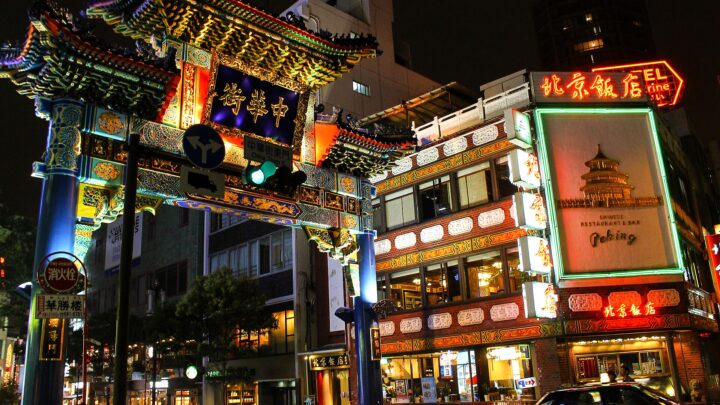
Chinese residents are heavily concentrated in Greater Tokyo. Ikebukuro, Shinjuku and Takadanobaba in Tokyo, and the Nishi-Kawaguchi area of Kawaguchi in Saitama, are full of Chinese restaurants, supermarkets and Chinese-language services. Yokohama Chinatown, Kobe’s Nankinmachi and Nagasaki’s Shinchi Chinatown are long-established communities. Osaka, Nagoya and Fukuoka also have sizeable Chinese populations.
Newcomers can find information through hometown associations, alumni groups, trade associations and Chinese-language media, while students rely on the Chinese students and scholars associations at their universities. Chinese-language services are convenient, but watch out for scams posing as “visa agents”, “guaranteed permanent residence” or “high-yield investments”: anyone who wants a large payment up front and promises a 100% success rate deserves suspicion. Community organisations are listed in our Chinese community in Japan guide.
Visa and residence routes
Ordinary PRC passport holders need a visa for Japan. From 1 July 2026, Japan’s missions in China charge RMB 715 for a single-entry visa and RMB 1,430 for a multiple-entry visa, plus the service fee of the application agency. Tourist visas must be lodged through a travel agency designated by the embassy; individuals cannot apply in person. The main long-stay routes are:
| Route | Who it suits | Key points |
|---|---|---|
| Student | Language schools, universities, postgraduates | The school applies for a Certificate of Eligibility, then you get the visa in China; 464,784 students at end-2025 |
| Engineer / Specialist in Humanities / International Services | Graduates or experienced professionals | Needs a Japanese employer; the most common work status |
| Highly Skilled Professional | Highly educated, high-earning talent | Points-based, 70+ points; faster permanent residence |
| Specified Skilled Worker | Care, food service, construction and similar sectors | Skills and Japanese tests required |
| Business Manager | Entrepreneurs and company managers | Since Oct 2025: ¥30m capital plus one full-time employee |
| Family statuses | Spouses and children of Japanese nationals or permanent residents; dependants of work-visa holders | Proof of marriage or kinship required |
Documents and procedures for each route are in our Japan visa guide; renewals, permanent residence and naturalisation are covered in Japan residency and permanent residence. From 1 October 2026, fees for changing or extending a status depend on the period granted: for example ¥33,000 for one year at the counter, while the permanent residence fee rises from ¥10,000 to ¥200,000. Always check the latest figures with the Immigration Services Agency of Japan.
Safety
Japan is very safe overall; travelling alone late at night in big cities is relatively low-risk. The real concern is natural disasters: earthquakes, typhoons and heavy rain occur every year. After moving in, find your nearest evacuation centre, turn on emergency alerts on your phone and keep drinking water and emergency food at home.
China–Japan relations also matter for Chinese residents. On 14 November 2025, China’s Ministry of Foreign Affairs and Chinese missions in Japan advised Chinese citizens to avoid travel to Japan for the time being and asked those in Japan to take extra precautions. Check the China Consular Service website before you travel to see whether the advisory is still in force. In daily life, beware of phone scams and online investment fraud; call 110 if something happens and contact the Chinese Embassy in Japan or your local consulate-general.
On leisure, Japan restricts gambling tightly, with pachinko and public-run racing operating under special legal arrangements. Whether local gambling is legal and how it affects PRC citizens is covered in Japan gambling laws.
Pros and challenges
Pros
- Safe, with excellent public services for families with children
- Close to China, so trips home are quick and cheap
- Familiar characters and food make settling in easier
- Labour shortages open work visas in many sectors
- Universal health insurance, usually 30% co-payment
Challenges
- Japanese is a hard requirement for most jobs and daily life
- Slow wage growth and high Tokyo rents
- Business visa thresholds, visa fees and residence fees all rose sharply in 2025–2026
- Earthquake and typhoon risk
- Japan does not accept dual nationality; naturalising means giving up PRC citizenship
FAQ
Is moving to Japan a good idea?
It depends on your goals. For families who value safety, education and healthcare and can accept a slower pace and language study, Japan is a close, good-value option. If you want to raise your income quickly or simply “buy residency” through investment, Japan is a poor fit, especially since the 2025 rise in the business visa threshold.
What are the requirements to immigrate to Japan?
There is no single immigrant visa. The key is to obtain a status of residence and live in Japan steadily. Permanent residence generally requires long residence, stable income, and paid taxes and social insurance; Highly Skilled Professionals can qualify sooner. Details are on our visa and residency pages.
How much does a month in Japan cost?
In Tokyo, Numbeo puts a single person’s living costs excluding rent at about ¥140,000 a month, with a one-bedroom flat at about ¥200,000 in the centre or ¥110,000 further out. Regional cities are much cheaper.
Can I keep Chinese citizenship if I naturalise in Japan?
No. Japan does not in principle accept dual nationality, and China’s Nationality Law says a Chinese citizen settled abroad who voluntarily acquires a foreign nationality automatically loses Chinese nationality. See Dual nationality and PRC citizenship.
If you are still comparing East Asian destinations, read our South Korea guide and the Asia overview, and follow our news section for policy changes.
Sources
- Immigration Services Agency of Japan: Foreign residents as of end-2025 (published March 2026) (accessed October 2026)
- Statistics Bureau of Japan: Population Estimates (accessed October 2026)
- Immigration Services Agency: Revised residence procedure fees from 1 October 2026 (accessed October 2026)
- Embassy of Japan in China: Notice on visa fee changes (24 June 2026) (accessed October 2026)
- Embassy of Japan in China: Visa information (accessed October 2026)
- Numbeo: Cost of Living in Tokyo (updated October 2026) (accessed October 2026)
- nippon.com: FY2026 minimum wage national average ¥1,176 (media report) (accessed October 2026)
- Gyoseishoshi Office Tree: 2025 revision of the Business Manager status (law-office briefing) (accessed October 2026)
- JNTO: Emergency and medical guide for visitors (accessed October 2026)
- Xinhua: MFA and Chinese missions in Japan advise citizens to avoid travel to Japan (14 Nov 2025) (accessed October 2026)
- Chinese Embassy in Japan: Extension of China’s unilateral visa-free policy (7 Nov 2025) (accessed October 2026)