
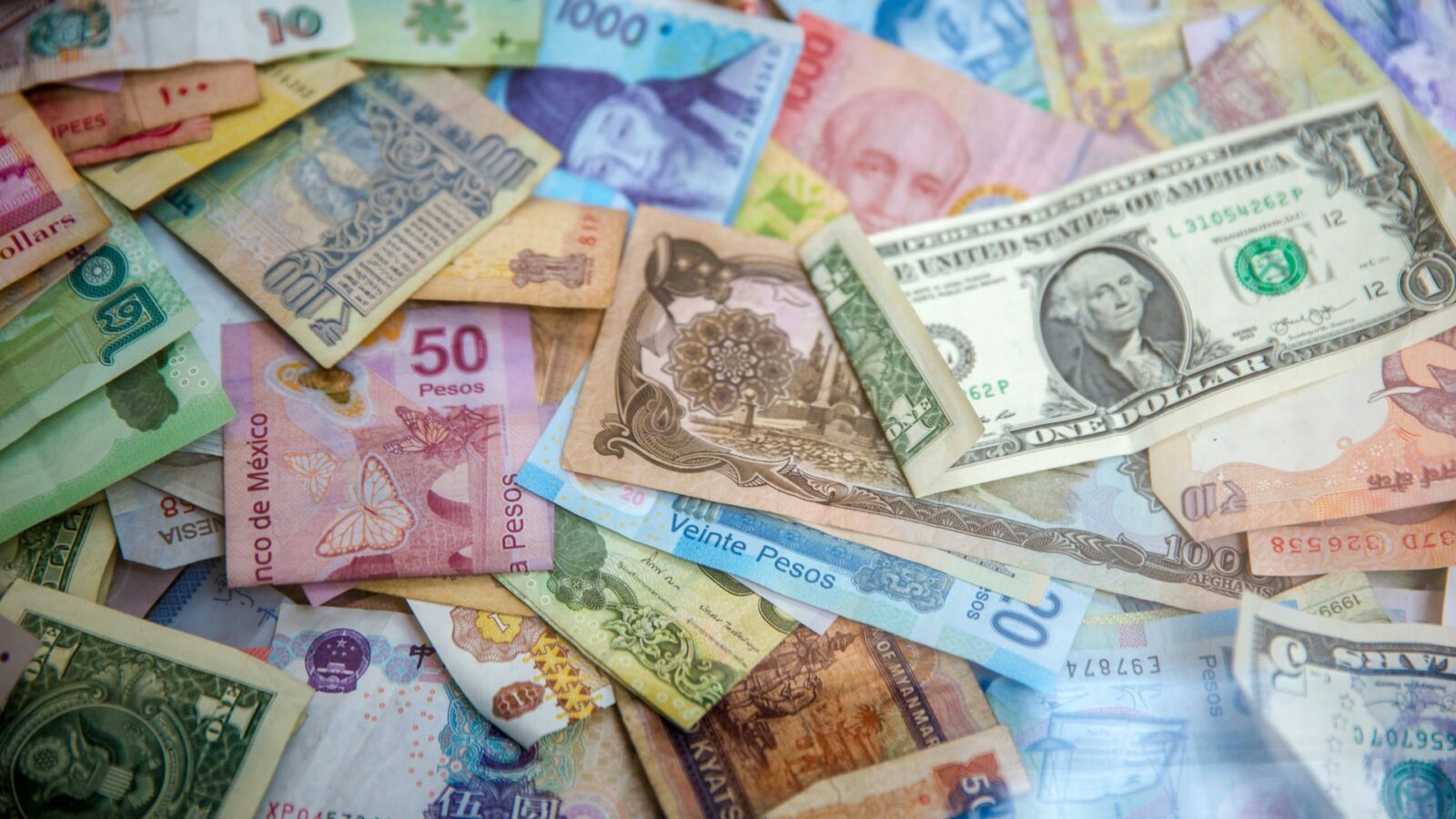
Anyone moving abroad to study, work or settle soon faces the question of how to get money out of China legally. China manages personal currency purchases through an annual convenience quota: each person can buy the equivalent of USD 50,000 a year at a bank with just their ID. That quota comes with clear limits on use, however: it cannot be used to buy property, securities or life insurance abroad. Going beyond USD 50,000 is possible for genuine current-account spending such as tuition fees, backed by documents, and people who already hold foreign permanent residence or citizenship can apply to transfer their lawful assets out in full.
This guide draws on the State Administration of Foreign Exchange’s (SAFE) Current Account FX Business Guidelines (2020 edition), the personal FX purchase application form, the service guide for emigrants’ property transfers and the rules on carrying cash across the border. It covers the annual quota, legal ways to move money abroad, remittance limits, how to transfer assets after emigrating and how much cash you can carry, and explains the legal risks of underground banks and splitting purchases. Information is current as of October 2026; your bank and local SAFE branch have the final word.
The annual quota: how USD 50,000 works
Under the Current Account FX Business Guidelines (2020 edition), each resident individual has an annual convenience quota of USD 50,000 equivalent for selling foreign currency and another USD 50,000 for buying it, reset every calendar year. Within the quota you can buy foreign currency at a bank counter or in your banking app with just your ID; no proof of purpose is needed.
No proof does not mean no declaration. Every purchase requires the Personal FX Purchase Application Form, on which you select the purpose truthfully, such as private travel, study abroad, family visits, medical treatment abroad, overseas shopping, non-investment insurance or wages and family support, and confirm by signing that the information is true. The money must be used as declared, and banks and SAFE can check. SAFE stresses that genuine current-account spending has no amount limit: USD 50,000 is simply the paperwork-free allowance.
What the quota cannot be used for
The purchase application form lists the prohibited conduct, and your signature confirms that you understand it:
- no buying property, securities, life insurance or investment-type participating insurance abroad, which are capital-account items not yet open;
- no false purchase information or supporting documents;
- no lending your quota to help others buy currency, borrowing other people’s quotas or splitting purchases to get around the limit;
- no involvement in money laundering, gambling, tax evasion, underground banking or other illegal activity.
Violators are placed on a “watch list” and lose the convenience quota for the year of listing and the following two years. During that time every purchase requires ID and transaction documents and strict bank review. Serious cases may be referred for anti-money-laundering investigation, and violations may be recorded in your credit file.
If you plan to buy a home abroad, you cannot pay for it by converting USD 50,000 a year. The legal route is usually to wait until you have permanent residence or citizenship there and use an emigrant’s property transfer, or to use income you have already earned lawfully abroad. For local purchase rules, see the country pages, for example buying property in Portugal.
Above USD 50,000: what you can do with documents
Current-account payments with a genuine transaction behind them can exceed the annual quota, and some do not use the quota at all:
| Purpose | How | Uses the USD 50,000 quota? |
|---|---|---|
| Tuition abroad | Your valid ID plus the school’s tuition invoice or similar documents | No |
| Living costs while studying | Within the quota with your ID, or with your ID plus a living-cost bill such as a rental contract | Optional |
| Parents buying for a child | Parent’s and child’s valid IDs plus documents showing the amount | No |
| Other current-account spending (medical, travel, etc.) above the quota | Valid ID and documents showing the amount and purpose, handled directly at the bank | The excess is processed with documents |
Outward remittance limits
To send foreign currency from your own account abroad for current-account spending, transfers of up to USD 50,000 equivalent per transaction or per day need only your ID. Above that, you also need documents showing the transaction amount, and you must cooperate with the bank’s check that the purpose of purchase and the purpose of payment match.
Legal ways to move money abroad
| Route | Who it suits | Key points |
|---|---|---|
| Annual convenience quota | All resident individuals | USD 50,000 a year, used for the declared purpose; not for property, securities or life insurance abroad |
| Purchase backed by transaction documents | Students, patients and others with clear bills | No amount cap; limited to the documented amount |
| Emigrant’s property transfer | People with foreign permanent residence, foreign citizenship or Hong Kong, Macao or Taiwan residency | Approval from the SAFE branch where your hukou was registered; lawful assets converted to cash can be remitted |
| Inheritance transfer | Heirs abroad inheriting assets in China | Apply to SAFE where the deceased’s hukou was registered |
| Cross-boundary Wealth Management Connect (Southbound) | Eligible mainland residents of the Greater Bay Area | Individual quota raised from RMB 1 million to RMB 3 million in 2024; money stays in a closed loop invested in Hong Kong and Macao products |
Emigrant asset transfers: moving money after you get status abroad
Approval for emigrants’ property transfers is an administrative licence granted by SAFE. According to SAFE Hebei’s 2024 service guide, applicants must hold foreign permanent residence, foreign citizenship or Hong Kong, Macao or Taiwan residency. The assets must be lawful assets owned in China before obtaining that status, already converted to cash, and not frozen by judicial or supervisory authorities. A newly issued immigrant visa without permanent residence does not qualify.
- Settle your taxesObtain a tax certificate or tax payment receipts from the tax authority (unless legally exempt). For the tax settlement required before cancelling your hukou, see Tax residency changes.
- Prepare documentsWritten application and the Personal Property Transfer Application Form; passport or foreign ID, proof of settlement abroad certified by a Chinese consulate, and proof of hukou cancellation; proof of income source and ownership; if using a representative, a power of attorney and their ID.
- Apply to the SAFE branch of your former hukouEmigrant transfers are approved by SAFE where your hukou was registered, and you must declare the full amount you intend to transfer in one application.
- Wait for approvalSAFE commits to accepting within 5 working days; the statutory decision period is 20 working days, extendable by 10. There is no fee.
- Buy and remit through a bankWith the Capital Account FX Business Approval Notice, the bank remits the funds in one or several transfers. The notice is valid for that transaction only and nationwide.
For public officials and their close relatives transferring more than RMB 1 million, SAFE may verify with the supervisory authorities, and large or suspicious transfers may be checked with the police or courts. Heirs abroad inheriting assets in China apply for an inheritance transfer to SAFE where the deceased’s hukou was registered. For what naturalisation means for your hukou, pension and property, see China does not recognise dual nationality.
Carrying cash out of China
| Cash | Limit and procedure |
|---|---|
| Renminbi notes | Up to RMB 20,000 per person per trip; any excess must be declared and customs will send it back |
| Foreign cash up to USD 5,000 equivalent | No permit needed |
| Foreign cash above USD 5,000 up to USD 10,000 | Obtain a Permit for Carrying Foreign Exchange Out of China from a bank before leaving, and declare it to customs |
| Foreign cash above USD 10,000 | Not allowed in principle; in genuine special cases, obtain the permit from SAFE where your deposit or purchasing bank is located, and declare it to customs on departure |
A carrying permit can be used only once and is valid for 30 days from issue; if you present several bank-issued permits totalling more than USD 10,000, customs will not let the cash through. Undeclared or excess cash is dealt with under the customs administrative penalty rules. Cash is for your first few weeks; larger sums should go by bank transfer.
Underground banks and “ant moving”: why to stay away
“Ant moving” (蚂蚁搬家) means splitting a large sum into many parts, buying currency under relatives’ or friends’ USD 50,000 quotas and sending it all to one overseas account. Underground banks (地下钱庄) run mirror trades: you pay renminbi in China and receive foreign currency abroad. SAFE targets both, and the person exchanging the money carries the risk.
All three cases were treated as illegal capital flight. Under Article 39 of the Foreign Exchange Administration Regulations, offenders are ordered to bring the money back and fined up to 30% of the amount; in serious cases the fine is between 30% and 100%, and crimes are prosecuted. Article 45 sets the same range of fines for private currency trading and brokering.
Lending your account also costs. In typical cases published by SAFE and the Supreme People’s Procuratorate in May 2025, two people who lent their FX accounts to someone using an underground bank were warned and fined RMB 20,000 and RMB 25,000, even though they made no profit. Running an underground bank is a “serious” illegal business offence once turnover reaches RMB 5 million or illegal gains reach RMB 100,000, and is prosecuted as a crime.
Besides fines, money sent through underground banks or “exchange groups” can simply disappear, or the funds you receive may come from fraud or money laundering, getting your bank accounts frozen in China or abroad. For property or investment abroad, use an emigrant’s property transfer or another legal channel.
Managing money after you leave
Your Chinese bank card and phone number are the security keys for online banking, WeChat and Alipay, so keep the number active; see Using WeChat and Alipay abroad. Keep purchase slips and remittance receipts, as banks and tax offices abroad may ask about the source of funds. For the full list, see our Leaving China checklist; for policy changes, follow our news section and the SAFE website.
FAQ
My spouse and I each have USD 50,000. Can we pool them for one person?
Each quota is for the holder’s own genuine needs. Borrowing someone else’s quota, or sending several people’s quotas to one account, is the splitting the application form prohibits. Parents can pay a child’s tuition with the child’s ID and the school invoice, without using any quota.
I have used my quota. Can I still buy currency this year?
Yes, for genuine current-account spending with your ID and transaction documents, with no amount cap. Without documents, you have to wait for the next calendar year.
Sources
- State Administration of Foreign Exchange: Current Account FX Business Guidelines (2020 edition) (accessed October 2026)
- State Administration of Foreign Exchange: Personal FX Purchase Application Form (template) (accessed October 2026)
- SAFE Shanxi Branch: Guide to common FX transactions (July 2023) (accessed October 2026)
- SAFE Hebei Branch: Service guide – approval for emigrants’ property transfer (2024) (accessed October 2026)
- SAFE Tianjin Branch: Q&A on personal property transfers (7) (19 Mar 2026) (accessed October 2026)
- SAFE Anhui Branch: Q&A on transferring personal property abroad (accessed October 2026)
- Overseas Chinese Affairs Office website (China Qiaowang): Cash carrying rules when crossing borders (20 Mar 2024) (accessed October 2026)
- gov.cn: SAFE and GACC Interim Measures on Carrying Foreign Currency Cash Across the Border (accessed October 2026)
- Regulations of the PRC on Foreign Exchange Administration (State Council Decree No. 532) (accessed October 2026)
- State Administration of Foreign Exchange: Notice on FX violation cases (29 Jun 2023) (accessed October 2026)
- SAFE and Supreme People’s Procuratorate: Typical FX cases referred from prosecution to administrative penalty (8 May 2025) (accessed October 2026)
- Supreme People’s Court: Q&A on the judicial interpretation on underground banking cases (2019) (accessed October 2026)
- SAFE Shenzhen Branch: Cross-boundary Wealth Management Connect 2.0 launched (8 Mar 2024) (accessed October 2026)