Do Chinese citizens need a visa for South Korea? In most cases, yes. As of October 2026, ordinary PRC passport holders travelling individually to Korea for tourism, family visits, business, work or study generally need a Korean visa first. Two important visa-free arrangements have appeared in the past two years, however: Chinese tour groups of three or more organised by designated travel agencies can enter mainland Korea visa-free for up to 15 days, and Chinese visitors flying directly to Jeju Island can stay visa-free for 30 days.
These arrangements are no substitute for a long-stay visa. To work, study or join family in Korea you still need the visa for that purpose, followed by foreigner registration after arrival. This guide covers the visa types, documents, process, fees, application locations and common refusal reasons that matter most to PRC citizens, and explains the path from a work or student visa to permanent residence and citizenship.
Do Chinese citizens need a visa for South Korea?
The current entry rules for PRC passports fall into four situations:
- Group visa-free entry: in force since 29 September 2025 for Chinese tour groups of three or more recruited by designated Korean travel agencies, allowing up to 15 days anywhere in Korea. It was due to end on 30 June 2026; Korea’s Ministry of Justice has said it runs for the same period as China’s visa-free entry for Koreans, i.e. to 31 December 2026. Travellers classed as high-risk are excluded and must obtain a visa.
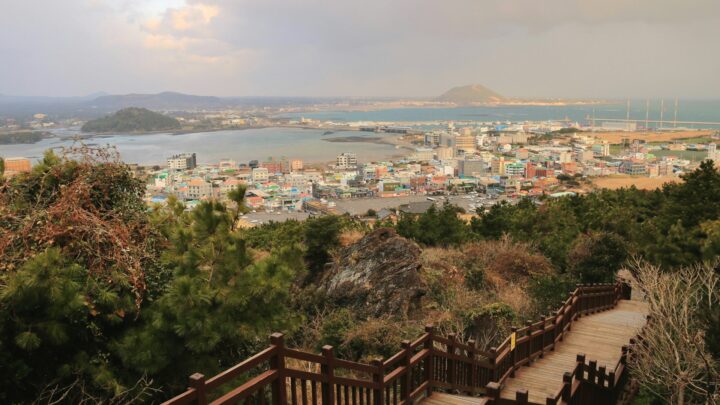
- Jeju visa-free entry: arriving at Jeju International Airport on a direct international flight allows a 30-day visa-free stay, but you may not travel on to mainland Korea.
- Independent travel and other purposes: a visa is required. Korea’s electronic travel authorisation (K-ETA) only applies to visa-exempt nationals, so it is not available to PRC passport holders.
- Group visa fee waiver: the Ministry of Justice’s waiver of the US$15 group tourist visa fee for China and five other countries has been extended to 31 December 2026 (announced by the Ministry on 1 July 2026).
- Easier multiple-entry visas: according to the Korean Embassy in Beijing (announced March 2026, as reported by the media), from 30 March 2026 Chinese citizens who have visited Korea before can apply for a 5-year multiple-entry visa, and residents of 14 cities (Beijing, Shanghai, Guangzhou, Shenzhen, Tianjin, Nanjing, Qingdao, Chongqing, Xiamen, Hangzhou, Suzhou, Ningbo, Changsha and Wuhan) as well as executives and staff of companies that have invested US$1 million or more in Korea can apply for a 10-year one. The consulate still decides whether to grant it and for how long.
China lets ordinary Korean passport holders visit visa-free for 30 days, also extended to 31 December 2026. Korea has said its group visa-free period is tied to China’s policy, so check the arrangements for 2027 again before travelling.
Visa types at a glance
| Type | Who it is for | Stay | Fee | Where to apply |
|---|---|---|---|---|
| Group visa-free | Groups of 3+ via designated agencies | Up to 15 days | None | Designated travel agency |
| Group tourist visa | Group tourists not eligible for visa-free entry | Short stay | US$15, waived until end-2026 | Designated travel agency |
| Short-term visit C-3 (incl. tourism C-3-9) | Independent travel, family visits, business meetings | Up to 90 days per visit, single or multiple | Visa fee plus application-centre fee | Korea Visa Application Centre or mission |
| Study D-2 / language training D-4 | University, postgraduate and language-school students | Length of programme, extended in Korea | Per the application centre | Visa Application Centre or mission |
| Work, e.g. E-7, E-9 | Professionals, Employment Permit System workers | Contract length | Per the application centre | Employer sponsorship; some routes start with a visa issuance certificate |
| Overseas Korean H-2, F-4 | Ethnic Koreans from China | Long-term | Per the application centre | Visa Application Centre or mission |
| Marriage migrant F-6 | Spouses of Korean citizens | Long-term, renewable | Per the application centre | Mission or Visa Application Centre |
Visas issued by Korean missions abroad are generally electronic “visa grant notices” rather than stickers in the passport; print the notice after approval and carry it with your passport.
Short-stay application process
- Check visa-free optionsGroups of 3+ go through a designated agency; direct flights to Jeju are visa-free; otherwise apply for a visa.
- Choose the category and locationFind the visa application centre or mission for the consular district of your residence or hukou.
- Book and prepare documentsPassport, form, photo, ID and residence proof, employment and financial documents.
- Submit and payApply in person or through an eligible representative; pay the visa and service fees, which are usually not refunded if refused.
- Check the result and print the noticePrint the visa grant notice and present it with your passport on arrival.
Document checklist
Requirements vary between consular districts and application centres. These are the documents usually needed for short tourist, family and business visas; always follow the list published by the centre handling your file:
| Document | Notes |
|---|---|
| Passport | Sufficient validity remaining and blank pages |
| Application form and photo | Photo normally taken within the last 6 months |
| ID and proof of residence | Copy of ID card; residence permit if your hukou is outside the district |
| Employment or student status | Employment letter, business licence copy or enrolment certificate |
| Proof of means | Bank statements, deposit certificate, property or tax records |
| Extra for family or business visits | Invitation letter, inviter’s ID, proof of relationship or business correspondence |
Certificates from government bodies or Korean institutions are usually expected to be issued within the past 3 months. Details on the form, employment letter and bank statements must match; freelancers, unemployed applicants and students should explain their source of funds and ties to home. If your passport is about to expire, see Applying for and renewing a PRC passport.
Fees and processing times
A Korean visa costs the visa fee plus the application centre’s service fee; amounts depend on the visa type and where you apply. The US$15 fee for group tourist visas is waived until 31 December 2026. If you apply for a multiple-entry visa but receive a single-entry one, or are refused, the visa fee is normally not refunded.
Ordinary short-term visas usually take from a few working days to a little over two weeks; peak seasons, requests for more documents or closer checks take longer. Apply at least three to four weeks ahead.
Work and long-term visas
Korean work visas are tied to a specific job. Professionals usually use the E-7 (special occupation) visa, which needs a job description and contract from a Korean employer and has education, experience and salary requirements. Non-professional workers in manufacturing, agriculture and fishing enter on E-9 visas through the government-to-government Employment Permit System. Ethnic Koreans from China can apply for H-2 visit-work or F-4 overseas Korean status. Graduates of Korean universities can switch to a D-10 job-seeker visa and then to an E-7 or other work visa once hired.
Some long-stay visas require a criminal record certificate and degree authentication; see How to get a police certificate and Degree authentication. The job market and job-search channels are covered in Working in South Korea.
Student visas
Undergraduate and postgraduate study uses the D-2 visa, while university language institutes generally use D-4. After the school issues an admission letter, you apply in China, usually with the admission letter, proof of your highest qualification and proof of funds. Chinese diplomas and transcripts generally need authentication or an apostille; see Getting an apostille in China.
Students who have stayed six months must join National Health Insurance, currently with a premium reduction. Part-time work on D-2 or D-4 visas needs prior permission and is capped in hours. For schools and costs, see Education and study in South Korea.
Family reunion
Foreign spouses of Korean citizens can apply for the F-6 marriage migrant visa, showing a genuine marriage and basic ability to communicate, and the Korean sponsor must meet an income requirement. Spouses and minor children of work or student visa holders can generally apply for an F-3 dependant visa, which in principle does not allow work. Marriage and birth certificates must be translated and notarised or apostilled.
Investment, digital nomad or retirement visas
Korea has no retirement visa for ordinary foreigners. The main investment route is the D-8 corporate investment visa for foreigners who set up or invest in a Korean company. Korea also runs a real-estate investment immigration scheme in designated areas such as Jeju, with high investment thresholds; check the current rules with a qualified lawyer before relying on it. Since 2024 Korea has also offered a digital nomad visa for high-earning remote workers, with a high income requirement. These conditions change often, so check HiKorea, Korea’s immigration portal.
Where to apply in China
Korea has an embassy, seven consulates-general and one consular office in mainland China:
- Embassy: Beijing
- Consulates-general: Shanghai, Guangzhou, Shenyang, Qingdao, Chengdu, Xi’an, Wuhan
- Consular office: Dalian
Most individual visas are handled by Korea Visa Application Centres. Some centres accept in-person bookings or walk-in queue numbers as well as eligible representatives; group tours and some special categories go through designated travel agencies. Districts may differ on bookings, residence proof and extra documents, so check the latest notices from your mission or application centre before applying.
Common refusal reasons and tips
- Weak ties to home: no stable job, income or family ties, suggesting a risk of overstaying.
- Insufficient or fake financial proof: small balances, sudden deposits or false documents.
- Inconsistent information: employer, title or income differ across the form, employment letter and statements.
- Poor history: past overstays or illegal work in Korea or elsewhere.
Korea takes illegal stays seriously. Visa-free group tourists who leave their group can cause the agency to lose its designation and will face future entry restrictions themselves. Ignore anyone who claims you can work after entering visa-free.
From visa to permanent residence and citizenship
Foreigners with long legal residence and stable income can move on to the points-based F-2 residence visa or apply directly for F-5 permanent residence. F-5 holders must enter Korea at least once every two years and renew their card after ten years. General naturalisation normally requires a domicile in Korea for five consecutive years, good conduct, financial self-sufficiency and basic knowledge of the Korean language and culture.
Korea generally requires new citizens to give up their original nationality, and under China’s Nationality Law a Chinese citizen settled abroad who voluntarily acquires foreign nationality automatically loses Chinese nationality. Weigh the options in South Korea residency and permanent residence and Dual nationality and PRC citizenship.
FAQ
Do Chinese citizens need a visa for South Korea?
Independent travellers do. Groups of three or more through designated agencies can stay visa-free for 15 days (extended to 31 December 2026), and direct flights to Jeju allow a 30-day visa-free stay.
What documents do I need for a Korean tourist visa?
Usually a passport, form, photo, ID and residence proof, employment or student status documents and proof of means; follow your application centre’s checklist.
How long does a Korean visa take?
Ordinary short-term visas usually take a few working days to a little over two weeks; apply three to four weeks ahead.
Can I work after entering Korea visa-free?
No. Neither visa-free entry nor short-term visas allow work; you need the appropriate work visa. For the bigger picture, read our South Korea guide for Chinese expats, or compare with the Japan visa guide.
Sources
- Korea.net: Visa-free entry for Chinese tour groups from 29 September (Sept 2025) (accessed October 2026)
- SBS: Visa-free entry for Chinese tourists to be extended to end of December (23 June 2026, media report) (accessed October 2026)
- Travel Times Korea: Visa-free entry for Chinese groups to run to year-end (29 June 2026, media report) (accessed October 2026)
- Dazabi: Ministry of Justice extends group visa fee waiver for six countries to 31 Dec 2026 (media report) (accessed October 2026)
- Asia Economy: Ministry of Justice extends group visa fee waiver for six countries (1 July 2026, media report) (accessed October 2026)
- Zaobao: Korea extends visa-fee waiver for group tourists from China and five other countries (July 2026) (accessed October 2026)
- Sohu: Key points for Korean visa applications in 2026 (Chinese media; secondary source) (accessed October 2026)
- Wikipedia: Visa policy of South Korea (accessed October 2026)
- Wikipedia: List of diplomatic missions of South Korea (accessed October 2026)
- National Health Insurance Service (NHIS): Guidance for foreigners (accessed October 2026)
- Wikipedia: Immigration to South Korea (overview of permanent residence and naturalisation) (accessed October 2026)
- Korea Immigration Service (Ministry of Justice): Group visa fee waiver for China and five other countries extended to end-2026 (1 July 2026) (accessed October 2026)
- Korea Herald: S. Korea extends visa fee waiver for group tourists from 6 countries (1 July 2026, media report) (accessed October 2026)
- Korea Herald: S. Korea to ease multiple-entry visa requirements for Chinese nationals (31 March 2026, media report) (accessed October 2026)
- Caixin Global: South Korea eases entry rules for Chinese visitors (1 April 2026, media report) (accessed October 2026)
- Chinese Embassy in Japan: Extension of China’s unilateral visa-free policy to 31 Dec 2026, covering Korea and others (7 Nov 2025) (accessed October 2026)