
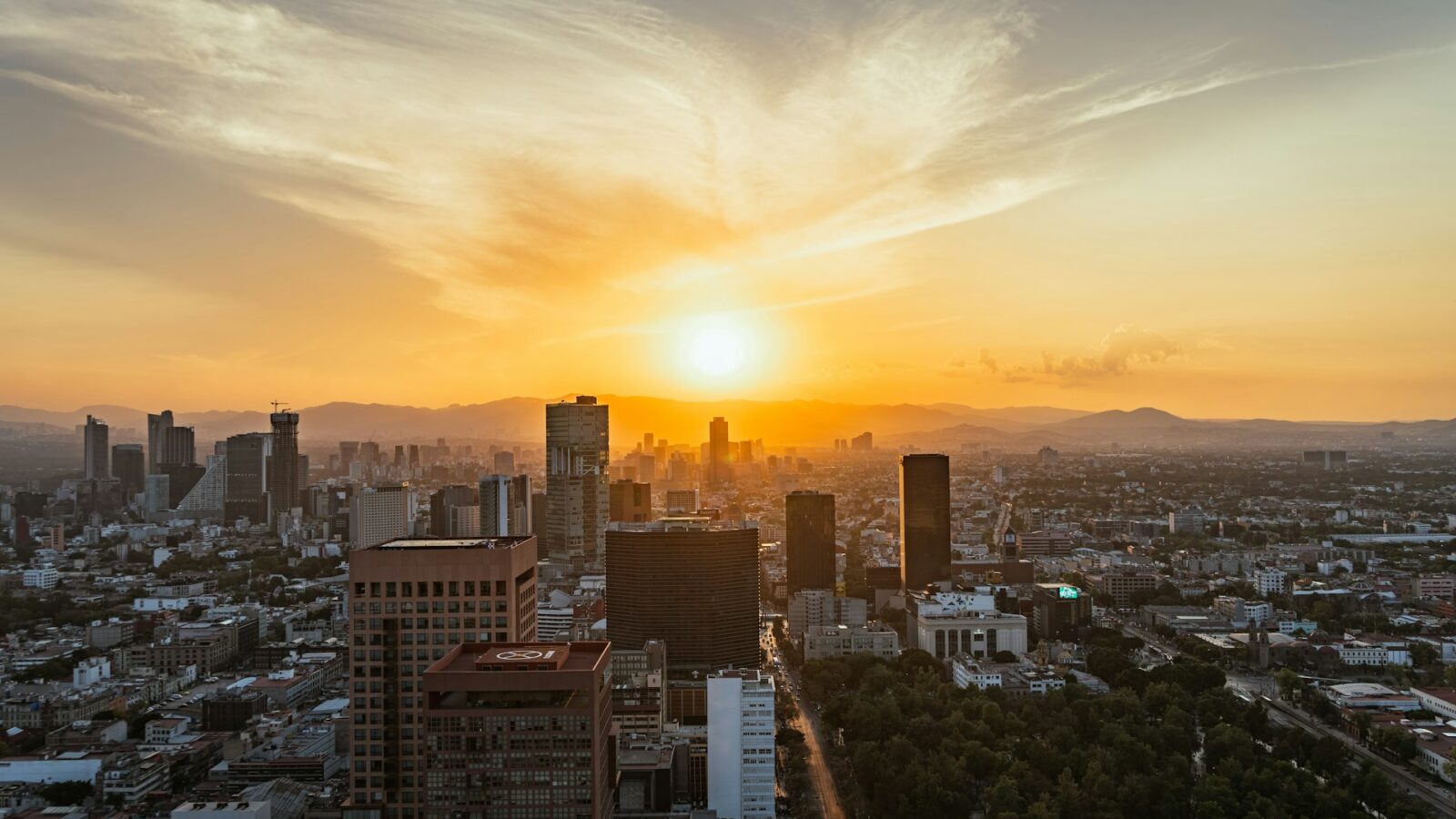




Mexico is Latin America’s second-largest economy and shares a long border with the United States. Over the past few years it has become one of the fastest-growing destinations for Chinese companies relocating production (“nearshoring”) and for Chinese citizens settling in Latin America. The appeal for someone leaving China is simple: proximity to the US market, living costs well below North America, clearly written residency rules, and a mild climate in big cities such as Mexico City, Monterrey and Guadalajara.
The downsides are just as real: security varies sharply from city to city, Spanish is close to essential, bureaucracy is slow, and new tariffs on Chinese goods from 2026 have changed the maths for many traders. This guide looks at culture, the economy, living costs, healthcare, the Chinese community and residency routes from the perspective of someone moving from China. Every figure carries its source and year; always check the latest Mexican rules before acting.
Why choose Mexico
Mexico has about 130.9 million people (INEGI Intercensal Survey 2025, reference date 15 October 2025) and a median age of 32, so it is still a young country with a large consumer market. According to MOFCOM’s Mexico Trade Guide 2025, GDP per capita was about US$14,000 in 2024, GDP grew 1.5% and unemployment stood at just 2.7% in May 2025. Total trade reached about US$1.24 trillion in 2024, most of it tied to the United States.
For Chinese citizens, the big change is the number of people moving. Citing official data, the newspaper Reforma reported that 5,018 Chinese nationals received temporary residence in 2023, more than the previous two years combined; about 67% came for work and about 20% for family reunification.
Culture and etiquette
Mexican society centres on family and personal relationships. Greetings take longer than in China, friends often greet with a cheek kiss, and business contacts shake hands. Arriving ten or fifteen minutes late to social events is common, but be on time for government appointments, the immigration office and the bank. Addressing people as Señor/Señora plus surname is the safe choice.
- Language: Spanish is the language of daily life and paperwork. English works in upmarket parts of Mexico City and at multinationals, but is limited outside big cities. Before you go, aim to handle renting, doctor visits and a police report in Spanish.
- Holidays: Day of the Dead (early November), Independence Day (16 September) and Holy Week are major national holidays; many offices close or shorten hours, so plan paperwork around them.
- ID: In November 2025 the Chinese embassy and consulates in Mexico reminded Chinese citizens to carry valid ID at all times in case of police or immigration checks.
Economy and jobs
Jobs are concentrated in manufacturing, cars and auto parts, electronics assembly, logistics, cross-border e-commerce and services. Nuevo León (Monterrey) in the north, Querétaro in the centre and Jalisco (Guadalajara) host most Chinese-owned factories and industrial parks. Expat staff usually have their work permit requested by the employer from Mexico’s National Migration Institute (INM); finding a job on your own is harder, and salaries are generally below mid-to-senior roles in China’s tier-one cities.
Watch trade policy closely. In December 2025 Mexico’s Senate approved an amended import tariff law: from 1 January 2026, 1,463 tariff lines from countries without a trade agreement with Mexico, China included, carry tariffs of 5% to 50%, covering textiles, steel, auto parts, plastics and home appliances. Chinese importers in Mexico need to rework their costings. Company set-up, tax registration and hiring rules are covered in our guide to doing business in Mexico.
Cost of living
Compared with China, rents in Mexico City are close to mid-range Beijing or Shanghai levels, while eating out and transport are cheaper. The chart shows Numbeo crowd-sourced data as of October 2026 (Mexican pesos):
On these figures, a single person renting a central one-bedroom flat in Mexico City spends about MXN 33,000 a month, or about MXN 26,000 outside the centre. Second-tier cities such as Guadalajara and Querétaro are usually cheaper. The 2026 national minimum wage is MXN 315.04 a day, up 13% on 2025: local pay is not far below China’s, but incomes are very unequal. Deposits, guarantors (aval) and other details are in our Mexico cost of living guide.
Healthcare
Mexico has public and private systems. Formal employees are insured through the Mexican Social Security Institute (IMSS). Households without employer coverage can buy IMSS’s voluntary family health insurance (Seguro de Salud para la Familia), paid once a year by age band. Rates from March 2026: MXN 12,350 a year for ages 30–39, MXN 14,850 for 50–59 and MXN 20,600 for 60–69.
Public hospitals have long waits and most doctors speak only Spanish, so many foreign residents use private hospitals plus private insurance. Private care in Mexico City and Monterrey is good but can cost close to US or European levels. Have a full check-up in China before leaving and carry Spanish or English notes for any prescription medicines. See our Mexico insurance guide for cover options.
The Chinese community
Chinese history in Mexico goes back more than a century. In the late 19th century, Cantonese labourers came to the northern border to dig irrigation canals and clear cotton fields, earning Mexicali the nickname “Little Guangzhou”. Xinhua reported in July 2026 that Mexicali still has more than 350 Chinese restaurants, the most per capita in Mexico, and that its Chinese association and Chinese-language school have run for over thirty years. Anti-Chinese campaigns in the north in the 1930s remain part of the community’s memory.
Newer arrivals are mainly staff of Chinese companies, traders and their families. Reforma reported that about 41% of temporary residence permits for Chinese nationals in 2023 were processed in Mexico City and about 11% in Nuevo León. There is no official total for the Chinese population in Mexico and estimates vary widely, so treat any single figure with care. Chambers of commerce, hometown associations and Chinese schools are listed on our Chinese community in Mexico page.
Visa and residency routes at a glance
Ordinary PRC passport holders need a visa for Mexico, but anyone holding a valid US, Canadian, Japanese, UK or Schengen visa (affixed in the passport) can visit visa-free as a tourist. The table lists the routes Chinese citizens use most. Amounts come from the Mexican embassy in China and are adjusted each year in line with the minimum wage:
| Route | Who it suits | Main requirement (example) |
|---|---|---|
| Visitor visa | Tourism, family visits, business trips | Monthly income above ~CNY 11,000 for 3 months, or average balance ~CNY 31,500 |
| Temporary residence (economic solvency) | People with steady income or savings | Monthly income ~CNY 31,500 for 6 months, or average balance ~CNY 525,000 for 12 months |
| Temporary residence (work) | Employees of Mexican companies | Employer obtains INM approval; applicant interviews at consulate with the NUT number |
| Temporary residence (student) | Degree students | Admission letter plus proof of funds |
| Permanent residence | Retirees; 4 years as temporary resident | High pension or savings threshold, or switch after 4 years |
Documents, fees and booking are explained in our Mexico visa guide.
Safety and security
Security is the biggest variable in Mexican life. INEGI’s urban security survey (ENSU) found that in June 2026, 59.8% of urban residents aged 18+ felt their city was unsafe, down from 63.2% in June 2025 but still high. Differences between cities are huge; wealthy districts such as San Pedro Garza García in metro Monterrey feel far safer.
In June 2026 a Chinese visitor in Mexico for the World Cup was robbed at gunpoint near Mexico City airport. The Chinese embassy advises: stay alert at night, don’t display valuables, keep passports apart from cash; in an emergency put your safety first, then call 911 and contact the embassy’s consular protection line +52-5556162129 or China’s global consular hotline +86-10-12308.
Phone scams impersonating the embassy are common in the Chinese community; the embassy never asks for money transfers by phone. More advice is in our Mexico safety guide.
Leisure and local rules
Weekends in Mexico revolve around food, beaches and football; Cancún, Oaxaca and Chichén Itzá are favourite trips. China Southern launched a direct Shenzhen–Mexico City route in May 2024; it still operates in 2026 (three flights a week in the summer season), making trips home easier. Some cities have licensed casinos and betting halls; whether gambling is legal locally and how it affects Chinese citizens is covered in Mexico gambling laws.
Pros and cons
Pros
- Next door to the US, ideal for North American markets and supply chains
- Transparent residency rules with clear solvency thresholds
- Living costs below North America; food culture Chinese people enjoy
- Many Chinese companies, so more expat job openings
Cons
- Security varies widely; choose city and neighbourhood carefully
- Spanish barrier and slow bureaucracy
- New tariffs on Chinese goods from 2026 squeeze trade margins
- 14-hour time difference with China
Preparing in China before you leave
Almost every Mexican residence route starts with a visa from a Mexican embassy or consulate abroad, followed by a residence card from the immigration office after arrival, so most documents must be ready before you leave China. Work through it in this order:
- Choose a routeVisitor, work, economic solvency or student, based on your income; check the latest thresholds
- Gather proof6–12 months of bank statements, employment or pension letters, with Spanish or English translations if needed
- Sort documentsKeep at least a year of passport validity; notarise and legalise marriage and birth certificates as required
- Book the interviewGet a slot on MiConsulado and attend the embassy or consulate for your region; pay the fee
- Swap for a cardWithin 30 days of arrival, get your residence card from INM, then open a bank account and get a tax number
If you are also weighing other North American countries, start with our North America overview to compare requirements and costs in the US, Canada and Mexico.
FAQ
Is moving to Mexico a good idea?
It depends on your income source and risk tolerance. Remote income, an expat posting or a business aimed at North America fits best; expecting a high-paying local job is harder. Spend one or two months there as a visitor before deciding.
Are Mexico’s immigration requirements high?
Temporary residence on economic solvency needs about CNY 31,500 a month in income over 6 months, or an average balance of about CNY 525,000 over 12 months (Mexican embassy in China, adjusted with the minimum wage). That is within reach for many middle-class families.
Can I use WeChat Pay or Alipay in Mexico?
Hardly any local merchants accept them. You will need pesos, a local bank card or an international credit card. Set up a card that works abroad before you leave; see using WeChat and Alipay abroad.
Will Mexican citizenship affect my Chinese nationality?
Yes. China does not recognise dual nationality: a Chinese citizen who settles abroad and voluntarily acquires another nationality automatically loses Chinese nationality. Check the effect on your hukou, social insurance and property first.
Sources
- INEGI Encuesta Intercensal 2025:墨西哥人口1.309亿(Xataka México 报道)/ INEGI Intercensal Survey 2025 (Xataka México) (accessed October 2026)
- 商务部《墨西哥贸易指南(2025年)》/ MOFCOM Mexico Trade Guide 2025 (accessed October 2026)
- Numbeo: Cost of Living in Mexico City (2026-10) (accessed October 2026)
- IMSS: Seguro de Salud para la Familia (cuotas 2026) (accessed October 2026)
- Embajada de México en China: Visa de visitante (accessed October 2026)
- Embajada de México en China: Visa de residencia temporal (accessed October 2026)
- Embajada de México en China: 签证(免签说明)/ Visa exemptions (accessed October 2026)
- Vanguardia (Reforma): Otorgan 5 mil permisos de residencia temporal a ciudadanos de China (2024-06) (accessed October 2026)
- 新华社:墨西哥边境城市的华人印记(2026-07)/ Xinhua on Mexicali’s Chinese heritage (accessed October 2026)
- 新京报:驻墨西哥使领馆再次提醒注意安全(2026-06)/ Beijing News: embassy safety reminder (accessed October 2026)
- UnoTV: Percepción de inseguridad, ENSU junio 2026 (INEGI) (accessed October 2026)
- Diario Libre: Senado de México aprueba aranceles de hasta 50% (2025-12) (accessed October 2026)
- Bloomberg Línea: Salario mínimo 2026 MXN 315.04 (accessed October 2026)
- 中国日报:深圳—墨西哥城直航开通(2024-05)/ China Daily: Shenzhen–Mexico City route (accessed October 2026)
- 中华人民共和国驻墨西哥合众国大使馆 / Chinese Embassy in Mexico (accessed October 2026)
- Flightmapper: China Southern SZX–MEX 2026 schedule(航班数据库,次要来源)/ secondary source (accessed October 2026)
- Ley de Migración(墨西哥众议院,最新修订DOF 2026-01-15)/ Migration Law (Chamber of Deputies, last amended 15 Jan 2026) (accessed October 2026)