
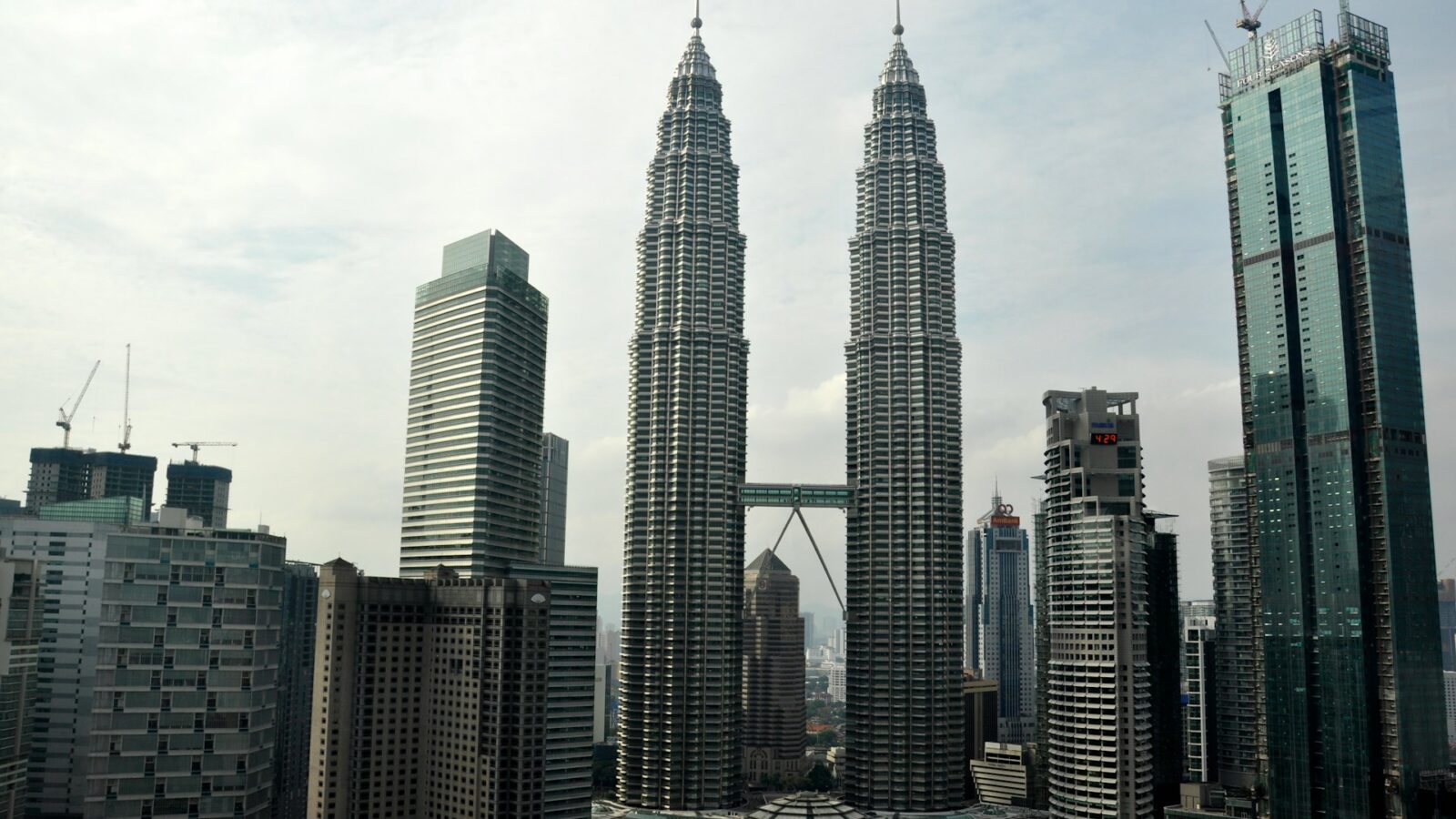

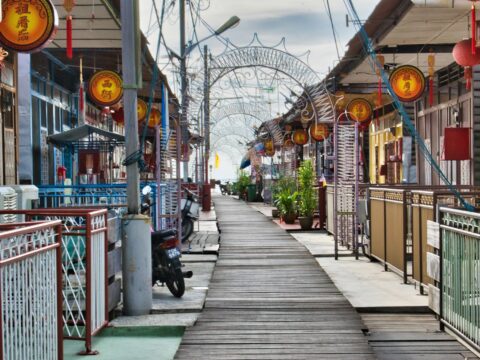

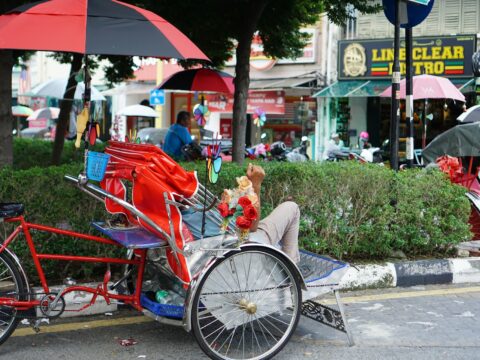
Malaysia has one of the largest ethnic Chinese communities in Southeast Asia: more than seven million people of Chinese descent have lived there for generations. In Kuala Lumpur, Penang or Johor Bahru you will hear Mandarin, Cantonese, Hokkien and Hakka, and see Chinese shop signs, Chinese schools and familiar temples. For people from China it is a place that is foreign, yet not unfamiliar.
Compared with Singapore, Malaysia is far cheaper, homes are bigger, and the climate, food and pace of life feel closer to southern China. But its visa rules, religious culture and bureaucracy take time to get used to. This guide looks at Malaysia from the perspective of a PRC citizen – residence requirements, cost of living, healthcare, the Chinese community and the main long-stay routes – to help you decide whether moving to Malaysia makes sense.
Why Malaysia
China’s Ministry of Commerce (MOFCOM) country guide for Malaysia (2025 edition), citing Malaysia’s Department of Statistics, puts the population at about 34.1 million at the end of 2024, including about 7.64 million ethnic Chinese, or 22.4% of the total. The capital is Kuala Lumpur, the federal administrative centre is Putrajaya, and the country uses UTC+8 – the same time as Beijing.
For PRC citizens, the attractions are clear: since the China–Malaysia mutual visa exemption agreement took effect on 17 July 2025, ordinary passport holders can visit visa-free, which makes scouting trips easy; Chinese-language education is fully developed, so children can learn Chinese, English and Malay; living costs are moderate and the climate is summer all year; and the Malaysia My Second Home (MM2H) programme offers long-stay residence. China has been Malaysia’s largest trading partner for 16 years in a row, and Chinese companies are creating more jobs there.
Culture and etiquette
Malaysia is a multi-ethnic country made up mainly of Malays and other indigenous groups, Chinese and Indians. Islam is the official religion; Malays are generally Muslim, most Chinese are Buddhist or Taoist, most Indians are Hindu, and some Malaysians are Christian. Malay is the national language, English is widely used in business and in cities, and Chinese communities speak Mandarin and a range of dialects.
Respecting Islamic customs is basic etiquette: when eating with Muslim friends, keep to halal food and do not bring pork or alcohol; avoid eating conspicuously in front of Muslims during Ramadan; dress modestly when visiting mosques. Hari Raya, Chinese New Year, Deepavali and Christmas are all public holidays, and “open houses” where communities visit each other are a local tradition.
Malaysian states have some autonomy, and certain states differ in religious matters, weekend days and local rules. Check the rules of the state you plan to live in before you decide.
Economy and jobs
According to the MOFCOM guide, Malaysia’s 2024 GDP was about RM1.65 trillion (at constant 2015 prices), up 5.1% year on year; gross national income per capita was about RM54,895 (around US$12,000); and unemployment was about 3.3%. Services make up 59.3% of GDP, manufacturing 23.2%, and agriculture and mining about 6% each. China–Malaysia trade reached a record of about US$212 billion in 2024.
Foreigners need an Employment Pass applied for by their employer. Under the revised policy published by the Immigration Department’s Expatriate Services Division (ESD), from 1 June 2026 there are three EP categories: Category I for monthly salaries of at least RM20,000, Category II for RM10,000–19,999 and Category III for RM5,000–9,999. All three can bring dependants, but employers also take on obligations such as training local staff and succession planning.
Malaysia does not want low-paid foreign staff replacing local workers, so realistic openings for Chinese professionals are concentrated in Chinese-invested companies, electronics manufacturing, the digital economy, cross-border e-commerce and Chinese-language education. Pass requirements are covered in our guide to working in Malaysia.
When choosing a city, note that Kuala Lumpur and the surrounding Klang Valley have the most jobs and international schools; Penang is known for electronics manufacturing and its historic old town, with a slower pace of life; and Johor Bahru, across the strait from Singapore, suits families who move between the two countries. Housing prices, transport and the share of Chinese residents vary widely, so consider a trial stay before you commit.
Cost of living
Malaysia is much cheaper than Singapore or central areas of China’s top-tier cities. Numbeo data updated in early October 2026 put a one-bedroom flat in central Kuala Lumpur at about RM2,525 a month and about RM1,518 outside the centre, while a single person’s monthly costs excluding rent were about RM2,413.
A meal at an inexpensive restaurant costs about RM20, and hawker stalls and food courts are cheaper still. Rents in Penang, Ipoh and Johor Bahru are usually lower than in Kuala Lumpur. Many Chinese families choose condominiums with a pool, gym and security, which offer good value. See our detailed Malaysia cost of living guide for a full budget.
Malaysian customs rules require you to declare cash or bearer instruments worth more than US$10,000 when entering, and carrying more than the equivalent of US$10,000 in ringgit needs central bank approval. Move larger sums through regular bank transfers – see moving money out of China.
Healthcare
The MOFCOM guide describes Malaysia’s public healthcare as essentially free for residents, organised in three tiers: clinics and community health centres, secondary hospitals and tertiary hospitals. Privatisation reforms since the 1970s mean public and private care now exist side by side.
Foreigners pay more than citizens at public hospitals and waits can be long, so most expatriates use private hospitals and clinics. Private hospitals in Kuala Lumpur and Penang are well equipped, many doctors trained in the UK, US or Australia, and medical tourism is well developed. MM2H participants must show health insurance when renewing, and every long-term resident should buy private medical insurance that covers hospital stays, checking whether treatment in China is included.
Chinese community
Most Malaysian Chinese trace their roots to Fujian, Guangdong, Guangxi and Hainan, and each city has its own dialect flavour: Cantonese dominates in Kuala Lumpur, Hokkien in Penang, and Hakka is common in Kuching and Sabah. Chinese chambers of commerce, hometown associations and clan associations exist everywhere, and bodies such as the Malaysia-China Business Council and the Malaysia-China Chamber of Commerce are active in bilateral trade.
Malaysia keeps a complete Chinese-language education system: national-type Chinese primary schools teach in Mandarin, there are independent Chinese secondary schools, and Chinese newspapers and radio thrive. For families who value Chinese education, this is a unique advantage. Chinese universities such as Xiamen University Malaysia also offer new options for Chinese students. Learn more in our guide to the Chinese community in Malaysia.
Visa and residence routes at a glance
The China–Malaysia mutual visa exemption agreement took effect on 17 July 2025: PRC ordinary passport holders can stay up to 30 days per entry and no more than 90 days in any 180-day period, for purposes such as tourism and family visits. Fill in the Malaysia Digital Arrival Card (MDAC) online within the three days before arrival. To live there long term, choose one of these routes:
| Route | For whom | Main requirement (2026) |
|---|---|---|
| Employment Pass (EP) | Professionals hired by a local company | At least RM5,000 a month (Category III); employer applies |
| MM2H Silver | Applicants 25+ with some assets | US$150,000 fixed deposit, home of RM600,000+, 5-year pass |
| MM2H Gold | Wealthier families | US$500,000 fixed deposit, home of RM1 million+, 15-year pass |
| MM2H Platinum | High-net-worth individuals; work and business allowed | US$1 million fixed deposit, home of RM2 million+, 20-year pass |
| Student Pass | Students at local institutions | Admission to a recognised institution |
| Dependant Pass | Spouses and children under 18 of EP holders | Follows the main pass |
For documents, fees and procedures, see our Malaysia visa guide. MM2H is run by the Ministry of Tourism, Arts and Culture; details are on the official MM2H website.
Safety
The MOFCOM guide describes Malaysian society as generally stable, but notes that crime does occur, road accidents are relatively frequent and some remote areas carry higher risks. It advises against going out alone late at night or visiting isolated islands and remote areas, and recommends calling the police and contacting the Chinese embassy or consulates in an emergency. China has an embassy in Kuala Lumpur and consulates-general in Penang, Kuching and Kota Kinabalu.
On leisure and entertainment, Malaysia regulates gambling strictly: Muslims are forbidden to gamble, there are very few licensed casinos, and online gambling is illegal. Whether gambling is legal and how the rules affect Chinese citizens is explained in Malaysia gambling laws.
Be wary of overseas job ads promising “high pay, free food and housing”. Working on a visa-free stay is illegal, and some such offers lure people into telecom fraud and other crimes.
Pros and cons
Pros
- Large Chinese community; Mandarin and dialects widely spoken
- Complete Chinese-language school system; Chinese, English and Malay
- Much cheaper than Singapore, with larger homes
- Same time as Beijing; easy travel under mutual visa exemption
- MM2H offers long-term residence options
Cons
- EP salary thresholds rose sharply in 2026; limited jobs for foreigners
- MM2H requires substantial assets, and Silver and Gold holders may not work
- Government services less efficient than Singapore’s
- Complex religious and ethnic policies take time to understand
- Permanent residence and citizenship are very hard to obtain
If you have a bigger budget and care most about your career, compare our guide to moving to Singapore.
FAQ
Is moving to Malaysia a good idea?
For Chinese families who value Chinese-language education, want a good quality of life at lower cost or plan a semi-retirement, Malaysia is attractive. If you need to earn a living locally, EP thresholds and the job market are the main limits.
What are the requirements to immigrate to Malaysia?
Malaysia has no regular “immigrant visa”. Most people live there long term on an Employment Pass, Student Pass or MM2H; permanent residence and citizenship are granted rarely and strictly.
Do Chinese citizens need a visa for Malaysia?
Ordinary passport holders can visit for tourism or family visits visa-free for up to 30 days per entry and 90 days in any 180-day period. Work and study require the relevant pass.
Can I get residence by buying property in Malaysia?
No. Buying a home is only one condition of MM2H, which also requires a fixed deposit. For the rules on foreign buyers, see our guide to buying property in Malaysia.
Sources
- 商务部《对外投资合作国别(地区)指南:马来西亚》(2025年版) (accessed October 2026)
- 新华网:中马互免签证协定正式生效(2025年7月17日) (accessed October 2026)
- Jabatan Imigresen Malaysia – Visa requirement by country (accessed October 2026)
- Jabatan Imigresen Malaysia – Malaysia Digital Arrival Card (MDAC) (accessed October 2026)
- Expatriate Services Division – Revised Expatriate Salary Policy (effective 1 June 2026) (accessed October 2026)
- Malaysia My Second Home (MM2H) – Silver category (accessed October 2026)
- Malaysia My Second Home (MM2H) – Gold category (accessed October 2026)
- Malaysia My Second Home (MM2H) – Platinum category (accessed October 2026)
- 中华人民共和国驻马来西亚大使馆 (accessed October 2026)
- Numbeo – Cost of Living in Kuala Lumpur (updated 2 Oct 2026) (accessed October 2026)
- Consulate General of Malaysia in Dubai (Wisma Putra) – Malaysia Digital Arrival Card notice (accessed October 2026)