
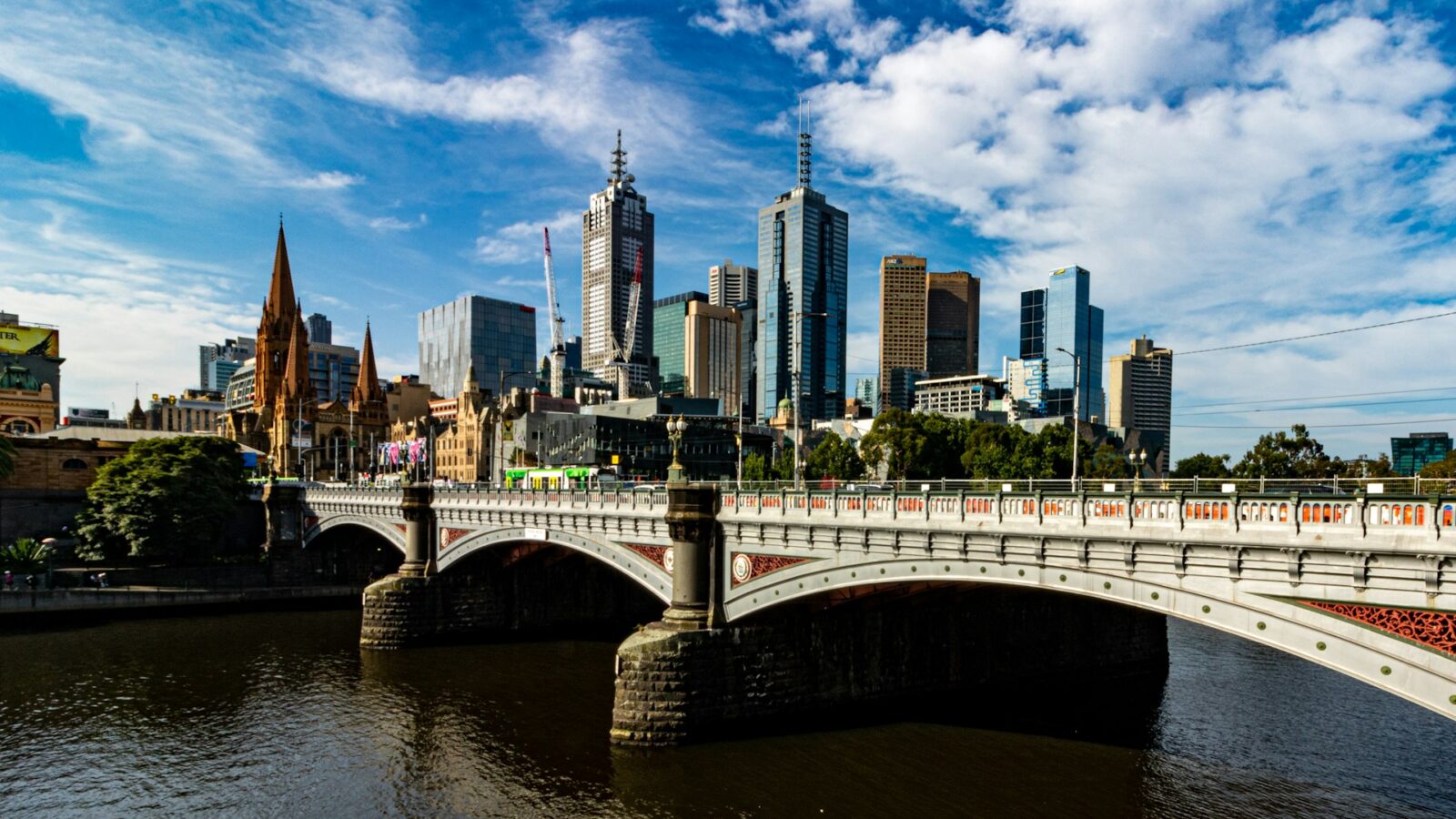
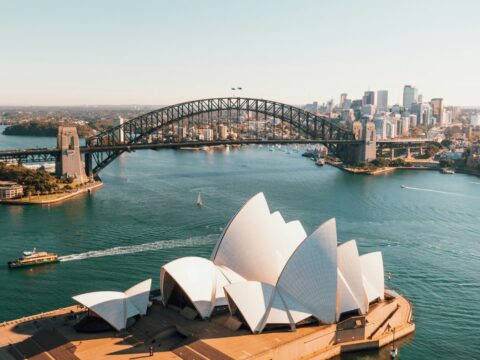


Australia is one of the destinations mainland Chinese know best. According to preliminary figures from the Australian Bureau of Statistics (ABS), about 732,000 people born in mainland China were living in Australia in June 2025, the third-largest overseas-born group after people born in India and England. In the 2021 Census, around 1.39 million people reported Chinese ancestry. In other words, Chinese people who move to Australia rarely lack compatriots, Chinese food or Chinese-language services.
The bar for migrating has risen noticeably in recent years, though. Business and investor visas have closed, skilled migration depends on age, English, skills assessments and state quotas, and most visa charges rose by roughly 25% on 1 July 2026. This guide looks at Australia from the point of view of someone moving from China: entry requirements, culture, jobs, cost of living, healthcare, the Chinese community and safety, compared with life at home, so you can decide whether moving to Australia is right for you.
Why Australia
Canberra is the capital, but people and jobs are concentrated in Sydney, Melbourne, Brisbane, Perth and Adelaide. In the 12 months to March 2026 the population grew by 1.4%, with net overseas migration of about 292,100, so Australia remains one of the world’s main immigration countries.
For Chinese families the main attractions are clean air and nature, a public health system that covers permanent residents, public schools that are essentially free for permanent-resident families, and relatively transparent laws and rules. The time difference is small: the east coast is two hours ahead of Beijing (three in daylight saving time), Perth shares Beijing’s time zone, and there are many direct flights home.
The costs are just as real: housing and rents in the big cities are very high, labour is expensive, many things need an appointment or DIY, and Chinese degrees and work experience often need to be re-assessed, so the first local job can be hard to get. Decide early whether your route is study, employer sponsorship or points-tested skilled migration.
Culture and etiquette
Australian society values equality and informality. At work people usually use first names regardless of rank, and disagreeing openly in meetings is normal; “mateship” is about helping each other and not putting on airs. Punctuality matters, and you should warn people if you will be late. Tipping is not expected, and menu prices usually include the 10% goods and services tax (GST).
In the 2021 Census, 38.4% of people said they had no religion. Christian denominations are still the largest religious group, and there are sizeable Buddhist, Muslim and Hindu communities. Mandarin is one of the most widely spoken languages at home other than English (about 685,000 people), with Cantonese at about 295,000.
Things to get used to: queuing, waste sorting and neighbourhood noise rules are taken seriously, and formal events often open with an Acknowledgement of Country, a mark of respect to Aboriginal and Torres Strait Islander peoples. Many shops close early in the evening and at weekends; barbecues, beaches and sport (Aussie rules, cricket, rugby) are the main ways people socialise. The states allow licensed casinos and poker machines in clubs, but federal law strictly limits online casino services offered to people in Australia; for what is legal and how it affects Chinese citizens, see Gambling laws in Australia.
Economy and jobs
Australia is an advanced economy built on resources and services. Iron ore, coal, LNG and international education are major exports, and China has long been its largest trading partner. The ABS put the seasonally adjusted unemployment rate at 4.6% in August 2026, with participation at 67.1%, a labour market a little cooler than a few years ago.
Sectors with strong demand include health care, aged care, construction and the trades, education, engineering and some IT roles. For Chinese migrants the main hurdle is not the number of jobs but local recognition:
- Skilled migration and many employer-sponsored visas require a skills assessment first (engineers, accountants and IT professionals each have their own assessing body).
- Doctors, nurses, lawyers and teachers must register in Australia, usually after exams or bridging study.
- Employers value local experience and English communication, so the first job is often a step below your position in China.
Australia has a progressive income tax, and employers must also pay a percentage of wages into the employee’s retirement fund (superannuation). For how to get Chinese qualifications verified and what to prepare before you leave, see Degree authentication.
Cost of living
Rent is the biggest cost. According to Numbeo, a one-bedroom flat in central Sydney costs about A$3,600 a month and a single person needs about A$1,800 a month on top of rent; the same source puts Sydney’s average net monthly salary at about A$5,900. Rents in Melbourne, Brisbane and Adelaide are generally lower than in Sydney, but they have risen in every major city in recent years.
Rents are usually quoted per week and paid weekly or fortnightly, and you pay a bond at signing that is held by a state government body. Takeaways and restaurants cost far more than in China, so many Chinese families mostly cook at home; Asian supermarkets are easy to find in all major cities. For a city-by-city comparison see Cost of living in Australia.
Healthcare
Australia’s public health insurance, Medicare, covers citizens and permanent residents: GP visits are partly or fully reimbursed, treatment as a public patient in a public hospital is free, and prescription medicines are subsidised through the PBS. China has no reciprocal health care agreement with Australia, so Chinese citizens on temporary visas (students, workers, visitors) generally cannot use Medicare.
- International students must buy Overseas Student Health Cover (OSHC) and keep it valid for the whole visa.
- Holders of work visas such as the 482 must also maintain adequate health insurance, usually Overseas Visitor Health Cover (OVHC).
- You first see a GP, who refers you to a specialist; for emergencies call 000, and expect long waits in emergency departments.
Once you are a permanent resident you pay the Medicare levy above a certain income, and higher earners without private hospital cover may also pay a surcharge. For choosing cover after arrival, see Insurance in Australia.
The Chinese community
Chinese settlement in Australia goes back to the 19th-century gold rushes; today the community is made up mainly of newer migrants and students from mainland China. ABS figures show the China-born population rising from about 550,000 at the 2021 Census to about 732,000 in June 2025, one of the fastest-growing overseas-born groups of the past decade.
Sydney and Melbourne have the largest Chinese communities, and Brisbane, Perth and Adelaide have sizeable ones too. Chinese neighbourhoods have supermarkets, restaurants, clinics, lawyers and accountants with Chinese signs, and Chinese media, hometown associations, alumni groups and churches are active. China has an embassy in Canberra and consulates-general in Sydney, Melbourne, Perth, Brisbane and Adelaide.
A word of caution: the quality of “Chinese-language services” varies widely, and visa agents, property and investment pitches in particular should be checked. For neighbourhoods, associations and Chinese schools in each city, see The Chinese community in Australia.
Visa and residence routes at a glance
PRC ordinary passport holders need a visa before travelling to Australia. The table lists the routes Chinese citizens use most; fees are the base charge for the main applicant from 1 July 2026 (AUD, compiled from secondary sources; check the Department of Home Affairs website before applying).
| Route | For | Key points | Main applicant fee |
|---|---|---|---|
| Visitor (600) | Tourism, family visits, business visits | Usually 3, 6 or 12 months, no work; a 10-year multiple-entry Frequent Traveller stream also exists | A$250 (outside Australia) |
| Student (500) | Study | Length of course, up to 5 years; up to 48 hours’ work per fortnight during term | A$2,500 |
| Skills in Demand (482) | Sponsored by an Australian employer | Core Skills stream salary threshold A$79,423 (from July 2026); can lead to employer-sponsored PR (186) | A$4,015 |
| Skilled Independent (189) / Skilled Nominated (190) | Points-tested skilled migrants | Submit an expression of interest (EOI) and wait for an invitation; permanent on grant | A$6,135 / A$6,140 |
| Skilled Work Regional (491) | State or regional-relative nomination | Provisional; can lead to PR via the 191 | A$6,140 |
| Partner (309/100, 820/801) | Spouses and de facto partners of citizens or PRs | Temporary then permanent; long processing | A$11,710 |
| Work and Holiday (462) | Chinese citizens aged 18–30 | Limited places each year; English and education requirements | A$840 (first visa) |
The former Business Innovation and Investment visas (188/888) stopped taking new applications in 2024. For documents, steps and where to apply in China, see the Australia visa guide.
Safety
Overall, Australia’s big cities are safe and the risk of violent crime is lower than in most countries, but burglary, car theft and phone and online scams are not rare. The risks that hit new migrants and students hardest are often non-violent:
Chinese diplomatic missions in Australia have warned for years that phone scams by people posing as Chinese police, prosecutors or consular staff, fake landlords taking deposits and fake agents “arranging” visas are the scams Chinese people meet most often. Embassies never ask you to transfer money by phone. In an emergency call 000; for consular help call the Chinese Embassy’s consular protection line on +61 2 6228 3948, or the MFA global emergency hotline (+86 10 12308 from abroad).
Natural hazards matter too: UV levels are extreme in summer, swim between the red and yellow flags at beaches, follow state warnings in bushfire and flood seasons, and on country drives watch for kangaroos and long-distance fatigue.
Pros and cons
Pros
- Established Chinese community; Chinese services and ingredients are easy to find
- Permanent residents get Medicare and public schooling
- Small time difference with China and many direct flights
- Clean environment and liveable cities
- Permanent residents can apply for citizenship after a qualifying period; a strong passport
Cons
- Migration is getting harder, and visa charges jumped again in July 2026
- High housing, rent and labour costs in the big cities
- Chinese qualifications and experience often need re-assessment; income may drop at first
- China does not recognise dual nationality, so naturalising means losing Chinese nationality
- Far from Europe and North America; narrower choice of some goods and services
FAQ
What are the requirements to migrate to Australia?
There is no single set of requirements. Points-tested skilled migration usually requires you to be under 45, in an eligible occupation, with a positive skills assessment and enough English; employer sponsorship depends on the job contract and salary thresholds; partner and parent visas depend on family ties. Studying, then moving to a work visa and then PR is a common route for younger Chinese.
Do Chinese citizens need a visa for Australia?
Yes. PRC ordinary passports are not eligible for the ETA or eVisitor, so tourists and family visitors also need a subclass 600 Visitor visa, usually lodged online with biometrics where requested.
Will I lose Chinese nationality if I become an Australian citizen?
Yes. The PRC Nationality Law does not recognise dual nationality for Chinese citizens; a Chinese citizen who settles abroad and voluntarily acquires a foreign nationality automatically loses Chinese nationality. Holding Australian PR does not affect your Chinese nationality. See Dual nationality.
Australia or New Zealand?
Australia has bigger cities, more jobs and higher pay, but also more competition and higher costs; New Zealand is slower-paced and smaller, with its own visa rules. Compare with our New Zealand guide, or start with the Oceania overview.
Sources
- ABS – Australia’s population grows 1.4% in March 2026 (media release, 17 Sep 2026) (accessed October 2026)
- ABS – Australia’s Population by Country of Birth, June 2025 (accessed October 2026)
- ABS – 2021 Census QuickStats: Australia (accessed October 2026)
- ABS – Labour Force, Australia, August 2026 (accessed October 2026)
- Numbeo – Cost of Living in Sydney (updated 7 Oct 2026) (accessed October 2026)
- Study Australia (Australian Government) – Student visa (subclass 500) (accessed October 2026)
- Australian Migration Lawyers – Australian visa fee increases from 1 July 2026 (law firm, secondary source) (accessed October 2026)
- This is Australia – Visa fee increases 1 July 2026 (secondary source) (accessed October 2026)
- 中华人民共和国驻澳大利亚联邦大使馆 (accessed October 2026)
- Federal Register of Legislation – Home Affairs Legislation Amendment (2026 Measures No. 1) Regulations 2026 (F2026L00874, commenced 1 Jul 2026) (accessed October 2026)
- Erickson Immigration Group – Australia skilled visa income thresholds rise July 2026 (law firm, cites Home Affairs announcement) (accessed October 2026)