
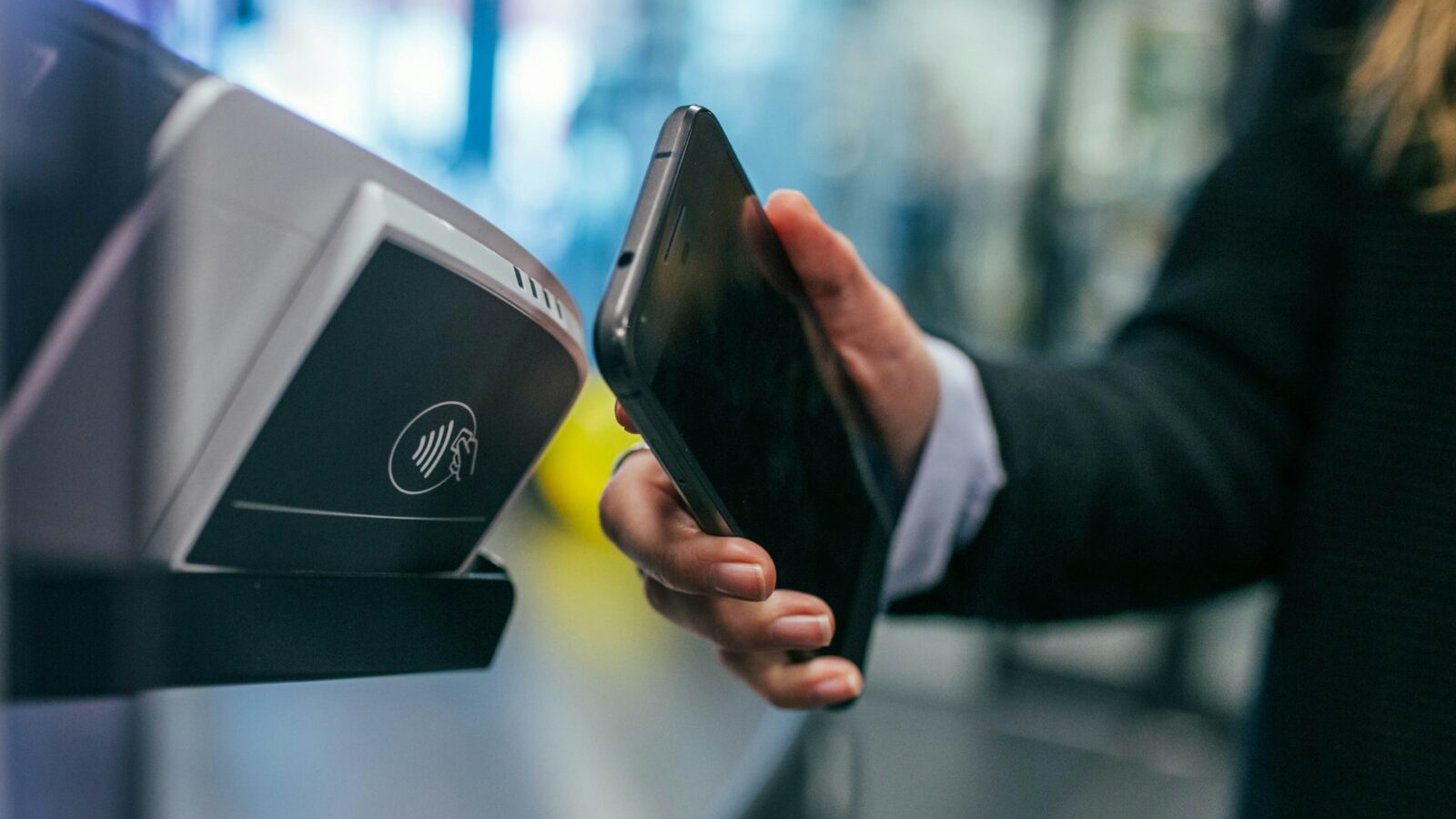
Opening a bank account in Australia as a Chinese passport holder is straightforward. Under anti-money-laundering rules, banks must verify who you are, and your passport is the key document, usually combined with your visa details and an Australian address. If you are moving as a student or skilled migrant, some major banks let you apply online before you leave, and you then finish the identity check at a branch with your passport after you land. Once the account is open, give the bank your tax file number (TFN), or interest may be withheld at the top tax rate.
Moving money in and out also follows clear rules. In China, each person has an annual facilitation quota of USD 50,000 equivalent for buying foreign currency and a separate USD 50,000 quota for converting foreign currency into RMB; larger amounts require supporting documents. On the Australian side, carrying or posting cash of AUD 10,000 or more must be declared to AUSTRAC, while transfers through a bank or registered remitter need no separate declaration. Deposits with locally incorporated banks are protected by the Financial Claims Scheme up to AUD 250,000 per person per institution, but branches of foreign banks are not covered. Below we go through opening an account, choosing a bank, cross-border transfers, everyday payments and scams.
What you need to open an account: identity checks and the “100 points”
The “100-point check” Australians talk about comes from older rules; today each bank sets its own identification checklist under the anti-money-laundering framework. NAB’s published checklist, for example, accepts a single current foreign passport as a primary photographic document. The alternative is a non-photo document such as a birth certificate plus a secondary document showing your address, such as a utility bill or rates notice from the last three months, or a Medicare card. A Chinese passport counts as a primary document, so most people only need their passport and visa.
| Item | Usual requirement | Notes |
|---|---|---|
| Passport | Original, current | Primary photo ID |
| Visa | Electronic visa details | Some banks do not open accounts on short-term visitor visas |
| Australian address | Lease, utility bill, etc. | Usually needed for full online banking |
| Tax details | TFN; Chinese taxpayer ID | The TFN can be added after opening |
Opening an account before you arrive
Take CommBank as an example. As of November 2026, its migrant account can be opened online up to 14 days before you arrive or within 12 months after arriving, but not on visitor visas subclass 600, 601 or 651. After the account is opened you must show your original passport at a branch within 20 days, or the account is closed automatically. Until you are identified you cannot withdraw money or use full online banking. New migrants pay no monthly account fee for the first year; after that, the fee can be waived if you deposit at least AUD 2,000 a month (about RMB 9,375) or meet other criteria. Other major banks offer similar services. For visa types and entry planning, see our Australia visa guide.
- Apply onlineSubmit passport and visa details up to 14 days before arrival
- Get your account numberYou can transfer money in from China, but cannot withdraw yet
- Verify on arrivalVisit a branch with your original passport within 20 days
- Add detailsRegister your Australian address and provide your TFN
- Start using itCollect your debit card, set up online banking and PayID
Tax file numbers and withholding on interest
According to the Australian Taxation Office (ATO), quoting your TFN to a bank is voluntary. But if you don’t quote it or claim an exemption, and the interest on a bank account reaches AUD 120 a year, the bank withholds tax at the top marginal rate plus the Medicare levy. Non-residents follow a different set of rules: you should tell the bank you are a foreign resident and give your overseas address, and interest is then withheld at 10% (countries with a tax treaty with Australia may have different arrangements). If you don’t tell the bank, it may withhold at 47%. When you arrive, apply for a TFN online with the ATO as soon as you can and give it to both your bank and your employer. For job hunting and tax returns, see our guide to working in Australia.
Which bank: the big four and Chinese banks
Retail banking in Australia is dominated by the big four: Commonwealth Bank (CBA), Westpac, ANZ and National Australia Bank (NAB). They have the widest branch and ATM networks. Among Chinese banks, you need to tell two kinds of institution apart. Bank of China (Australia) Limited is on APRA’s list of deposit-taking institutions, which makes it a locally incorporated subsidiary. It offers personal services including transaction accounts, term deposits, an overseas student account, UnionPay dual-currency debit cards and cross-border remittances. ICBC Sydney Branch and China Construction Bank Sydney Branch, by contrast, are branches of foreign banks. Their websites describe mainly corporate, wholesale and trade-finance business, and ICBC also offers private banking for high-net-worth clients.
This difference matters for deposit protection. According to APRA, the Financial Claims Scheme (FCS) covers banks, building societies and credit unions that are incorporated in Australia and authorised by APRA. Each account holder’s Australian-dollar deposits with each licensed institution are protected up to AUD 250,000 in total (about RMB 1.17 million at the Reserve Bank of Australia rate of AUD 1 = RMB 4.6877 on 30 October 2026). Brands that share one banking licence count as a single institution, and neither foreign bank branches nor foreign-currency deposits are covered.
| Institution | Type | Personal retail banking | FCS protection |
|---|---|---|---|
| CBA / Westpac / ANZ / NAB | Locally incorporated banks | Full range | Yes (AUD deposits only) |
| Bank of China (Australia) Limited | Locally incorporated subsidiary | Yes | Yes (AUD deposits only) |
| ICBC Sydney Branch | Foreign bank branch | Mainly corporate | No |
| CCB Sydney Branch | Foreign bank branch | Mainly wholesale | No |
Sending money between China and Australia: rules at both ends
To send money from China to Australia, an individual can buy up to USD 50,000 equivalent of foreign currency a year at a bank with valid ID; amounts above that require supporting documents. To bring Australian income back to China and convert it, there is also a USD 50,000 per person per year conversion quota. You must state the purpose truthfully. See our guide to China’s FX quota and currency exchange.
On the Australian side, transfers through a bank or remitter need no separate report to AUSTRAC. Besides bank wire transfers, many people use fintech services such as Wise, whose fees and rates are usually more transparent. However, AUSTRAC says remittance providers must generally be registered, and you can check a provider on its remittance sector register. A registered provider will always verify your identity; if it doesn’t ask for ID, it is probably unregistered. Operating without registration can bring a fine, up to 7 years in prison, or both, and AUSTRAC warns that money sent through unregistered dealers could end up mixed in activities that harm the community. Avoid underground banks and private “swap” deals.
Everyday payments: PayID and fast transfers
Australia’s New Payments Platform (NPP) launched on 13 February 2018 and settles payments in real time, 24 hours a day, every day of the year. A PayID is a simple identifier, such as a mobile number, email address or ABN, linked to your bank account. When you pay to a PayID you see the payee’s account name, which helps prevent misdirected payments. It is widely used for rental bonds and splitting bills with friends; for renting, see our Australia renting guide.
Scams and large cash declarations
Figures published by the Australian Competition and Consumer Commission (ACCC) in March 2026 show that Australians reported AUD 2.18 billion in scam losses in 2025, up 7.8% on 2024, with investment scams causing the largest losses. The Scams Prevention Framework passed in 2025 requires banks, telcos and digital platforms to act to detect and disrupt scams. Covered businesses must join the Australian Financial Complaints Authority (AFCA) from 1 September 2026, and most obligations, along with AFCA handling scam complaints, start on 31 March 2027. You can report anything suspicious to Scamwatch.
Calls from people posing as Chinese police, prosecutors or the embassy, and “high-return” investment chat groups, all end with a request to transfer money. Hang up on any caller who asks you to transfer money, share a verification code or install remote-access software, and check for yourself.
On cash, AUSTRAC requires you to declare cash and bearer negotiable instruments, such as cheques and traveller’s cheques, worth AUD 10,000 or more in total (about RMB 47,000) when entering or leaving Australia. You declare using the online form before you pass through customs. There is no limit on how much you can carry, but splitting money among family members to stay under the threshold is illegal. China Customs has its own rules on carrying cash in and out, so check them separately before you travel.
Banks and gambling transactions
Since 11 June 2024, Australia has banned using credit cards, credit-linked digital wallets or cryptocurrency to fund online and telephone betting accounts; the ban does not apply to lotteries. Some banks also let customers block gambling transactions themselves in their app. Under the Interactive Gambling Act, offering online casino-style services to people in Australia is illegal, and the regulator ACMA keeps blocking such websites. Gambling is for adults aged 18 and over only. In China, Amendment XI to the Criminal Law added the offence of organising PRC citizens to gamble abroad to Article 303, and SAFE’s personal FX purchase application form states that purchased foreign currency may not be used for gambling. For the legal forms of gambling in Australia and how they are regulated, see Australia gambling laws. This site is for information only; see our disclaimer.
FAQ
Can I open an account without an Australian address?
Some banks let you apply online before you arrive, but full access usually requires an Australian residential address and an identity check at a branch within a set time.
Are deposits with Bank of China (Australia) protected?
It is on APRA’s list of deposit-taking institutions, so its Australian-dollar deposits fall under the Financial Claims Scheme. Deposits with foreign bank branches, and any foreign-currency deposits, are not covered.
Do international students need a TFN?
It is not compulsory, but without one, interest may be withheld at the top tax rate. You also need a TFN to work in Australia.
Can I bring cash to Australia and deposit it?
Yes, but amounts of AUD 10,000 or more must be declared to AUSTRAC, and the bank may ask where the money came from. For more, see our Australia overview.
Sources
- APRA – Types of banking institutions covered under the Financial Claims Scheme (accessed November 2026)
- APRA – Types of accounts covered under the Financial Claims Scheme (accessed November 2026)
- APRA – List of authorised deposit-taking institutions (FCS) (accessed November 2026)
- AUSTRAC – Moving money across international borders (accessed November 2026)
- AUSTRAC – Unregistered remittance service providers (accessed November 2026)
- ATO – Interest, unfranked dividends and royalties (foreign residents) (accessed November 2026)
- ATO – TFN and ABN information for savings accounts and investments (accessed November 2026)
- RBA – Exchange Rates (30 October 2026) (accessed November 2026)
- RBA Bulletin – The New Payments Platform and Fast Settlement Service (2018) (accessed November 2026)
- ACCC – Continued action critical to combat fraud as annual scam losses exceed $2 billion (30 March 2026) (accessed November 2026)
- ACCC – Scams Prevention Framework (accessed November 2026)
- ACMA – Credit ban (online wagering) (accessed November 2026)
- ACMA – Action on interactive gambling: April to June 2024 (accessed November 2026)
- NAB – Identification checklist (bank form, backup source) (accessed November 2026)
- CommBank – Migrant banking (bank page, backup source) (accessed November 2026)
- Bank of China (Australia) – Personal banking (bank page) (accessed November 2026)
- ICBC Sydney Branch – About us (bank page) (accessed November 2026)
- China Construction Bank Sydney Branch – About us (bank page) (accessed November 2026)
- 国家外汇管理局天津市分局 – 2025年外汇管理互联网信息:个人外汇(九) (accessed November 2026)
- 最高人民检察院 – 组织参与国(境)外赌博罪援引规范内含两档刑罚 (accessed November 2026)
- SAFE – Personal FX purchase application form (个人购汇申请书, PDF) (accessed November 2026)