
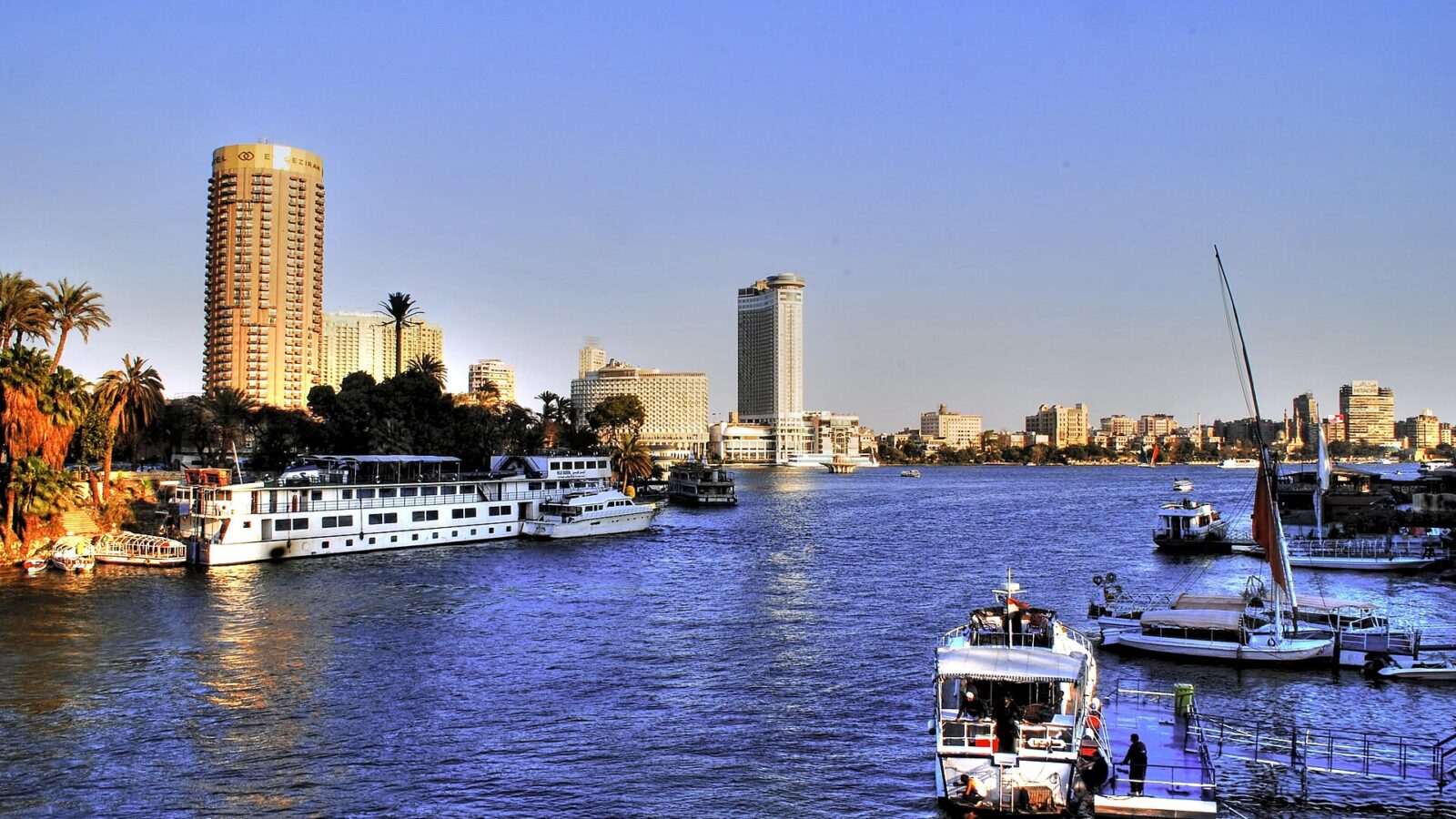
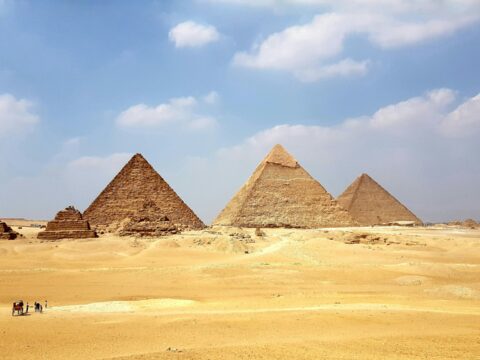

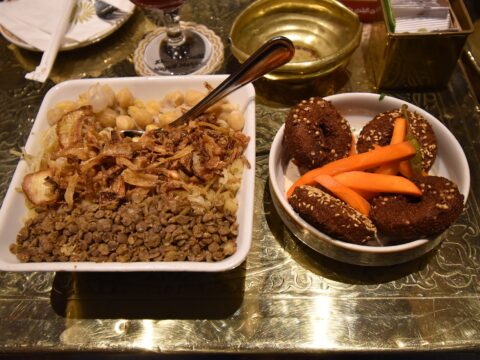
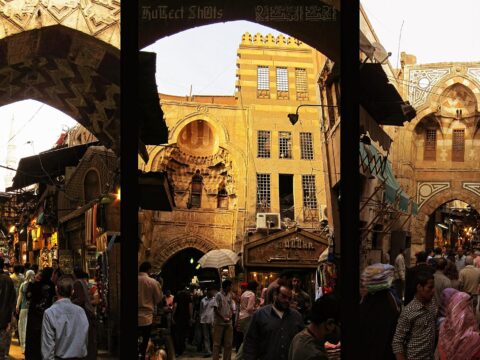
Egypt is one of Africa’s most populous countries, straddles Africa and Asia, and is often the first stop for Chinese companies entering the Middle East and Africa. For people moving from China, relocating to Egypt is rarely about acquiring a new citizenship. More often it is a company posting, setting up a trading or manufacturing business, studying Arabic at a local university, or simply the appeal of a low cost of living.
This guide looks at Egypt from the perspective of a PRC citizen: entry and residence requirements, culture and etiquette, the economy and jobs, everyday costs in Cairo, healthcare and safety, and what life in the Chinese community is really like. It ends with a balanced list of pros and cons. Every figure is dated and sourced; visa and residence rules change often, so always check Egyptian official channels and the Chinese Embassy in Egypt before you go.
Why Egypt
Egypt’s appeal rests on three things. First, location: the Suez Canal links Asian and European shipping, and Egypt sits close to Middle Eastern, African and European markets. Second, the Chinese business cluster: since 2003 more than twenty Chinese car brands have entered the market, with Chery, Geely, Jetour and others assembling locally, and the China–Egypt TEDA Suez Economic and Trade Cooperation Zone has attracted around 200 Chinese and foreign companies. Third, connections: according to MOFCOM’s 2025 country guide, Beijing, Shanghai, Guangzhou, Chengdu, Shenzhen and Hangzhou all have direct flights to Cairo.
Cairo is 6 hours behind Beijing. Egypt reinstated daylight saving time in 2023, so from the last Friday of April to the last Thursday of October the gap is 5 hours. Cairo is very dry, with only about 18 mm of rain a year; average summer highs are 34.2°C and average winter lows 9.7°C.
Culture and etiquette
Islam is the state religion. Muslims, mostly Sunni, make up about 84% of the population; Coptic Christians and others about 16%. Religion shapes daily life far more than in China: Friday is the day of congregational prayer, the weekend is Friday and Saturday, and Sunday is a normal working day. Newcomers from China are often caught out by Sunday meetings and offices closed on Friday.
- Ramadan: Muslims fast during daylight. Foreigners should avoid eating, drinking or smoking in public, and government offices and companies usually work shorter hours, so allow extra time for paperwork.
- Dress: In mosques, old neighbourhoods and government buildings, both men and women should avoid shorts and sleeveless tops; women need to cover their hair in mosques.
- Social life: Egyptians value small talk and personal relationships. Business negotiations move more slowly than in China – build the relationship first, then talk business. Hand things over and eat with your right hand.
- Language: The official language is Arabic, and people speak Egyptian Arabic day to day. English and French are fairly common in big cities and tourist areas, but a few words of Arabic go a long way in government offices, markets and taxis.
Economy and jobs
Egypt has one of Africa’s largest economies but has been through sharp currency devaluation and high inflation in recent years. According to MOFCOM’s 2025 country guide, inflation was 27.5% in fiscal year 2023/24 and eased to 14.9% in 2024/25. World Bank data show GDP growth of about 4.4% in 2025, GDP per capita of about US$3,086 and unemployment of about 6.8% (modeled ILO estimate).
For Chinese movers this means two things. Local wages are very low – Numbeo data as of October 2026 put the average net monthly salary in Cairo at about US$199 – so most Chinese in Egypt earn expatriate salaries from Chinese employers rather than competing in the local job market. And the Egyptian pound is volatile, so it is wise to peg income, rent and contracts to US dollars or renminbi. Jobs are concentrated in Chinese companies (construction, car assembly, textiles, telecoms, renewables), trading firms, Chinese-language teaching and tourism. Foreigners must obtain a work permit before working in Egypt – working on a tourist visa is not allowed.
Cost of living
On Numbeo figures, one person in Cairo spends about US$387 a month excluding rent (around EGP 20,000); add a one-bedroom flat in the centre and the total is roughly US$600. In practice, the new districts Chinese residents favour – New Cairo, Sheikh Zayed – and gated compounds cost well above average, and imported food, international schools and private hospitals are not cheap either. For a detailed breakdown, see Cost of living in Egypt.
Before taking money out of China, check the US$50,000 annual personal foreign-exchange quota and the declaration rules – see Foreign exchange when leaving China. In Egypt, WeChat Pay and Alipay work only at a handful of Chinese-run shops; for daily life you need a local bank card and cash.
Healthcare
Egypt has both public and private healthcare. According to MOFCOM’s 2025 guide, there were 662 public hospitals with 88,427 beds at the end of 2022 and 1,145 private hospitals with 34,470 beds in 2021; life expectancy was 71.5 years in early 2024.
Public hospitals are cheap, but waiting times, equipment and communication are real problems. Foreigners usually use private hospitals and clinics in Cairo and Alexandria, where many doctors speak English. Buy international health insurance that covers Egypt before you leave, bring your regular medicines with English-language prescriptions, and drink bottled water. When choosing a policy, check that it covers emergency evacuation to China.
Chinese community
MOFCOM’s 2025 guide puts the number of Chinese nationals and ethnic Chinese in Egypt at about 8,000, concentrated in Cairo, Alexandria and the Suez Canal Economic Zone. Unlike the trader-dominated communities in South Africa or Nigeria, a large share of Chinese in Egypt are employees of Chinese companies and project staff, alongside traders, restaurant owners and students of Arabic.
The Chinese Embassy is in Zamalek, Cairo, and there is a Consulate General in Alexandria. After arriving, register your details in the “China Consular” (中国领事) app so you can get consular help in an emergency. Chinese business associations, hometown associations and WeChat groups are the fastest way to find housing, interpreters and policy updates.
Visa and residence routes at a glance
Holders of ordinary PRC passports need a visa for Egypt, but the process is simple: apply online in advance on the Ministry of Interior portal visa2egypt.gov.eg, or get a visa on arrival at major airports. Living in Egypt long-term requires a residence permit.
| Route | Who it suits | Key points (October 2026) |
|---|---|---|
| Tourist e-visa | Scouting trips, tourism, family visits | US$30 single entry, US$65 multiple entry; max. 30 days per stay |
| Visa on arrival | Short-notice trips | US$30 since March 2026 according to media reports; digital visa on arrival piloted at Cairo airport since August 2026 |
| Work permit + residence | Staff of Chinese companies, employees of Egyptian firms | Employer applies for the work permit, then residence; usually renewed yearly |
| Investment/business residence | Company founders, shareholders | Requires an Egyptian-registered company meeting investment authority requirements |
| Student residence | University and language-school students | Based on admission and enrolment letters; renewed each academic year |
| Family residence | Spouses and children of residents | Legalised marriage and birth certificates required |
For fees, documents and step-by-step procedures, see the Egypt visa guide.
Preparing before you leave China
For most Chinese people, the “requirements for emigrating to Egypt” are not a separate immigration programme but the conditions for a work, business or student residence permit. The time-consuming part is usually the paperwork at the Chinese end, so tackle it early and in this order:
- Check your passportIt needs at least 6 months’ validity, ideally more than a year for a long stay – renew it in China first if necessary
- Get a police clearance certificateRequired for work and some residence categories; issued by the public security bureau where your hukou or residence is, then notarised
- Legalise degree and family documentsDegree certificates, marriage and birth certificates must be notarised and legalised before they can be used in Egypt
- Arrange money and insurancePlan your foreign-exchange quota and buy health insurance that covers Egypt
- Apply for residence after arrivalEnter on a visa and, while it is still valid, apply for a residence permit with help from your employer or school
Document legalisation is where things most often go wrong; see Apostille and consular legalisation for how to do it.
Safety and security
MOFCOM’s guide notes that public security has improved markedly, with crime rates falling 13.2% in 2021 and 15% in 2022, though rising prices have led to more theft and robbery in some areas. The Chinese Embassy’s consular reminder of March 2026 advises staying away from border areas adjoining conflict zones such as the Sinai Peninsula, avoiding non-essential travel to sensitive areas near the southern Red Sea coast and the Suez Canal, going out in company, limiting night-time travel, and using reputable ride-hailing apps and checking vehicle details.
- Police: 122; Tourist police: 126; Ambulance: 123
- Chinese Embassy consular protection line: +20-2-27363556
- MFA Global Consular Protection and Services Hotline: +86-10-12308
For leisure, some hotels in Cairo and the Red Sea resorts have casinos. Whether gambling is legal locally and how it affects PRC citizens is covered in Gambling laws in Egypt.
Pros and cons
Pros
- Low cost of living: about US$387 a month for one person in Cairo excluding rent (Numbeo, October 2026)
- Many direct flights to China, so trips home are easy
- Strategic location for Middle Eastern, African and European markets
- Strong Chinese business presence – about 200 companies in the TEDA Suez zone – means relatively stable jobs
- Mild, dry winters and a wealth of history and culture
Cons
- Volatile inflation and exchange rate – 27.5% inflation in FY2023/24
- Low local wages make it hard to earn a decent income on the local market
- Arabic is a real barrier, and government offices are slow
- Hot summers, with highs of up to 42°C in the south
- A complex regional situation and security risks in border areas
- Long-term status is usually tied to a job or investment, and naturalisation is hard
FAQ
Is moving to Egypt a good idea?
It depends on where your income comes from. If you earn an expatriate salary, trade between China and Egypt or work for a Chinese company, Egypt’s low costs and easy flights are clear advantages. If you plan to earn a living on the local job market, low wages and high inflation will be a real strain. Do a one- or two-week scouting trip on an e-visa first, and compare other destinations in our guide to moving to Africa.
Do Chinese citizens need a visa for Egypt?
Yes. Ordinary PRC passport holders can apply online for a tourist e-visa (US$30 single entry) or get a visa on arrival at the airport. Working, doing business or studying requires the relevant residence permit.
Can I pay with WeChat Pay or Alipay in Egypt?
Only at a few Chinese restaurants and supermarkets. Day-to-day spending is in cash or on local bank cards, so open a local account soon after arriving – see Banking in Egypt.
Can I get permanent residence in Egypt?
Egypt has no general “green card” like the US or Europe. Foreigners’ long-term residence is usually tied to work, investment, property or family and must be renewed periodically. See Residence permits in Egypt for the categories.
Sources
- MOFCOM, Country (Region) Guide for Foreign Investment and Cooperation: Egypt (2025 edition, Chinese) (accessed October 2026)
- Ministry of Foreign Affairs of the PRC: Egypt country profile (Chinese) (accessed October 2026)
- World Bank: Population, total – Egypt (accessed October 2026)
- World Bank: GDP per capita (current US$) – Egypt (accessed October 2026)
- World Bank: GDP growth (annual %) – Egypt (accessed October 2026)
- World Bank: Unemployment, total (modeled ILO estimate) – Egypt (accessed October 2026)
- Numbeo: Cost of Living in Cairo (accessed October 2026)
- Egypt e-Visa Portal (Ministry of Interior): FAQ (accessed October 2026)
- Chinese Embassy in Egypt: Consular reminder on security precautions (4 March 2026, Chinese) (accessed October 2026)
- Chinese Embassy in Egypt: Egypt introduces digital visa on arrival from 1 August 2026 (Chinese) (accessed October 2026)
- VisasNews: Egypt visa on arrival fee has officially increased (media report, March 2026) (accessed October 2026)
- Ahram Online: Digital visas for a smoother entry to Egypt – US$36 total (Egyptian state media, August 2026) (accessed October 2026)