




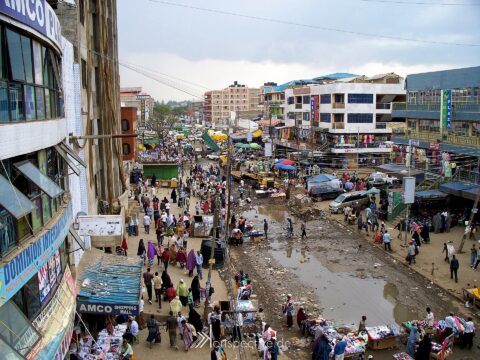
Kenya is the engine of the East African economy, and its capital Nairobi hosts many international organisations, multinationals and regional headquarters. For Chinese people it is one of the most active countries in China–Africa cooperation: Chinese companies helped build landmark projects such as the Mombasa–Nairobi railway and the Nairobi Expressway, bringing in large numbers of engineers, traders, restaurateurs and tourism workers.
This guide looks at Kenya from a PRC citizen’s point of view: the requirements and residence routes for moving there, culture and etiquette, the economy and jobs, the cost of living in Nairobi, healthcare and safety, and what life in the Chinese community is really like. It ends with the pros and cons to help you decide whether moving to Kenya is right for you. Every figure is dated and sourced; immigration rules and fees change, so check the Kenyan Department of Immigration Services and the Chinese Embassy in Kenya before you go.
Why Kenya
Kenya’s first advantage is openness: English is an official language, and government and business documents are mostly in English, which makes it easier to settle in than French- or Arabic-speaking countries. The second is location: Kenya is a member of the East African Community, the port of Mombasa is one of East Africa’s key gateways to the sea, and Nairobi is the region’s aviation and financial hub. The third is the Chinese presence: MOFCOM’s 2025 country guide conservatively estimates more than 50,000 Chinese in Kenya, mainly in Nairobi, Mombasa and Kisumu.
Kenya is on UTC+3, 5 hours behind Beijing, with no daylight saving time. Nairobi sits at high altitude, so temperatures stay roughly between 10 and 26°C all year. The long rains run from March to June and the short rains from October to December, and many Chinese newcomers are surprised by how cool it is on the equator.
Culture and etiquette
Kenya is a multi-ethnic country. Swahili is the national language and, together with English, an official language; ethnic groups also speak their own languages. Christianity dominates: according to MOFCOM’s guide, Protestants make up about 33.4% of the population, Catholics about 20.6% and Evangelicals about 20.4%, while Muslims, about 11%, live mainly on the coast and in the north-east.
- Greetings: exchange pleasantries before getting down to business – going straight to the point can seem rude. A few Swahili words such as “Jambo” (hello) and “Asante” (thank you) go a long way.
- Time: business meetings are usually punctual, but government offices and informal settings move more slowly, so allow plenty of time.
- Photography: ask before photographing people, and do not take photos near government buildings or police and military sites.
- Managing staff: cultural differences between Chinese companies and Kenyan employees are a common source of friction. Knowing local labour law and respecting staff’s religious practices and rest days matters a great deal.
Economy and jobs
World Bank data show GDP growth of about 4.6% in 2025, GDP per capita of about US$2,363 and unemployment of about 5.4% (modeled ILO estimate). Agriculture remains the backbone of the economy, with tea, cut flowers and horticulture the main exports, while services, tourism and the digital economy – mobile money in particular – are growing fast.
China is an important source of foreign investment and a major infrastructure partner for Kenya. The flagship projects listed in MOFCOM’s guide include the Mombasa–Nairobi railway, the 27.1 km Nairobi Expressway, the Lake Turkana wind farm and the Garissa solar plant. Among self-employed Chinese, more than twenty businesses each are in catering and tourism, over a hundred in import-export trade, and dozens in construction contracting and manufacturing.
For Chinese people who want to work in Kenya, the key issue is the work permit. The Department of Immigration Services issues permits in classes A, B, C, D, F, G, I, K and M. Employment falls under Class D, with an issuance fee of KES 500,000 a year; the employer must also show the job could not be filled locally and assign a Kenyan “understudy” to the applicant. All applications are submitted online – see the Department of Immigration Services website.
Cost of living
On Numbeo figures, one person in Nairobi spends about US$579 a month excluding rent; add a one-bedroom flat in the centre and the total is about US$1,000 – clearly more than Cairo. The reasons are imported goods and high prices in expatriate areas: in Kilimani, Lavington and Westlands, where many Chinese live, flats with security and backup power usually rent above average. By contrast, the average net local salary is only about US$478 a month, which shows how far expatriate living standards are from local ones. For a detailed breakdown, see Cost of living in Kenya.
Mobile payments are everywhere in Kenya. Get a local SIM card and a mobile wallet soon after arriving – paying in shops, for taxis and for utilities becomes much easier. Before sending money from China, check your personal foreign-exchange quota and declaration rules in Foreign exchange when leaving China.
Healthcare
According to MOFCOM’s guide, Kenya had 15,984 health facilities and about 116,000 hospital beds in 2024. Malaria is one of the leading causes of death, so before visiting malaria areas such as the coast or around Lake Victoria, consult a travel health clinic in China and take mosquito precautions. There is currently no Chinese medical aid team in Kenya.
Nairobi has several good private hospitals, and foreigners generally use private care, which is expensive. Buy international health insurance that covers Kenya and includes emergency evacuation. Bring your regular medicines with English prescriptions and get the vaccinations your travel health clinic recommends.
Chinese community
There are no exact figures for Chinese in Kenya; MOFCOM conservatively estimates more than 50,000, concentrated in Nairobi, followed by Mombasa and Kisumu. Most are staff of Chinese companies and project workers, alongside many self-employed people in trade, catering, tourism, logistics and manufacturing. Chinese media are active too: CCTV Africa began broadcasting from Nairobi in 2012, and companies such as StarTimes run TV businesses locally.
The Chinese Embassy is in Nairobi; register your details in the “China Consular” (中国领事) app after you arrive. Chinese business associations, hometown associations and WeChat groups are the main channels for housing, hiring and security alerts.
Visa and residence routes at a glance
Since 2024 Kenya has replaced traditional visas with an electronic travel authorisation (eTA) that all travellers, except exempt groups, must obtain online before departure. Ordinary PRC passport holders are not exempt and need an eTA; living in Kenya long-term requires a work permit or another pass.
| Route | Who it suits | Key points (October 2026) |
|---|---|---|
| Electronic travel authorisation (eTA) | Tourism, family visits, business trips | From US$30; usually processed within 3 working days |
| Special Pass | Short-term business or professional work | Up to 6 months; US$200 per month |
| Class D work permit | Employees | KES 500,000 a year issuance fee; a local understudy is required |
| Class G permit | Trade, business, consultancy | Proof of at least US$100,000 in capital |
| Class K permit | “Ordinary residents” with secure foreign income | Aged 35+, at least US$24,000 a year in income |
| Student/Dependant’s Pass | Students; spouses and children of permit holders | Students US$100 a year; dependants from KES 10,000 |
For documents, fees and procedures, see the Kenya visa guide.
Preparing before you leave China
The core of Kenya’s requirements is “permit first, residence second”: whether you are employed, running a business or joining family, you first need the relevant permit or pass approved through the immigration department’s online system. In China, work through the preparation in this order:
- Pick your categoryChoose the permit or pass that matches employment, business, retirement, study or joining family
- Prepare documents in ChinaCertified copies of degree and professional certificates, with non-English documents translated into English; adults in categories such as study also need a police clearance certificate
- Employer or school appliesMaterials are uploaded through the immigration department’s online system and the processing fee is paid
- Get an eTA to enterWhile the permit is pending or once approved, apply for an electronic travel authorisation as required
- Endorsement after arrivalPrint the approved permit and have it endorsed at an immigration office
For obtaining and notarising a police clearance certificate, see our police clearance certificate guide.
Safety and security
According to MOFCOM’s guide, about 101,200 crimes were reported in Kenya in 2024, down 3.5% on the year, but burglary and robbery remain common, and Chinese projects and staff have been targeted. Al-Shabaab is active in the northern areas bordering Somalia, which should be avoided unless essential; in June 2024 Nairobi saw large-scale protests, so stay away from demonstrations.
- Choose housing in gated compounds with security, avoid walking at night and use reputable ride-hailing apps
- Do not show large amounts of cash, phones or cameras on the street
- Call 999 or 112 for police and emergencies, and follow the Chinese Embassy’s safety alerts
Gambling adverts are a common sight in Kenyan cities. Whether gambling is legal locally and how it affects PRC citizens is covered in Gambling laws in Kenya.
Pros and cons
Pros
- English is an official language, so work and paperwork are easier
- Cool climate in Nairobi, roughly 10–26°C all year
- East African hub with access to the East African Community market
- 50,000+ Chinese and many Chinese companies mean good support networks
- Entry only needs an online eTA, and permits can be applied for online
Cons
- Expensive work permits – the Class D issuance fee is KES 500,000 a year
- Employers must prove the job cannot be filled locally and train a Kenyan understudy
- Crime is a serious issue, and northern border areas are high-risk
- Malaria and other tropical diseases; good care is mostly private and costly
- Nairobi is not cheap for expatriates – about US$579 a month excluding rent
FAQ
Is moving to Kenya a good idea?
It suits people with a clear job or business: staff of Chinese companies, traders, and people in construction and tourism have plenty of opportunities, and the English-speaking environment helps. Without a stable income, the high cost of work permits and the security situation make life hard. You can also compare a neighbouring country in Moving to Tanzania.
Do Chinese citizens need a visa for Kenya?
Not a traditional visa, but you must obtain an electronic travel authorisation (eTA) online before departure. It costs from US$30, and the official site recommends applying at least two weeks before travel.
Can I get permanent residence in Kenya?
Yes. According to the Department of Immigration Services, people who have held work permits for at least 7 years and lived in Kenya continuously for the 3 years before applying can apply for permanent residence, together with their spouse and children. See Residence and permanent residence in Kenya.
What do Chinese people in Kenya mostly do?
Mainly construction, manufacturing and telecoms projects for Chinese companies; self-employed Chinese focus on import-export, catering and tourism. For Chinese communities elsewhere on the continent, see our guide to moving to Africa.
Sources
- MOFCOM, Country (Region) Guide for Foreign Investment and Cooperation: Kenya (2025 edition, Chinese) (accessed October 2026)
- World Bank: Population, total – Kenya (accessed October 2026)
- World Bank: GDP per capita (current US$) – Kenya (accessed October 2026)
- World Bank: GDP growth (annual %) – Kenya (accessed October 2026)
- World Bank: Unemployment, total (modeled ILO estimate) – Kenya (accessed October 2026)
- Numbeo: Cost of Living in Nairobi (accessed October 2026)
- Kenya eTA (Department of Immigration Services): FAQs (accessed October 2026)
- Kenya eTA: General information – exemptions, requirements, processing (accessed October 2026)
- Kenya Department of Immigration Services: Work permits (accessed October 2026)
- Kenya Department of Immigration Services: Class D (Employment) (accessed October 2026)
- Kenya Department of Immigration Services: Permanent residence (accessed October 2026)
- Embassy of the PRC in Kenya (Chinese) (accessed October 2026)