
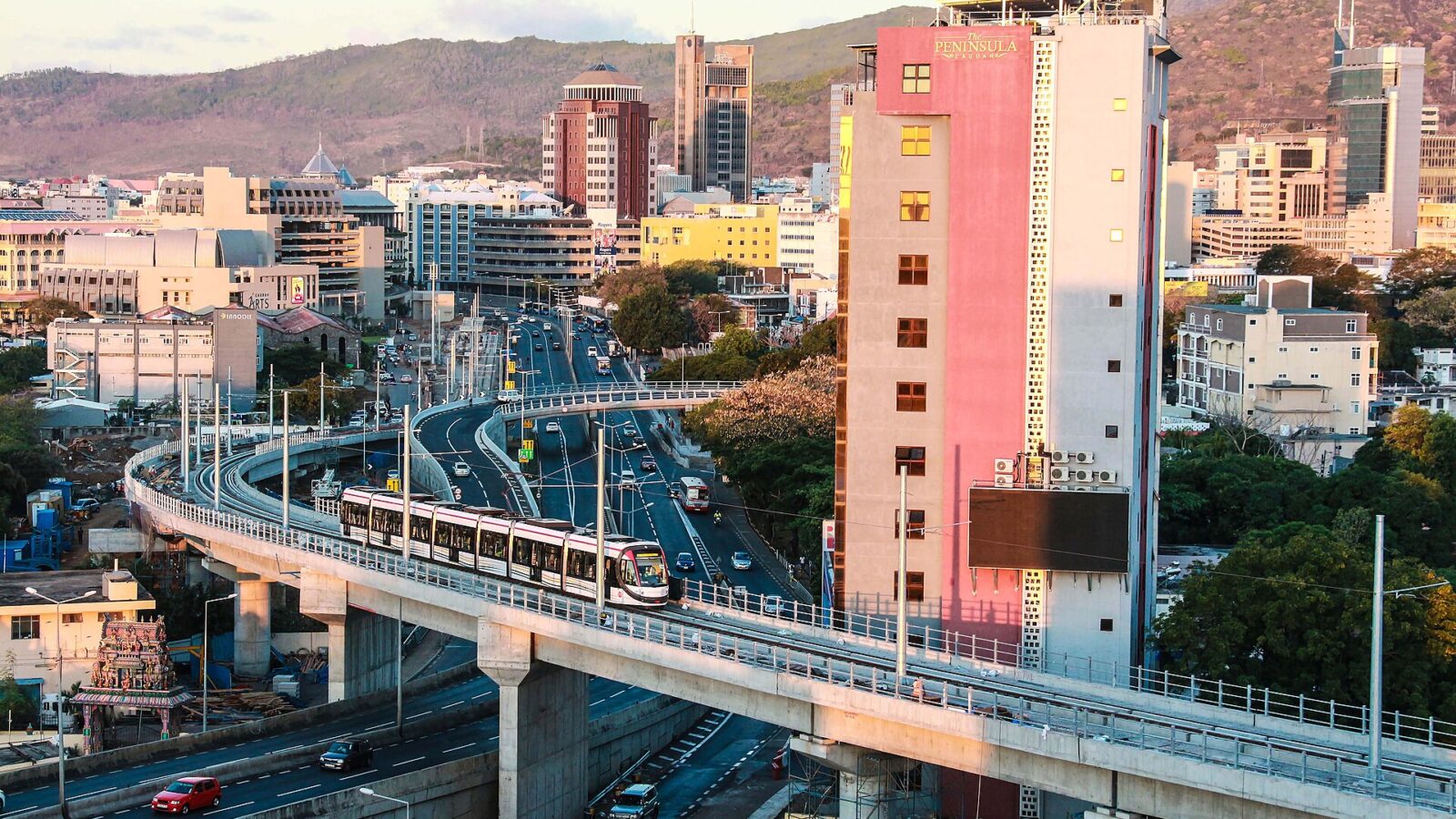


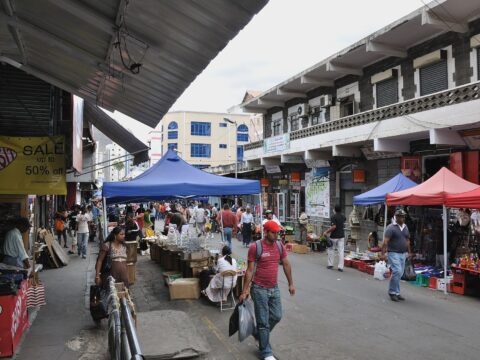
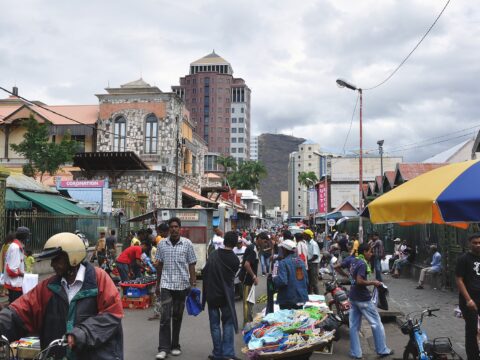
Mauritius is an island nation in the south-western Indian Ocean, with a land area of about 2,040 km² and a population of roughly 1.24 million. Many people in China know it only as a honeymoon and beach destination. If you are seriously thinking about moving abroad, though, it has a few features that are easy to miss: visa-free entry on an ordinary PRC passport, a legal and business system that runs in English, politics that are relatively stable by African standards, and a long-established Chinese community made up mostly of descendants of Hakka migrants from Meizhou.
It is just as important to be realistic: Mauritius is not a “low-threshold immigration country”. There is no general “immigration visa”. Long-term residence almost always runs through a specific scheme – an Occupation Permit, a retirement residence permit or a property-linked permit – and each one comes with income, investment or turnover thresholds. This guide looks at Mauritius from the point of view of someone moving from China: culture, economy, cost of living, healthcare, the Chinese community, residence routes and safety, so you can judge whether a move to Mauritius makes sense for you.
Why choose Mauritius
Mauritius has long been seen as one of Africa’s better places for doing business and for public safety. According to China’s Ministry of Commerce (MOFCOM) Country Investment Guide (2025 edition), Mauritius’s GDP was about USD 14.95 billion in 2024, or roughly USD 11,900 per person – high by African standards. Sugar, textiles and garments, and tourism are the three traditional pillars of the economy, and financial services have become another key sector.
For PRC citizens there is another practical advantage: you can look before you leap. The China–Mauritius mutual visa exemption agreement has been in force since 31 October 2013, so you can enter on an ordinary passport, check housing, schools and the business climate in person, and only then decide whether to apply for long-term residence.
Culture and etiquette
Mauritius is a genuinely multi-ethnic society. The Chinese Ministry of Foreign Affairs country profile puts people of Indian and Pakistani descent at about 69% of the population, Creoles at about 27%, Sino-Mauritians at about 2.3% and people of European descent at about 1.7% (these shares come from older statistics). The MOFCOM guide gives the religious breakdown as roughly 52% Hindu, 30% Christian and 17% Muslim, with a small Buddhist minority.
English is the official language, French is used everywhere, and the language you will hear most in daily life is Mauritian Creole. Laws, government documents and contracts are mainly in English, while French is common in the media and in business. For newcomers from China, being able to work in English is the minimum; some French makes life much easier.
A few differences from home are worth noting. There are many religious festivals, and you should dress modestly and remove your shoes where required when visiting temples and mosques. Government offices and banks run on appointments, paperwork and procedure – the habit of “using connections to speed things up” usually does not work here. The pace of life is slower; business meetings start on time, but decisions can take a while.
Economy and jobs
The Mauritian economy is small but very open. The textile industry once employed large numbers of Chinese contract workers, but the MOFCOM guide says their numbers have “fallen significantly” in recent years, and Chinese-funded companies had about 540 staff in Mauritius in 2024.
Official statistics tell the same story. Data presented by Statistics Mauritius and the labour authorities at a UN migration-statistics workshop in March 2025 showed that of about 2,000 new work permits issued in January 2025, only 7 went to Chinese nationals, against 603 for India, 560 for Nepal and 323 for Bangladesh.
In practice, ordinary manual jobs are no longer open to Chinese applicants. The realistic routes into work are: being hired as a professional by a local or multinational company; investing in your own company or working as self-employed; or being posted by a Chinese company. The thresholds for each permit are set out under “Visa and residence routes” below; for job hunting, employment contracts and pay levels, see Working in Mauritius.
Cost of living
Prices in Mauritius are clearly higher than in most Chinese cities, especially for imported food, cars and electronics. According to Numbeo data updated in October 2026, a single person in Port Louis spends about Rs 26,600 (about USD 560) a month, excluding rent.
Adding these figures up, a single person renting a one-bedroom flat outside the centre should budget roughly Rs 40,000 a month (our estimate). Families also need to factor in international school fees, private health insurance and a car – items that often weigh more on the budget than rent. For detailed rents, supermarket prices and transport costs, see Cost of living in Mauritius.
Healthcare
Mauritius has parallel public and private healthcare. The MOFCOM guide says consultations and hospital stays in public hospitals are free, and that as of 2024 there were about 26 private clinics and hospitals with more than 1,000 beds in total.
Keep in mind that free public care is aimed first at Mauritian residents; what a foreign resident is entitled to depends on their status and the hospital’s rules, and waiting times in public hospitals can be long. Most expatriates use private hospitals and buy commercial health insurance that covers Mauritius. Some complex operations or serious cases may need treatment in another country, so a policy that includes medical evacuation is a good idea. For help choosing cover, see Insurance in Mauritius.
Before leaving China, it is worth having a full medical check-up, taking enough of your regular medicines and carrying prescriptions explained in English. The local ambulance number is 114.
Chinese community
According to the MOFCOM guide, about 20,000 ethnic Chinese live in Mauritius, mostly third- and fourth-generation descendants; around 90% trace their roots to Meixian in Guangdong (Hakka), about three-quarters work in commerce and industry, and most live in the capital Port Louis and the central town of Curepipe. Port Louis has a Chinatown, and there are Chinese-language newspapers and several Chinese associations.
The “old” Sino-Mauritian community and new arrivals from the PRC are, however, two very different groups. Older Sino-Mauritians mostly speak Creole, French and English, and many no longer speak Mandarin. The UN DESA International Migrant Stock 2024 counts about 3,007 residents with PRC citizenship in Mauritius in 2024, down from 8,024 in 2000, mainly because of fewer textile workers. Local media, citing the 2022 census, report that the “Sino-Mauritian” community – counted on the basis of religion – made up about 0.9% of the population, compared with 2.9% in 1972.
For newcomers from China, Chinese associations, restaurants and shops can help, but the community is small and you should not expect it to solve every problem. For associations, Chinese food and Chinese-language services, see The Chinese community in Mauritius.
Visa and residence routes
PRC ordinary passport holders can enter Mauritius visa-free, but visa-free entry is only for tourism, family visits and short business trips – not for work. To live in Mauritius long term you need one of the permits below. Figures are from the Economic Development Board (EDB) residency portal, accessed October 2026:
| Route | For whom | Main conditions | Validity |
|---|---|---|---|
| Visa-free entry | Tourism, family visits, exploratory trips | Valid passport, return ticket, hotel booking, sufficient funds | As stamped on entry; extensions free at the Passport and Immigration Office |
| Occupation Permit – Professional | Employees of local or multinational companies | Basic monthly salary of at least Rs 50,000 (single rate for all sectors since 2026, EDB) | Up to 10 years, depending on the employment contract |
| Occupation Permit – Investor | Shareholder-directors of a Mauritian company | Transfer at least USD 100,000 within 60 days of approval; annual turnover of at least Rs 5 million from year 3 | 10 years, renewable |
| Occupation Permit – Self-Employed | Freelancers and small start-ups | Transfer at least USD 50,000 | 10 years, renewable |
| Retired Non-Citizen Residence Permit | People aged 50 or over | Show funds of at least USD 24,000 or a guaranteed income of at least USD 2,000 a month; clean criminal record | 10 years, renewable |
| Property-linked residence | Buyers in approved schemes | Buy property under PDS and similar schemes for more than USD 375,000 | For as long as you own the property |
| Premium Visa | Remote workers and long-stay visitors | Income and main place of business outside Mauritius; no entry into the local labour market | Up to 1 year, renewable, free |
Official pages do not always agree with each other, so always check the latest notices on residency.mu and from the immigration office before applying. Documents, fees and procedures for each route are covered in our Mauritius visa guide; if you are thinking of buying a home, see Buying property in Mauritius.
Safety and security
The MOFCOM guide describes Mauritius as having “long been one of the African countries with good public security”, but also notes that homicides rose from 26 in 2023 to 35 in 2024. For ordinary residents, the more common risks are burglary and theft.
In a reminder issued on 28 September 2026, the Chinese Embassy in Mauritius advised people to keep documents and valuables safe, carry copies of the passport photo page and entry-stamp page, and never leave bags, phones or cameras in a car. Whale- and dolphin-watching trips should be booked only with licensed agencies or certified boat operators, and off-road 4×4 activities carry a real risk of rollovers. Under Mauritian regulations, swimming or diving with whales is prohibited, as is touching or feeding whales and dolphins.
Useful numbers: police 999 or 112, ambulance 114, fire 115 or 995; Chinese Embassy consular emergency line +230-52522618; Chinese MFA Global Consular Protection and Service hotline +86-10-12308.
Mauritius has licensed casinos. Whether gambling is legal locally and what legal risks PRC citizens may face are covered in Gambling laws in Mauritius.
Pros and cons
Advantages
- Visa-free entry on an ordinary PRC passport, so you can visit before deciding
- Politics and public safety are good by African standards
- English is the official language; laws and business rules are well defined
- Clear residence routes: employment, investment, self-employment, retirement and property
- A long-established Chinese community; Chinese food and goods are easy to find
Challenges
- High prices, especially for imported goods and cars
- A small job market; very few work permits go to Chinese nationals
- Every permit has income, investment or turnover thresholds, and renewals depend on performance
- Limited medical resources on an island; serious cases may need treatment abroad
- Far from China, with little Chinese-language support – daily life needs English or French
FAQ
Do Chinese citizens need a visa for Mauritius?
Not for short tourist, family or business visits. The China–Mauritius mutual visa exemption agreement has been in force since 31 October 2013 and covers ordinary passports. Bring a valid passport, return ticket, hotel booking and proof of funds, and complete the Mauritius All-in-One Travel Digital Form online before arrival. The length of stay is whatever is written on your entry stamp.
What are the requirements to emigrate to Mauritius?
There is no separate “immigration visa”. The usual path is to obtain an Occupation Permit or residence permit, hold it for five consecutive years while meeting the income, turnover or transfer requirements, and then apply for a 20-year Permanent Residence Permit.
Is moving to Mauritius a good idea?
It suits people with some capital who can work in English and want a quiet island life, or who want to use Mauritius as a base for business in Africa. It does not suit people who expect to find an ordinary local job or who want a foreign passport quickly. If you are still comparing destinations, start with our Africa overview and the Madagascar guide.
Can I keep Chinese nationality if I naturalise in Mauritius?
No. China’s Nationality Law does not recognise dual nationality for Chinese citizens; a Chinese citizen who settles abroad and voluntarily acquires a foreign nationality automatically loses Chinese nationality. See Dual nationality and China’s Nationality Law.
Sources
- MOFCOM Country Investment Guide: Mauritius (2025 edition) (accessed October 2026)
- Chinese MFA: List of Agreements on Mutual Visa Exemption (accessed October 2026)
- Chinese Embassy in Mauritius: travel safety reminder (28 Sep 2026) (accessed October 2026)
- Chinese MFA consular notice on entering Mauritius (Apr 2023) (accessed October 2026)
- Mauritius Passport and Immigration Office: Travel Requirements (accessed October 2026)
- UK FCDO: Mauritius entry requirements (accessed October 2026)
- Economic Development Board residency portal (residency.mu) (accessed October 2026)
- residency.mu: Professional Occupation Permit (accessed October 2026)
- residency.mu: Investor Occupation Permit (USD 100,000) (accessed October 2026)
- residency.mu: Self-Employed Occupation Permit (accessed October 2026)
- residency.mu: Retired Non-Citizen Residence Permit (accessed October 2026)
- residency.mu: Property Development Scheme (accessed October 2026)
- residency.mu: Permanent Residence Permit (accessed October 2026)
- residency.mu: Mauritius Premium Visa (accessed October 2026)
- Economic Development Board Mauritius: Occupation Permit (accessed October 2026)
- Economic Development Board Mauritius: Residence Permit (accessed October 2026)
- Numbeo: Cost of Living in Port Louis (accessed October 2026)
- UN DESA International Migrant Stock 2024 (destination and origin) (accessed October 2026)
- allAfrica: “Ile Maurice : Déconstruire le mythe” (Sep 2025) (accessed October 2026)
- Statistics Mauritius / Ministry of Labour: country presentation, UNSD SADC migration workshop (Mar 2025) (accessed October 2026)
- EDB Mauritius newsletter: Occupation Permit criteria after the National Budget reforms (July 2026) (accessed October 2026)