
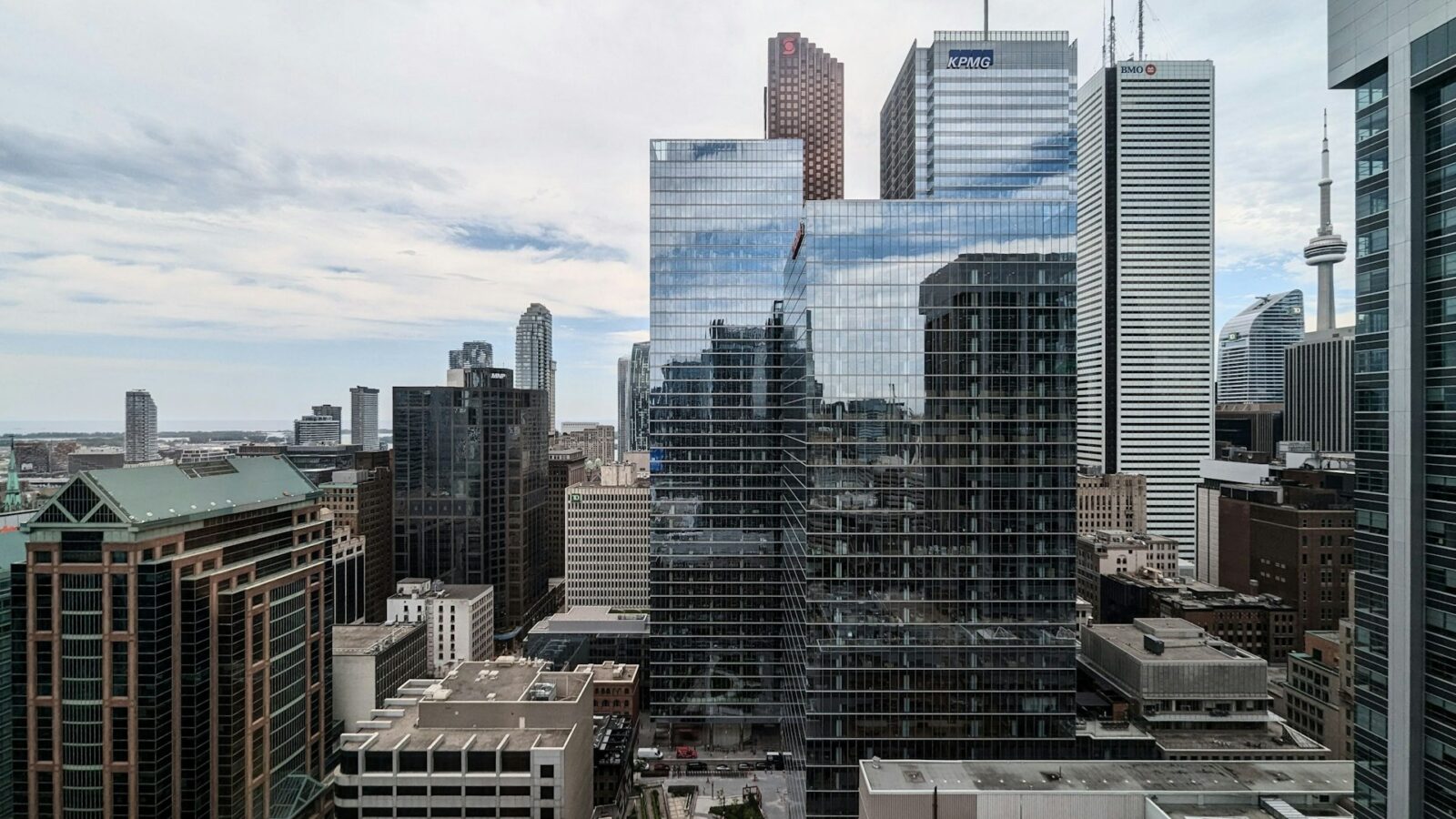
For PRC passport holders arriving in Canada as permanent residents, students or workers, opening a bank account is not hard. When you present acceptable identification, a federally regulated bank must in principle open a personal deposit account for you; it cannot make a job or an opening deposit a precondition. A foreign passport is itself an accepted document, so the real preparation is a second document showing your name together with your address or date of birth.
The harder part is moving money in and out. Each person in mainland China can buy only USD 50,000 worth of foreign currency per year, and that quota may not be used for overseas property, securities and similar purposes. In Canada, financial institutions report international transfers and cash transactions of C$10,000 or more to FINTRAC, the anti-money-laundering agency, and anyone crossing the border with C$10,000 or more in cash must declare it. Rules below are as of October 2026.
What ID you need: the Canadian rules
Under the Bank Act, as explained by the Financial Consumer Agency of Canada (FCAC), a bank must open a retail deposit account when you present either of these combinations:
- Option 1: two original documents from reliable sources, one showing your name and address and the other your name and date of birth.
- Option 2: one original document showing your name and date of birth, plus confirmation of your identity by a customer in good standing with the bank or a person of good standing in your community.
Accepted documents include federal or provincial government ID, foreign passports, government tax assessments or benefit statements, recent Canadian utility bills, and recent bank or credit card statements. Originals only. Non-citizens can open accounts too, but usually need to visit a branch in person.
A bank may refuse only on limited grounds, such as reasonable grounds to believe the account will be used for illegal or fraudulent purposes, knowingly false information, or refusing to let the bank verify your ID, and it must tell you in writing. The Social Insurance Number (SIN) is not on the statutory ID list; banks usually ask for it to report interest, but it does not normally block a basic account. For permit types, see Canada visas and immigration routes.
Opening an account step by step
- Two documentsOriginal passport plus Confirmation of PR, study permit or work permit
- Mailing addressLease, utility bill or temporary address for your card and letters
- Book a branch visitA first account is easiest in person; ask about Chinese-language service
- Choose accountsChequing for daily use, savings for saving; check monthly fees and free transactions
- Activate and updateSet up online banking and Interac e-Transfer; add your SIN and permanent address later
Which bank: the Big Five, Chinese banks and low-cost accounts
Everyday banking in Canada is concentrated in a few banks: RBC, TD, Scotiabank, BMO and CIBC are known as the Big Five, and with National Bank they make up the six largest banks. Every bank operating in Canada is regulated by the Office of the Superintendent of Financial Institutions (OSFI). For the bigger picture of moving to Canada, see the Canada country hub.
Two banks have Chinese parents: Bank of China (Canada) and Industrial and Commercial Bank of China (Canada). Both appear on CDIC’s member list, and both are among the 14 federally regulated institutions offering FCAC’s free and low-cost accounts. They have far fewer branches than the Big Five. In Toronto, Vancouver and other cities with large Chinese communities, many big-bank branches have Mandarin- or Cantonese-speaking staff; ask when you book.
Most large banks run newcomer and student packages, typically a period of waived monthly fees and a credit card available without Canadian credit history. Terms change often; we do not recommend specific products.
There is also a legal floor: since 1 December 2025, 14 federally regulated institutions offer low-cost accounts costing no more than C$4 (about RMB 19) a month with at least 18 debit transactions; newcomers in their first year in Canada qualify for a no-fee version.
Is my money safe? CDIC deposit insurance
The Canada Deposit Insurance Corporation (CDIC) protects eligible deposits at member institutions up to C$100,000 (about RMB 476,000) per category, principal and interest combined. Categories such as deposits in one name, joint deposits, RRSPs, TFSAs and FHSAs are counted separately. Canadian- and foreign-currency deposits are covered; stocks, bonds, mutual funds, ETFs and crypto assets are not. Check your bank on CDIC’s member list.
Sending money from China to Canada: the USD 50,000 quota and SWIFT
China manages individual FX purchases through an annual total of USD 50,000 per person, about C$69,925 (about RMB 333,000) at the Bank of Canada rate of 29 October 2026. SAFE states that purchased FX may not be used for overseas property, securities investment, life insurance or investment-type dividend insurance, which remain closed capital-account items. For how the quota works in practice, see China’s personal FX quota and purchase rules.
Splitting purchases or transfers across relatives’ quotas can put you on SAFE’s watch list for the year of listing plus the following 2 years, during which FX transactions need supporting evidence of the underlying deal.
The usual route is to buy FX at a Chinese bank and send it by SWIFT wire to your own account in Canada, giving the account name, account number, the receiving bank’s SWIFT code and address. A Canadian bank that receives an international transfer of C$10,000 or more (or several within 24 hours that add up to that and share a sender or beneficiary) must report it to FINTRAC within 5 business days. That is the bank’s compliance duty, not a tax, and you do not file anything yourself. If you plan to buy a home, remember the quota cannot be used for overseas property; see buying property in Canada.
Sending money from Canada back to China
Salary and savings can go home by bank SWIFT wire or through an online transfer service. Recipients in China converting FX to RMB also face annual total management.
Fintech services such as Wise usually show the exchange rate and fee separately, which makes comparison easier; some support payouts to Chinese bank cards or e-wallets, per each provider’s own terms. Money services businesses (MSBs) offering transfers in Canada must register with FINTRAC, and you can check a provider in FINTRAC’s MSB Registry. ExitChina has no partnership with any provider. When comparing quotes, use the Bank of Canada daily exchange rates: on 29 October 2026, RMB 1 = C$0.2100, so C$1 is about RMB 4.76.
Tax note: Canadian tax residents whose specified foreign property (including bank deposits in China) has a total cost above C$100,000 at any time in the year must file Form T1135; you are exempt for the year you first become resident. See the Canada tax guide, and compare with the US banking guide.
Cash at the border and large cash deposits: declare on both sides
| Situation | Rule (as of October 2026) | Approx. |
|---|---|---|
| Entering or leaving Canada | Currency and monetary instruments (cheques, bank drafts, stocks, bonds etc.) totalling C$10,000 or more must be declared to CBSA; undeclared funds can be seized and fined | About RMB 47,600 |
| Entering or leaving China: RMB cash | Limit of RMB 20,000 per person per trip | About C$4,200 |
| Entering or leaving China: foreign cash | Entering with more than USD 5,000 requires a written declaration; leaving with more than USD 5,000 requires a permit from a designated bank and a customs declaration | About C$6,990 |
| Large cash at a Canadian bank | C$10,000 or more in one transaction or within 24 hours is reported to FINTRAC | About RMB 47,600 |
Do not split cash into deposits just under C$10,000 to avoid reporting. Suspicious transaction reports have no dollar threshold, and deliberate splitting can itself draw the bank’s attention.
Frozen accounts and source-of-funds checks
Large or frequent cross-border credits, cash deposits and activity that does not match your income can all trigger a bank’s anti-money-laundering review. The bank may ask where the money came from, hold transactions, or in serious cases close the account. Keep these ready:
- FX purchase receipts and wire confirmations from China;
- pay slips, employment contracts and tax records;
- property sale contracts, gift letters and the donor’s proof of funds.
Sending from your own account to your own account is simplest. Never lend your account to others to receive money, and stay away from informal “matched” currency swaps; these carry legal and account risks in both countries.
Gambling money: how banks and the law treat it
Legal gambling in Canada is regulated by each province, and players must meet the provincial minimum age (18 or 19). Banks give gambling money no special treatment: a casino disbursing C$10,000 or more in one transaction or within 24 hours must report it to FINTRAC, and depositing large cash at a bank triggers a large cash transaction report. According to the CRA, casual winnings such as lottery prizes generally do not have to be reported or taxed, but interest earned on invested winnings is taxable, and winnings that amount to business income are a different matter. For PRC citizens, the personal FX quota should not be used for overseas gambling, and Article 303 of China’s Criminal Law targets organising gambling and organising or recruiting PRC citizens to gamble abroad. Provincial rules and compliance points are in our Canada gambling regulation guide.
FAQ
Can a student without a SIN open an account?
Yes. The SIN is not on the statutory ID list, and a passport plus study permit is usually enough. Give the bank your SIN later if you start working or earning interest.
How much can my parents in China send me each year?
Each parent has their own USD 50,000 annual FX purchase quota, usable for current-account purposes such as study abroad. Where genuine needs like tuition exceed the quota, the bank will ask for supporting documents; follow the bank’s and SAFE’s requirements.
Sources
- FCAC – Opening a bank account (accessed October 2026)
- FCAC – Opening a personal bank account: your rights (accessed October 2026)
- FCAC – Access to basic banking services: opening a retail deposit account (accessed October 2026)
- FCAC – Opening a low-cost or no-cost bank account (accessed October 2026)
- FCAC – Free and low-cost bank accounts (news release, Nov 2025) (accessed October 2026)
- OSFI – Banks (accessed October 2026)
- CDIC – What we cover (accessed October 2026)
- CDIC – Protecting your deposits (brochure) (accessed October 2026)
- CDIC – List of member institutions (accessed October 2026)
- FINTRAC – Reporting electronic funds transfers (accessed October 2026)
- FINTRAC – Financial transactions reported to FINTRAC (accessed October 2026)
- FINTRAC – Money Services Business Registry (accessed October 2026)
- CBSA – Travelling with CAN$10,000 or more (accessed October 2026)
- CRA – Amounts that are not reported or taxed (accessed October 2026)
- CRA – Questions and answers about Form T1135 (accessed October 2026)
- Bank of Canada – Daily exchange rates (accessed October 2026)
- 国家外汇管理局北京外汇管理部 – 个人外汇业务问答 (accessed October 2026)
- 国家外汇管理局 – 关于进一步完善个人外汇管理有关问题的通知 (accessed October 2026)
- 中国驻贝尔法斯特总领事馆 – 携带现金、物品出入境须合规 (accessed October 2026)