

Tanzania sits on the Indian Ocean coast of East Africa, bordered by Kenya and Uganda to the north and Zambia to the southwest. It is home to Mount Kilimanjaro, the Serengeti and the Zanzibar archipelago. For people from China it is a familiar name: the TAZARA railway, built with Chinese aid in the 1970s, is still a symbol of the relationship, and today close to a thousand Chinese-invested companies are registered in the country. Around 30,000 Chinese live there, most of them in Dar es Salaam, the largest city.
Moving from China to Tanzania is nothing like moving to Europe, North America or Southeast Asia, though. There is no property-for-residency scheme and no points-based permanent residence for ordinary foreigners; long-term stays depend on a work, investment or study permit. Health care is stretched, malaria is common, and in the neighbourhoods where expatriates live the cost of living is higher than many people expect. This guide looks at Tanzania from the point of view of a PRC passport holder: what to prepare before you go, what you will face after you land, and whether the move makes sense for you.
Why Tanzania: an overview
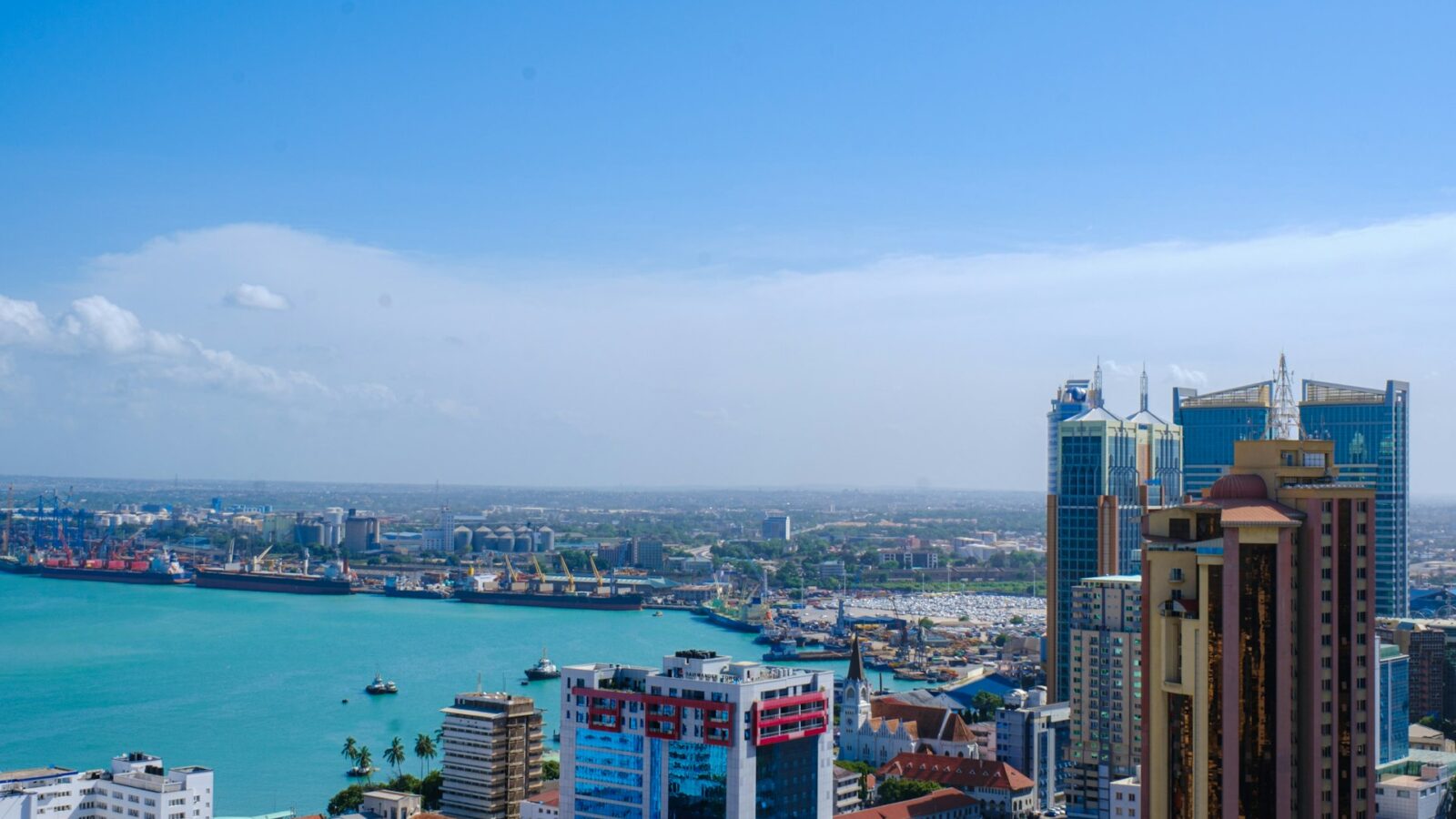
Tanzania was formed in 1964 from mainland Tanganyika and Zanzibar. The official capital is Dodoma, where the State House and most ministries have moved; Dar es Salaam remains the commercial centre, the main port and home to most foreign embassies. According to China’s Ministry of Commerce (MOFCOM) country guide for Tanzania (2025 edition), the population was about 69.57 million in February 2025. GDP reached about US$78.78 billion in 2024, growing 5.5%, or roughly US$1,120 per person.
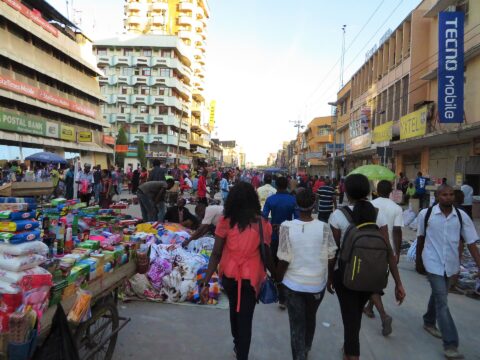
Chinese newcomers are drawn by three kinds of opportunity: construction and infrastructure contracts; wholesale trade centred on the Kariakoo market in Dar es Salaam, with goods re-exported to landlocked neighbours; and investment in manufacturing, mining and agriculture. Tanzania belongs to both the East African Community (EAC) and the Southern African Development Community (SADC), so it serves as a gateway to Zambia, the DR Congo, Uganda, Rwanda and beyond.
Culture and etiquette
Swahili is the national language and, with English, an official language. Government documents, contracts and business correspondence are mostly in English, but a few words of Swahili go a long way in markets, on the street and with local staff: “Habari” (hello), “Asante” (thank you) and “Shikamoo”, the respectful greeting for elders.
According to the MOFCOM guide, about 61.4% of mainland residents are Christian and 35.2% Muslim, while more than 95% of Zanzibar’s population is Muslim. Dress modestly in Zanzibar and coastal towns, and avoid eating or drinking in public during Ramadan.
- Greet people and exchange pleasantries before getting down to business; jumping straight to prices or tasks comes across as rude.
- Hand things over and shake hands with your right hand, and show respect to elders and officials.
- Ask before photographing people, and never photograph government buildings, police or military sites, or airports.
- Life moves more slowly than in China – people say “pole pole” (slowly, slowly). Build in extra time for paperwork and meetings rather than pushing for Chinese-style speed.
Another big difference from home is how things get done: permits, tax and customs all go through formal procedures. Any kind of “facilitation payment” carries serious legal risk in Tanzania, and newcomers should be especially wary of middlemen who claim connections that can speed things up.
Economy and jobs
Agriculture is the backbone of the economy, accounting for about 26.3% of GDP in 2024. The country has rich deposits of gold and natural gas, and tourism is one of its main sources of foreign exchange. Citing the World Bank, the MOFCOM guide puts 2024 inflation at 3.1%, a relatively stable macro picture.
For Chinese nationals there are three realistic ways to make a living:
- Posting by a Chinese company: the most common route, especially in construction, telecoms and manufacturing. The employer usually handles the work and residence permits. The MOFCOM guide counts about 4,000 staff at Chinese companies, mostly in contracting.
- Investing or running a business: Chinese investors are active in trade, building materials, ceramics, plastics and agro-processing, but you must register a company properly and apply for permits as an investor.
- Working for a local or third-country employer: the employer must show the labour authorities that no Tanzanian can fill the job, so this route suits people with specialist skills.
Note that Tanzania restricts foreigners from some small-scale retail and service businesses, and the rules have changed in recent years. Trading without the right licence is one of the most common legal problems Chinese residents run into.
Cost of living
Prices in Dar es Salaam are polarised. Fresh produce and staples at local markets are cheap, but imported goods, rents in expatriate districts such as Masaki and Oyster Bay, and international school fees are not. According to Numbeo data updated in October 2026, a single person spends about TSh 1.235 million (about US$468) a month excluding rent.
The same source puts the average net monthly salary at about TSh 740,000, a meal at an inexpensive restaurant at TSh 5,000 and petrol at about TSh 3,678 a litre. For security reasons most expatriates rent in gated compounds or guarded apartment blocks, so real rents are often above the averages shown.
Check China’s rules before moving money: individuals have an annual foreign-exchange purchase quota equivalent to US$50,000, and larger investments must go through official outbound-investment channels. See our guide to forex and moving money out of China (read it here). Once in Tanzania, open a bank account early rather than relying on private money changers.
Health care
The MOFCOM guide notes that Tanzania nominally provides free universal health care, but hospital drug supplies are limited and many medicines must be bought privately at pharmacies. There is roughly one doctor per 64,000 people, far below the WHO recommendation of 1:10,000. The country has about 3,600 public and 2,000 private health facilities, and Muhimbili National Hospital in Dar es Salaam is the main public referral hospital.
Malaria is the main health risk, followed by HIV (the guide gives an adult prevalence of 4.4%) and water-borne gastrointestinal illness. Expatriates generally use private hospitals and clinics; serious cases are often referred to Nairobi, South Africa or back to China. International health insurance with medical evacuation cover is therefore close to essential – do not rely on your Chinese medical insurance.
If you develop a fever, chills or headache, get a malaria test at a proper hospital straight away; do not treat it as a cold. Also, the Tanzanian Embassy in Beijing asks visa applicants for an original yellow fever vaccination certificate (the “little yellow book”), which you can get at international travel health centres across China.
Chinese community
The figure of “about 30,000 Chinese” comes from the 2025 MOFCOM guide, but it has barely changed for years and the real number is hard to pin down. The China Africa Research Initiative (CARI) at Johns Hopkins counted 4,279 Chinese contract and labour-service workers in Tanzania at the end of 2024; most of the rest are traders, factory owners and their families.
The community is concentrated in Dar es Salaam, followed by Zanzibar, Arusha, Mwanza and Dodoma. Active organisations include the Tanzania Chinese Chamber of Commerce and the Association of Chinese Enterprises in Tanzania. China has an embassy in Dar es Salaam and a consulate-general in Zanzibar. Chinese restaurants, supermarkets and Chinese-run hardware shops are mostly in Dar es Salaam. For associations, chambers and everyday resources, see our guide to the Chinese community in Tanzania (read it here).
Most newcomers find flats, used cars and currency exchange through WeChat groups. They are useful but uneven: anyone offering to “arrange permits”, buy shillings at a premium or “guarantee a visa” should be checked out before you hand over money or documents.
Visas and residence routes
PRC ordinary passport holders need a visa for Tanzania. China is not on the “referral visa” list, so you can apply online through the Immigration Department’s official e-visa system or through the Tanzanian Embassy in Beijing. Long-term residence depends mainly on three classes of residence permit:
| Route | For | Main requirement | Notes |
|---|---|---|---|
| Ordinary (tourist) visa | Tourism, visiting friends and family | Return ticket, itinerary or invitation | e-visa US$50, up to 90 days, no work |
| Business visa | Short trips, meetings, negotiations | Invitation and company documents from a Tanzanian firm | Not a substitute for a work permit |
| Residence permit Class A | Investors, self-employed | Legally established, invested business in Tanzania | Needs a matching work permit |
| Residence permit Class B | Employed foreign professionals | Employer applies and shows a foreigner is needed | Most common long-term route for Chinese staff |
| Residence permit Class C | Students, researchers, missionaries, volunteers, retirees and others | Letter from school or institution | Tied to the specific activity |
For documents, fees and where to apply for each visa, see our Tanzania visa guide (read it here). Apply online only through the Immigration Department’s official portal (eservices.immigration.go.tz), not through third-party sites that add a mark-up.
Safety and security
The MOFCOM guide’s assessment is that security is generally acceptable but crime has been rising in recent years, with theft and robbery not uncommon. Since 2020, militants from northern Mozambique have carried out several cross-border attacks in Tanzania’s southern Mtwara region.
- Do not walk alone at night, and keep phones, cash and jewellery out of sight on the street.
- Use licensed ride-hailing services or drivers you know, with doors and windows locked.
- Live in a gated, guarded compound; keep your passport somewhere safe and carry a copy.
- Large cash transactions are risky – use bank transfers wherever you can.
In an emergency, call 112 for the police and contact the Chinese Embassy in Tanzania or the Chinese foreign ministry’s 24-hour consular protection hotline (+86-10-12308). On the leisure side, if you want to know whether local casinos and sports betting are legal and what that means for Chinese citizens, see our guide to gambling laws in Tanzania (read it here).
Pros and cons
Pros
- An established Chinese community and many Chinese companies, with opportunities concentrated in construction, trade and manufacturing.
- A gateway to East Africa, with a port serving several landlocked countries.
- Friendly relations with China and broadly stable politics.
- China is not on the referral list, so short-term visas can be obtained online.
- Pleasant climate in highland cities such as Arusha, and world-class tourism.
Cons
- No property-for-residency or points-based permanent residence for ordinary foreigners.
- Limited health care and a constant malaria risk.
- Sector restrictions on foreign-run businesses, and permit rules that change.
- Higher risk of theft and robbery than in China, which means extra spending on security.
- Rents and school fees in expatriate areas are high: “Africa is cheap” is only half true.
FAQ
Is moving to Tanzania a good idea?
It depends on why you are going. With a posting from a Chinese company, or a clear business plan in trade or manufacturing, Tanzania is a relatively stable East African option with a mature Chinese network. If you are after top-quality health care, schooling for your children or a “stronger passport”, Tanzania is not the right choice.
What are the requirements to move to Tanzania?
There is no separate “immigrant visa”. Foreigners normally obtain a residence permit for work (Class B), investment (Class A) or study and similar activities (Class C) and renew it on schedule. Whether you can naturalise after long residence depends on Tanzania’s citizenship law; remember that China does not recognise dual nationality, and taking a foreign nationality means automatically losing Chinese nationality.
How does Tanzania compare with its neighbours?
Compared with neighbouring Zambia, Tanzania has a seaport and a bigger market but requires a visa; Zambia currently lets PRC ordinary passport holders in visa-free and has more mining-related opportunities. For a comparison, see our Zambia guide (read it here), or compare countries side by side in our Africa overview (read it here).
Is Tanzania safe for Chinese residents?
Most Chinese residents live without serious incident, but burglaries and street robberies targeting foreigners do happen. Choosing secure housing, handling less cash and complying with local law – especially work and business licences – are the three most effective ways to reduce risk.
Sources
- 对外投资合作国别(地区)指南:坦桑尼亚(2025年版),商务部 (accessed October 2026)
- Cost of Living in Dar es Salaam, Numbeo (updated October 2026) (accessed October 2026)
- Visa Information, Embassy of the United Republic of Tanzania in Beijing (accessed October 2026)
- Visa Guidelines, Tanzania Immigration Department e-Services (accessed October 2026)
- 中华人民共和国驻坦桑尼亚联合共和国大使馆 (accessed October 2026)
- Data: Chinese Workers in Africa, China Africa Research Initiative (SAIS-CARI) (accessed October 2026)
- Tanzania: Visas & Permits, G-P Globalpedia (employer-of-record firm; backup source) (accessed October 2026)
- List of emergency telephone numbers, Wikipedia (backup source) (accessed October 2026)
- Residence and Work Permits Class A, B and C, Embassy of the United Republic of Tanzania in Beijing (accessed October 2026)