


Zambia is a landlocked country in southern Africa, bordered by eight countries including Tanzania, the DR Congo, Angola and Zimbabwe, and home to Victoria Falls and the Zambezi River. Chinese readers know it for two things. One is the TAZARA railway, built with Chinese aid in the 1970s to link Zambia’s Copperbelt with Tanzania’s ports. The other is copper: Zambia is Africa’s second-largest copper producer after the DR Congo, and Chinese companies have been active in its mining, smelting and infrastructure for decades.
Zambia also offers PRC citizens a practical advantage: according to the list published by Zambia’s Department of Immigration, Chinese citizens can currently enter Zambia without a visa. Visa-free entry only covers short visits, though. To live, work or do business long term you still need an employment permit, an investor’s permit or another residence status, and the fees are significant. This guide looks at the requirements, cost of living, health care, Chinese community and safety risks from the point of view of a PRC passport holder, to help you judge whether the move is right for you.
Why Zambia: an overview
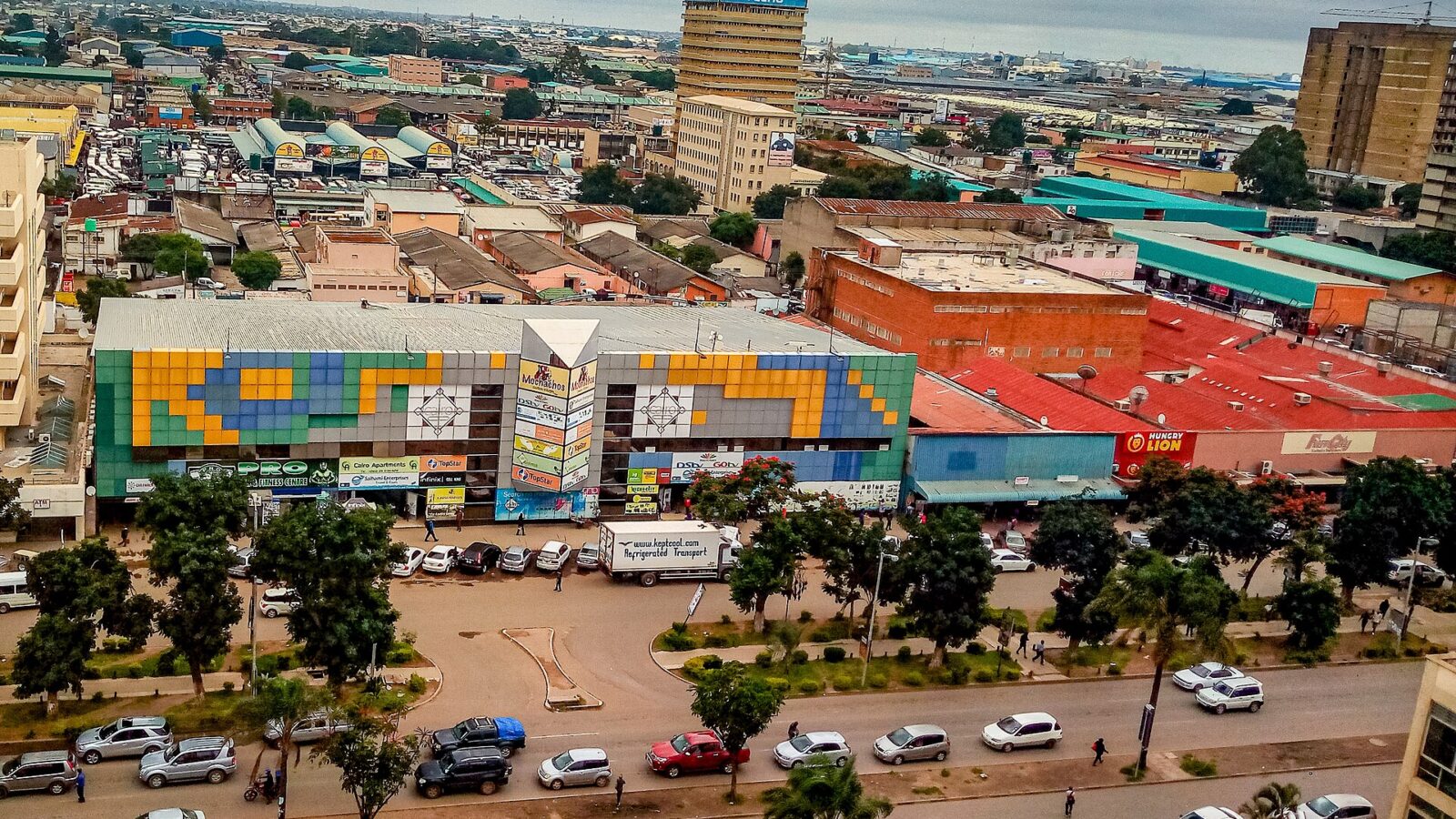
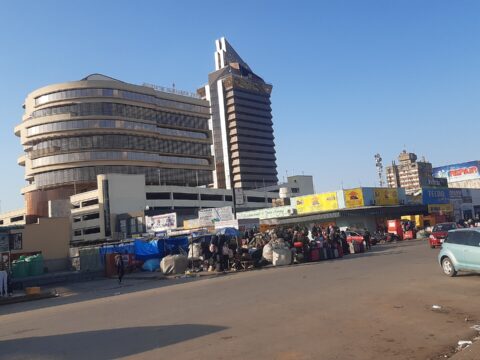
The capital, Lusaka, is the political and commercial centre; the Copperbelt in the north (Kitwe, Ndola, Chambishi and other towns) is the mining heartland. According to China’s Ministry of Commerce (MOFCOM) country guide for Zambia (2025 edition), the population is about 20.57 million (census data cited for 2023) and growing 2.75% a year. GDP was about US$24.48 billion in 2024, with real growth of 4%, or about US$1,257 per person. Copper reserves of about 21 million tonnes rank tenth in the world.
Most Chinese who come to Zambia are tied to one of three sectors: copper mining and the smelting, transport and equipment services around it; construction contracts for roads, power stations and housing; and trade, building materials, restaurants and farming in Lusaka. China–Zambia Economic and Trade Cooperation Zones in Chambishi and Lusaka also host a cluster of Chinese manufacturers and processors.
Culture and etiquette
English is Zambia’s official language and is used across government, the courts, schools and business – a real advantage for Chinese newcomers compared with many French-speaking African countries. The country has dozens of local languages: Nyanja is common in Lusaka, while Bemba dominates the Copperbelt.
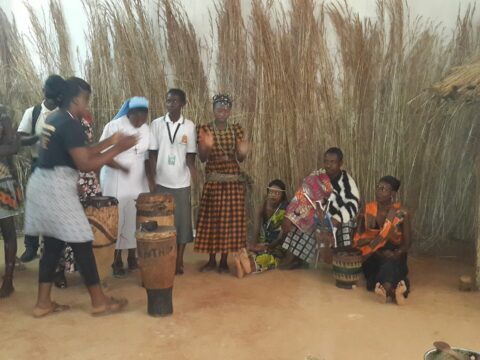
Zambia’s constitution declares it a Christian nation, and the MOFCOM guide says about 80% of people are Protestant or Catholic; Sunday church is a fixed part of life for many families. A few social norms differ sharply from China:
- Greetings matter. Ask how someone is and how their family is before getting down to business; people often bow slightly or clasp hands with both hands to show respect to elders and superiors.
- Give and receive things with your right hand, or support your right elbow with your left hand as a sign of courtesy.
- Criticising or shouting at staff in public is seen as a serious insult, and this kind of conflict has triggered labour disputes at a number of Chinese companies.
- Be careful when discussing politics or ethnicity, especially around elections.
Labour law and trade unions also carry more weight in Zambia than in China. Local staff must have written contracts and statutory social security contributions, and overtime and dismissals follow set procedures – you cannot simply import factory management habits from home.
Economy and jobs
Copper is the lifeblood of Zambia’s economy and earns most of its foreign exchange, which also makes growth sensitive to the global copper price. The MOFCOM guide notes that the severe drought of 2024 hit farming and hydropower, with knock-on effects on security and living standards.
For Chinese nationals the common ways to make a living are:
- Posting by a Chinese company: mining, construction and manufacturing firms send the most staff and handle employment permits. The China Africa Research Initiative (CARI) at Johns Hopkins counted 3,291 Chinese contract and labour-service workers in Zambia at the end of 2024, well down from 8,906 in 2019.
- Investing in a business: setting up a company on an investor’s permit in trade, building materials, farming, catering and similar fields.
- Working for another employer: the employer applies for an employment permit and must show that the job needs a foreign national.
Foreign involvement in small-scale trade is a sensitive topic in Zambia, and foreign traders have faced inspections and public pressure more than once. Before starting a business, get clear on company registration, tax and sector rules – see our guide to doing business in Zambia (read it here).
Cost of living
Lusaka is mid-to-low cost by southern African standards, but imported goods, cars and rents in expatriate areas are not cheap. According to Numbeo data updated in October 2026, a single person spends about K12,761 (about US$642) a month excluding rent.
The same source puts the average net monthly salary at about K6,276, a meal at an inexpensive restaurant at K110 and petrol at about K30 a litre. Dry-season power cuts (“load-shedding”) have been common in recent years, and many households and shops need a generator or solar system – a cost newcomers from China often overlook.
Before moving money from China, check the annual US$50,000-equivalent forex purchase quota for individuals and the outbound-investment filing rules. Once in Zambia, open an account with a regulated bank early rather than relying on informal money changers. For local accounts, transfers and Chinese banks in Zambia, see our Zambia banking guide (read it here).
Health care
Health resources in Zambia are very stretched. The MOFCOM guide lists 6 tertiary, 19 secondary and 80 primary hospitals plus 4 specialist hospitals, and about 700 doctors nationwide against a need of about 2,300. Health spending in 2024 was K20.9 billion, or 11.8% of the budget. Malaria, HIV and tuberculosis are the most common diseases.
Expatriates generally use private hospitals and clinics in Lusaka, and complex surgery or serious illness is usually referred to South Africa or back to China. China has sent medical teams to Zambia since the 1970s – the 25th team was serving by 2025 – but they mainly work in local public hospitals and are no substitute for insurance. International health insurance with medical evacuation cover is the single most important thing to arrange before you go.
Malaria is present throughout Zambia, especially in the rainy season (December to April). See a doctor and get tested at once if you have a fever rather than self-medicating, and use window screens, bed nets and repellent at home.
Chinese community
How many Chinese live in Zambia has long been disputed. The “80,000 or even 100,000” figure that circulates online goes back to political claims during Zambia’s 2006 election campaign and is not reliable. The most solid official figure is 19,845 Chinese residents, reported by the Ministry of Home Affairs to Parliament in 2014. Given the fall in Chinese contract workers and growth in private traders since then, we estimate the community at roughly 15,000–30,000 today; treat this as a rough guide only.
Chinese residents are concentrated in Lusaka and the Copperbelt mining towns of Kitwe, Ndola and Chambishi. The MOFCOM guide notes that Chinese people tend to live close together in the main cities and have formed their own communities and hometown associations; the China Chamber of Commerce in Zambia is among the most active organisations. The Chinese Embassy is in Lusaka and in recent years has held legal-awareness sessions for the community and offered “green channel” services for passports and other travel documents. For associations, shops and everyday resources, see our guide to the Chinese community in Zambia (read it here).
Visas and residence routes
Chinese citizens can make short visits to Zambia visa-free under Statutory Instrument No. 69 of 2022, which added China to the list of countries exempt from visa application requirements and visa fees; in October 2026 the Chinese Embassy in Zambia likewise referred to “Zambia’s current visa-free policy for China” and stressed that it does not cover work. According to the Department of Immigration, ordinary visitors, business visitors and tourists may stay up to 90 days free of charge in any 12-month period, though not necessarily all at once. Long-term residence requires one of the following permits:
| Route | For | Main requirement | Issue fee (2024 schedule) |
|---|---|---|---|
| Visa-free entry | Tourism, business visits, family visits | Return air ticket; overland arrivals need enough funds | Free; up to 90 days in 12 months |
| Temporary employment permit | Business visitors staying over 30 days | Documents from the host organisation | K18,000; up to 6 months in 12 months |
| Employment permit | Foreign employees working more than 6 months | Job offer and employer documents | K24,000; extendable up to 10 years |
| Investor’s permit | People over 18 investing in, setting up or joining a business | Investment and company documents | K16,000 |
| Study permit | Full- or part-time students | Admission documents | K9,000 |
| Residence permit (permanent) | 10+ years on an employment permit, 3+ years on an investor’s permit, 5+ years on a spouse permit, or retirees with secure income | Continuous lawful residence or pension proof | K20,000 |
For documents and procedures for each visa and permit, see our Zambia visa guide (read it here). Permit applications are submitted through the e-services platform linked from the Department of Immigration’s official website (zambiaimmigration.gov.zm).
Safety and security
The MOFCOM guide’s assessment is that Zambia is politically stable overall and had seen no terrorist attacks as of the end of June 2025, but theft and armed robbery are not uncommon. Security worsened after the 2024 drought, and instability in the neighbouring DR Congo poses a risk along the northern border.
- Do not keep large amounts of cash at home or in your shop – it is the main reason Chinese-run businesses are targeted.
- Avoid driving at night, and take extra care near the Copperbelt’s border with the DR Congo.
- Choose housing with guards, walls and alarms, and use a reputable security company.
- Handle labour disputes through legal channels; if a conflict escalates, call the police and contact the embassy.
In an emergency, call 999 for the police (112 from mobile phones) and contact the Chinese Embassy in Zambia or the Chinese foreign ministry’s 24-hour consular protection hotline (+86-10-12308). For leisure, Lusaka has casinos and sports betting shops; to find out whether they are legal and what that means for Chinese citizens, see our guide to gambling laws in Zambia (read it here).
Pros and cons
Pros
- Visa-free short visits for Chinese citizens make scouting trips cheap.
- English is the official language, which makes paperwork and communication easier.
- Copper mining, infrastructure and the cooperation zones create a concentration of Chinese-linked jobs.
- Broadly stable politics and long-standing ties with China.
- A highland climate averaging 18–20°C, cooler than many expect.
Cons
- High fees for employment and investor’s permits (K16,000–24,000).
- A severe shortage of doctors; serious illness often means treatment abroad.
- An economy tied to copper prices, a volatile kwacha and frequent dry-season power cuts.
- Armed robbery and other violent crime occur, and Chinese-run businesses are among the targets.
- Landlocked, so imports are expensive and logistics slow.
FAQ
Is moving to Zambia a good idea?
It suits people with a concrete job or investment opportunity in mining, construction or trade. If your priorities are children’s education, health care and long-term welfare, Zambia’s options are limited and you should be ready to rely on South Africa or China for medical care and on international schools.
What are the requirements to move to Zambia?
There is no “immigrant visa”. Long-term residence starts with an employment permit or an investor’s permit. After 3 years on an investor’s permit or 10 years on an employment permit you can apply for a residence permit, which gives permanent residence; retirees with a secure pension or annuity can also apply.
Zambia or Tanzania?
Zambia offers visa-free entry, widespread English and concentrated mining opportunities. Tanzania has a seaport, a bigger market and a larger Chinese community, but requires a visa. For a detailed comparison see our complete Tanzania guide (read it here), and for more countries see our Africa overview (read it here).
Is Zambia safe for Chinese residents?
Most Chinese residents live and work without incident, but theft and robbery targeting businesses do occur. Keep little cash on hand, invest in security, handle labour relations lawfully, and follow safety notices from the Chinese Embassy in Zambia.
Sources
- 对外投资合作国别(地区)指南:赞比亚(2025年版),商务部 (accessed October 2026)
- Cost of Living in Lusaka, Numbeo (updated October 2026) (accessed October 2026)
- Nationals Who Do Not Require Visa, Zambia Department of Immigration (accessed October 2026)
- For Visitors, Zambia Department of Immigration (accessed October 2026)
- For Residents (permit types), Zambia Department of Immigration (accessed October 2026)
- Fees, Zambia Department of Immigration (accessed October 2026)
- Immigration and Deportation (General) (Amendment) (No. 2) Regulations, 2022 (SI No. 69 of 2022) (accessed October 2026)
- 中华人民共和国驻赞比亚共和国大使馆 (accessed October 2026)
- Over 13,000 Chinese in Zambia given employment permits by February this year – government, Lusaka Times (2015) (accessed October 2026)
- Data: Chinese Workers in Africa, China Africa Research Initiative (SAIS-CARI) (accessed October 2026)
- List of emergency telephone numbers, Wikipedia (backup source) (accessed October 2026)
- 驻赞比亚使馆提醒赴赞中国公民切勿非法务工,中国驻赞比亚大使馆(2026年10月13日) (accessed October 2026)