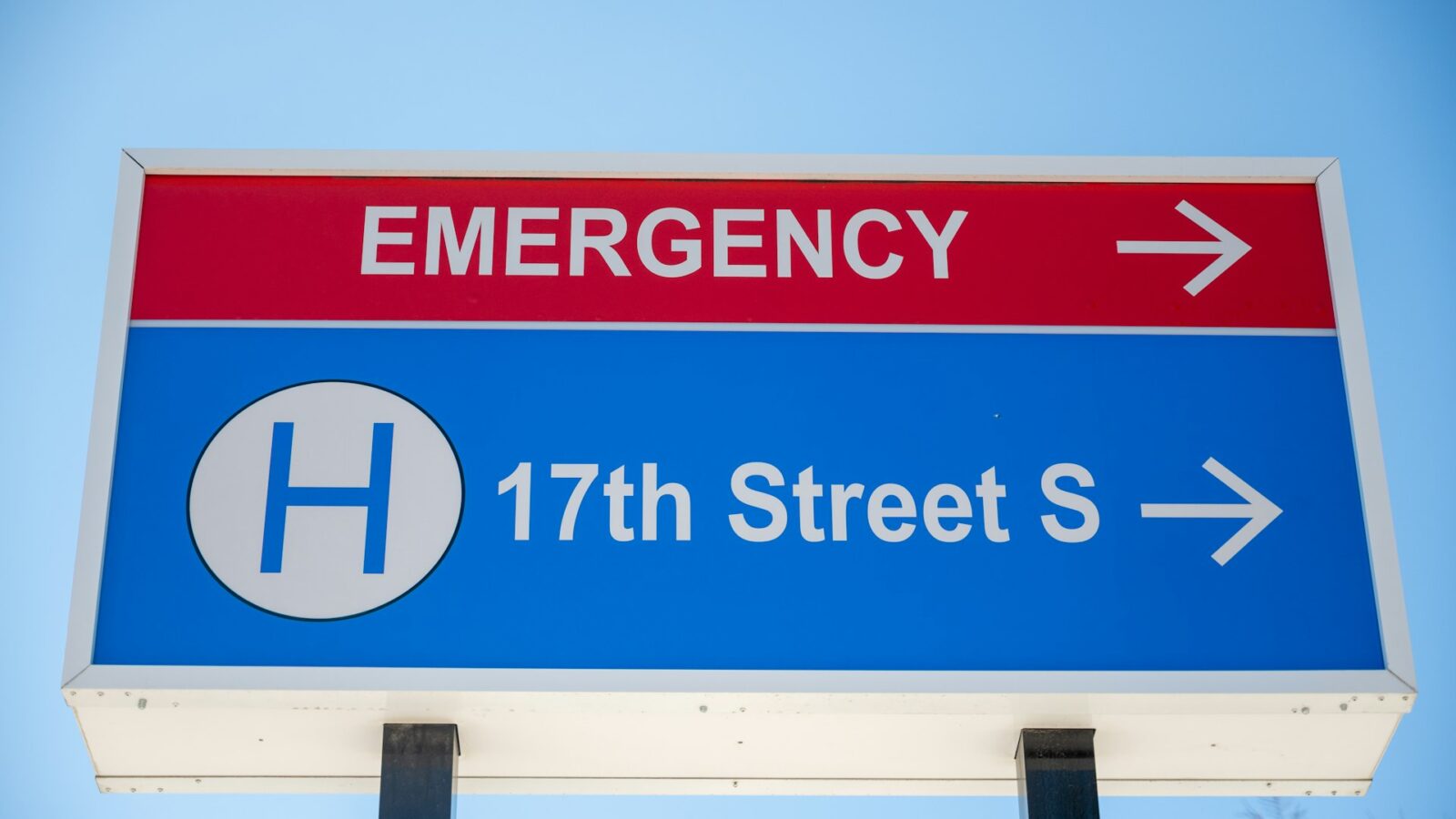
Canada does not have China’s model of large public hospitals where you register at the counter and see any specialist the same day. The usual entry point is a family doctor, and most specialist visits and tests need a referral. Provincial health plans pay for medically necessary physician and hospital services: you show your provincial health card and do not pay up front, unlike at home. The trade-off is waiting: the median wait from referral to treatment is now close to seven months.
For a newly arrived Chinese immigrant, three things matter most. First, when your province’s coverage starts, and private insurance until it does. Second, prescription drugs, dental care and eye care are mostly not covered by the public plan. Third, get on a family doctor list early, and learn to use the free 811 nurse line and your pharmacist. Below we go province by province and situation by situation, with data as of October 2026.
How the Canadian system works
The federal Canada Health Act sets five criteria: public administration, comprehensiveness, universality, portability and accessibility, and requires provinces to allow no extra-billing or user charges for insured health services. The insurance itself is run by each province: OHIP in Ontario, MSP in British Columbia, RAMQ in Québec and AHCIP in Alberta.
So “Canadian health insurance” is really a dozen-plus provincial plans with different eligibility rules and waiting periods. Decide your province first, then check its rules. For choosing a city and preparing to land, start with our Canada overview.
Who can join a provincial plan: main provinces compared
Permanent residents are eligible in essentially every province. Work permit holders usually need a permit or job lasting at least six months. International students are where provinces differ most. The table is based on official provincial websites (as of October 2026):
| Province / plan | Work permit holders | International students | Waiting period |
|---|---|---|---|
| Ontario OHIP | Valid work permit and working full-time for an Ontario employer for at least 6 months | Not listed as an eligible category on the official page; university students generally must join UHIP | None (removed), but you must be physically in Ontario at least 153 of the first 183 days |
| B.C. MSP | Permits valid for six months or more may qualify | Study permits valid for six months or more may qualify; a C$75/month international student health fee applies | Rest of the month you become a resident plus two months |
| Québec RAMQ | Only the permit types RAMQ lists (e.g. employer-specific, post-diploma) | China is not one of the 11 countries with a social security agreement with Québec; Chinese students usually must buy the school’s insurance | Up to 3 months (children under 18 exempt) |
| Alberta AHCIP | Permit must name an Alberta employer or be an open permit, with at least 6 months remaining, and you must intend to live in Alberta 12 consecutive months | Alberta study permit plus a letter confirming full-time attendance | None stated on the official page; coverage starts when residency is established |
In Ontario you apply for OHIP in person at ServiceOntario with three original documents (identity, immigration status and Ontario residence); photocopies are not accepted. The Ontario government’s OHIP page has the full rules. British Columbia eliminated MSP premiums on January 1, 2020, but enrolment is still mandatory.
Waiting periods and private insurance: your first step
Take B.C. as an example: if you become a B.C. resident on June 10, MSP starts on September 1. The province explicitly advises people arriving from abroad to buy private health insurance before arrival and keep it until MSP starts; many private insurers do not cover pre-existing conditions, including pregnancy.
- Before you leaveBuy private medical insurance covering your province’s waiting period; pregnant travellers and people with chronic conditions should read the exclusions
- Register soon after landingServiceOntario in Ontario, online MSP application in B.C., RAMQ in Québec
- Until your card arrivesKeep receipts for any care and claim through your private insurer
- Sign up for a family doctorIn Ontario, call 811 to join the Health Care Connect list
- Fill the gapsUse employer benefits or individual top-up insurance for drugs and dental
Students take note: UHIP, used by 22 publicly funded Ontario universities, rose from C$792 to C$948 a year for a single student from September 1, 2026 (about RMB 4,508; media reports citing UHIP rates). For choosing policies, see our Canada insurance guide.
What the public plans do not cover
Provincial plans mainly pay for doctor visits and hospital care. The following are out of pocket or covered by supplementary insurance:
- Prescription drugs: medicines prescribed outside hospital are generally paid at the pharmacy, with separate provincial drug programs for seniors, low-income residents and others. Federal national pharmacare currently runs through bilateral agreements with British Columbia, Manitoba, Prince Edward Island and Yukon, covering a range of contraception and diabetes medications and supplies; other provinces have not signed.
- Dental care: the federal Canadian Dental Care Plan (CDCP) is for Canadian residents for tax purposes with no access to dental insurance, an adjusted family net income below C$90,000, and a filed Canadian tax return. Newcomers usually need to file their first return before they can apply.
- Glasses, physiotherapy, counselling: mostly outside basic coverage; employer group benefits are the usual answer.
Build these costs into your household budget; see cost of living in Canada. When comparing job offers, check whether the benefits package covers drugs and dental, not just the salary; see our Canada work guide.
How to see a doctor: family doctors, clinics, emergency
For everyday problems, see your family doctor; without one, go to a walk-in clinic, where you normally just show your health card. The family doctor shortage is Canada’s biggest pain point: the OurCare 2025 survey found 81% of adults have a regular family doctor or nurse practitioner, leaving about 5.9 million without.
Specialists require a referral from your family doctor. According to the Fraser Institute’s 2025 Waiting Your Turn report, based on a survey of physicians, the national median wait from GP referral to treatment was 28.6 weeks: 15.3 weeks from referral to specialist and 13.3 weeks from specialist to treatment. Note this is a think-tank physician survey, not official statistics.
For life-threatening situations call 911 or go to a hospital emergency department. Emergency departments triage by severity, so minor problems can wait several hours.
Not sure whether you need the ER? Call 811 first. Ontario’s Health811 gives health advice and helps you register for a family doctor (24/7, TTY 711); HealthLink BC 811 offers translation in more than 130 languages.
Pharmacies and pharmacists
Canadian pharmacies (chains such as Shoppers Drug Mart) do more than sell medicine: pharmacists can handle some minor illnesses. In Ontario, from July 1, 2026, pharmacists can assess and prescribe for 28 minor ailments (the original 19 plus 9 new ones), with no assessment fee for eligible people with a valid Ontario health number; the medicine itself is paid separately.
Buying antibiotics over the counter, as is common at home, does not work in Canada: antibiotics and other prescription drugs need a prescription. If you take long-term medication, ask your doctor in China for English records and a medication list before you leave, and read our guide to the pre-departure medical checkup.
Chinese-language healthcare
Toronto and Vancouver have many Mandarin- or Cantonese-speaking family doctors; provincial physician directories let you filter by language. These Chinese-community organizations were checked on their own websites:
- Yee Hong Centre for Geriatric Care: a seniors’ organization in the Greater Toronto Area offering long-term care homes, community services and hospice care, with centres in Scarborough, Mississauga and Markham; its website has Simplified and Traditional Chinese versions.
- S.U.C.C.E.S.S.: a B.C. organization offering counselling in English, Cantonese and Mandarin; intake line 604-408-7266.
- HealthLink BC 811: you can ask for a Chinese interpreter.
To weigh where clinics cluster against neighbourhood safety, see our Canada safety guide.
Compared with China: what it costs
At the Bank of Canada rate for October 26, 2026 (RMB 1 = C$0.2103, so C$1 is about RMB 4.76), Canada’s health spending per person is about RMB 45,773, roughly seven times China’s (RMB 6,454.4 per person in 2024, National Health Commission statistical bulletin). China’s total health spending was 6.7% of GDP, with individuals paying 27.5%; Canada’s is forecast at 12.7% of GDP in 2025.
| Item | Canada | China |
|---|---|---|
| Health spending per person | C$9,626 (about RMB 45,773; 2025 forecast) | RMB 6,454.4 (2024) |
| Share of GDP | 12.7% (2025 forecast) | 6.7% (2024) |
| Outpatient visit | No charge with a health card, but you need a family doctor | Registration fee paid by patient; direct access to specialists |
| B.C. international student health fee | C$75/month (about RMB 357) | — |
To compare other popular destinations, see healthcare in the United States and healthcare in Australia.
FAQ
I just got a work permit. Can I use the provincial plan right away?
It depends on the province. Ontario has no waiting period but requires full-time work for an Ontario employer for at least six months; B.C. waits the rest of the month plus two months; Québec up to three months. Use private insurance in the meantime.
Are there private hospitals in Canada?
Insured physician and hospital services are mainly publicly funded, and the Canada Health Act prohibits extra-billing for them. Private clinics mostly provide services outside the plans, such as dental, eye care and physiotherapy, or charge people without provincial coverage.
Can Chinese students in Québec join RAMQ?
China is not among the countries with a social security agreement with Québec, so Chinese students generally cannot join RAMQ through an agreement and must buy the insurance their school requires.
What if my visiting parents get sick?
Visitors have no provincial coverage, so doctor and hospital care is billed at full private rates. Buy visitor medical insurance before they arrive.
Sources
- Government of Canada – Infographic: Canada Health Act (accessed October 2026)
- Ontario – Apply for OHIP and get a health card (accessed October 2026)
- Ontario – Find a family doctor or nurse practitioner (Health Care Connect) (accessed October 2026)
- Ontario Ministry of Health – Executive Officer Notice: Minor Ailments (May 19, 2026) (accessed October 2026)
- Government of B.C. – Coverage wait period for MSP (accessed October 2026)
- Government of B.C. – MSP: Are you eligible? (accessed October 2026)
- Government of B.C. – MSP Premium Elimination: Jan. 1, 2020 (accessed October 2026)
- Government of B.C. – Health fee for international students (accessed October 2026)
- HealthLink BC – HealthLink BC 811 (accessed October 2026)
- RAMQ – Waiting period (accessed October 2026)
- RAMQ – Eligible work permits (accessed October 2026)
- RAMQ – Social security agreements with other countries (accessed October 2026)
- Government of Alberta – Health care coverage for temporary residents (accessed October 2026)
- Health Canada – Canadian Dental Care Plan expands (March 2025) (accessed October 2026)
- Health Canada – National pharmacare bilateral agreements (accessed October 2026)
- Fraser Institute – Waiting Your Turn: Wait Times for Health Care in Canada, 2025 (accessed October 2026)
- Canadian Medical Association – OurCare Survey 2025 release (accessed October 2026)
- CIHI – National health expenditure trends (accessed October 2026)
- 新华网 – 《2024年我国卫生健康事业发展统计公报》报道(2025年12月2日) (accessed October 2026)
- CIC News – Ontario international students face 20% fee hike for UHIP (Aug 2026, media) (accessed October 2026)
- Yee Hong Centre for Geriatric Care(颐康中心) (accessed October 2026)
- S.U.C.C.E.S.S. – Counselling & crisis support (accessed October 2026)
- Bank of Canada – Daily exchange rates (accessed October 2026)