
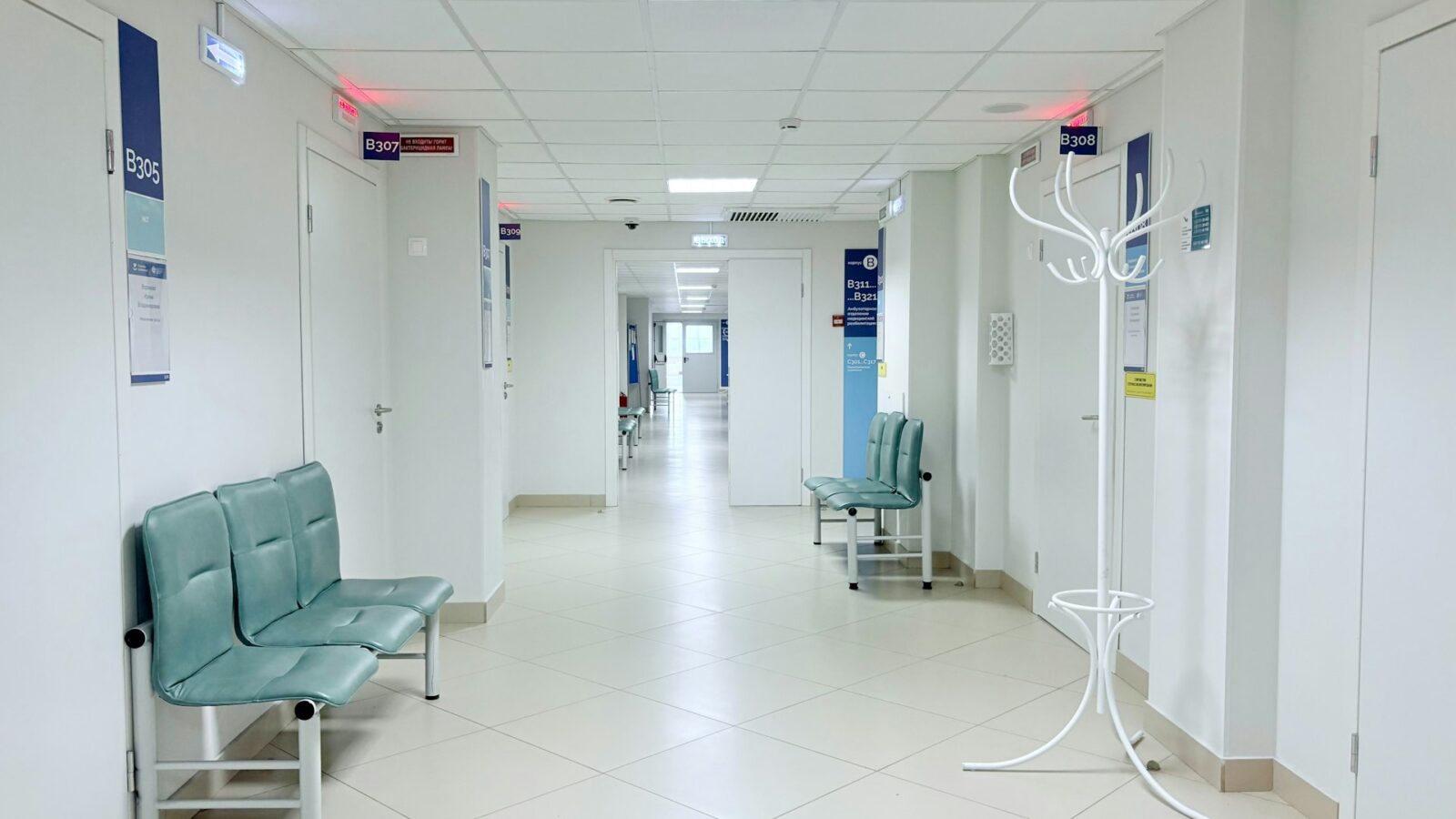
The biggest difference about getting medical care in the United States is not the quality of hospitals but who pays. There is no national health service covering everyone. Most people rely on private insurance through an employer, a plan they buy themselves, or government programs for older and low-income people. Without insurance, a single emergency visit or hospital stay can leave you with a heavy bill.
If you are arriving from China, sort out three things first: which insurance your visa status lets you buy, the new 2026–2027 restrictions on non-citizens, and where to go for minor versus urgent problems. This guide covers insurance, how to see a doctor, costs, Chinese-language care and what to prepare before you leave. Rules and figures are as of October 2026.
How the US healthcare system works
Most US hospitals and clinics are private (many of them non-profit). The government acts mainly as a payer and regulator. You show your insurance card, the provider bills your insurer first, and you pay the rest. Coverage usually comes from one of four sources:
- Employer insurance: the main route. Holders of work visas such as H-1B or L-1 usually join their company plan, with premiums shared between employee and employer.
- ACA Marketplace plans: bought on the federal platform HealthCare.gov or a state’s own exchange.
- Medicaid and CHIP: joint federal-state programs for low-income people and children; rules vary by state.
- Medicare: the federal program mainly for people aged 65 and over.
Learn a few terms: premium (the monthly price), deductible (what you pay each year before the plan pays most costs), copay/coinsurance (a fixed amount or percentage per visit) and network (in-network doctors and hospitals; out-of-network care is often paid little or not at all).
Which insurance can foreigners get: 2026–2027 changes
According to HealthCare.gov, people who are “lawfully present”, including holders of valid non-immigrant visas, can buy Marketplace coverage. However, the budget reconciliation law passed in July 2025 (H.R. 1, Public Law 119-21) sharply restricts subsidies and public coverage for non-citizens:
| Item | Change | Effective |
|---|---|---|
| Marketplace premium tax credits (subsidies) | Non-citizens with income below 100% of the federal poverty level no longer get subsidies | From 2026 |
| Marketplace premium tax credits (subsidies) | Only green card holders, Cuban/Haitian entrants and COFA migrants qualify; other lawfully present statuses (such as work or student visas) can still buy plans but pay full price | 1 January 2027 |
| Medicaid/CHIP federal funding | Full federally funded coverage limited to green card holders, Cuban/Haitian entrants and COFA migrants; green card holders generally still face the five-year waiting period | 1 October 2026 |
| Medicare | Eligibility limited to citizens, green card holders and a few other statuses; current enrollees who don’t qualify lose coverage no later than 4 January 2027 | 2025 law, phased in |
In addition, the “enhanced” premium subsidies in place since 2021 expired at the end of 2025, and from 2026 subsidies went back to the original formula. The House passed a three-year extension in January 2026, but as of October 2026 the Senate had not, so no extension became law. For most new arrivals on work visas, from 2027 a Marketplace plan means paying the full premium, so accepting an employer plan is usually the better deal.
Open enrollment for 2027 Marketplace plans runs from 1 November 2026 to 15 January 2027; enroll by 15 December 2026 for coverage starting 1 January 2027. Life events such as changing jobs, marrying or moving allow you to enroll outside that window. Check your eligibility on HealthCare.gov or your state’s exchange.
For Medicare, premium-free Part A (hospital insurance) generally requires that you or your spouse paid Medicare payroll taxes for 40 quarters (10 years). Green card holders without enough work history can buy in, but generally must have lived in the US continuously for five years. Parents who come to join you should not expect Medicare soon; see our US insurance guide for options such as visitor medical insurance.
Insurance rules for students and visiting scholars
J-1 exchange visitors face a binding federal rule. Under 22 CFR 62.14, J-1 visitors and accompanying J-2 dependants must hold insurance for the whole program that meets these minimums:
- medical benefits of at least $100,000 per accident or illness;
- medical evacuation to the home country of at least $50,000;
- repatriation of remains of at least $25,000;
- a deductible of no more than $500 per accident or illness.
Willfully failing to keep coverage, or misrepresenting it, can lead to termination of the program. F-1 students have no equivalent single federal minimum; requirements come mainly from the school. Many universities automatically enroll students in the school plan and require proof that any other plan meets school standards before granting a waiver. Read your international student office’s instructions before you arrive.
How to see a doctor: primary care, urgent care and the ER
Unlike in China, you don’t simply walk into a big hospital and register. Routine problems go to a primary care physician (PCP); specialists usually need an appointment and some plans require a PCP referral. Choose by severity:
- Choose a PCPPick an in-network primary care doctor after enrolling and have a first check-up
- Book for minor issuesColds, chronic-condition follow-ups and refills go to your PCP or telehealth
- Same-day needsSprains, fever or small cuts go to an urgent care centre or retail clinic
- Life-threateningChest pain, trouble breathing, stroke signs or serious injury: call 911 or go to the emergency room (ER)
- Check the billWait for your insurer’s Explanation of Benefits (EOB) before paying the hospital bill, and appeal if something looks wrong
Emergency care has a legal safety net. The federal Emergency Medical Treatment and Labor Act (EMTALA) requires Medicare-participating hospitals with emergency departments to give anyone who comes a medical screening exam and stabilizing treatment for an emergency condition, regardless of ability to pay. “Treated first” does not mean free: the bill still arrives later. Uninsured patients can ask about the hospital’s financial assistance policy.
911 is the single US number for ambulance, police and fire. Ambulances are usually billed separately, with costs depending on area and insurance, so don’t use one as a taxi when it is not an emergency. For general safety advice see our US safety guide.
How expensive is US healthcare: comparison with China
The US is among the world’s highest spenders on health. According to the Centers for Medicare & Medicaid Services (CMS), national health spending grew 7.2% in 2024 to $5.3 trillion, or $15,474 per person, equal to 18.0% of GDP. At the RMB/USD central parity rate of 6.7220 on 16 October 2026 (China Foreign Exchange Trade System), that is about RMB 104,016 per person. China’s National Health Commission reports total health expenditure of RMB 6,454.4 per person in 2024, so US spending is roughly 16 times China’s.
For individuals, the KFF Employer Health Benefits Survey published on 22 October 2026 found:
- the average annual premium for employer family coverage was $28,303 (about RMB 190,253), up 5% from 2025;
- workers paid an average of $7,471 of that (about RMB 50,220), up 9%;
- among workers with a deductible for single coverage, the average deductible was $1,955 (about RMB 13,142).
So even with a company plan, a family pays tens of thousands of yuan a year in premiums before meeting deductibles and copays. When comparing job offers, treat the health plan as part of your pay, alongside our US work guide and US cost of living.
Pharmacies and prescription drugs
Prescription drugs must be collected from a pharmacy with a doctor’s prescription. Many pharmacies are inside chains such as CVS and Walgreens, and your doctor sends the prescription electronically to the pharmacy you choose. Over-the-counter (OTC) products such as fever and pain relievers or allergy medicine can be taken straight from the shelf. Some drugs that are easy to buy in China, such as certain antibiotics, are prescription-only in the US.
Some pharmacy chains also run clinics. CVS says the nurse practitioners and physician assistants at its MinuteClinic are all licensed to write prescriptions, including antibiotics, birth control and blood pressure medicine, but not controlled substances or long-term pain medication. Ask whether a drug is on your plan’s formulary; generics are often much cheaper.
Chinese-speaking doctors and language help
Cities with large Chinese communities have Chinese-speaking providers, for example:
- Charles B. Wang Community Health Center (New York): its website says it started in 1971 and has five sites in Lower Manhattan and Flushing, Queens, offering bilingual and bicultural care, with a Chinese-language website. It is a federal Health Center Program grantee.
- Chinese Hospital (San Francisco): located in San Francisco’s Chinatown; its website says many staff speak Cantonese and Mandarin, and it offers 24-hour emergency services.
Even if your doctor doesn’t speak Chinese, you can ask for an interpreter. According to a December 2024 guidance letter from the HHS Office for Civil Rights, under Section 1557 of the Affordable Care Act, federally funded health providers must give patients with limited English proficiency a qualified interpreter free of charge. They may not require you to bring or pay for your own interpreter, and may not use minor children as interpreters except temporarily in an emergency. Simply say “I need a Mandarin interpreter”.
Your insurer’s doctor search usually lets you filter by language (Chinese, Mandarin, Cantonese). For comparison with a neighbouring system, see healthcare in Canada.
What to prepare before you leave
- Medical records and test results: recent check-ups, records for chronic conditions and imaging reports, ideally with an English translation or summary.
- Vaccination records: bring your vaccination booklet; schools usually check children’s vaccines, and immigrant visas require a designated medical exam. See our medical check-up guide.
- Regular medicines: bring enough for the transition with a prescription or doctor’s note, and write down the generic English names so a US doctor can prescribe them.
- No coverage gap: you need insurance from day one. Confirm when your employer plan starts; if there is a gap, buy short-term travel or bridge cover.
Advantages
- Advanced treatment and fast access to new drugs
- Emergency care protected by EMTALA
- Many Chinese-language providers in big cities
- Right to a free interpreter
Challenges
- High premiums and out-of-pocket costs
- No subsidies for most visa holders from 2027
- Appointments and waits for specialists
- Little coverage out of network
For more on life in the US, return to our United States overview.
FAQ
Can I buy insurance on HealthCare.gov with an H-1B or F-1 visa?
Yes. HealthCare.gov lists valid non-immigrant visas as a lawfully present status. But from 1 January 2027 subsidies go only to green card holders and a few other groups, so work and student visa holders pay full price. F-1 students should check their school’s insurance requirement first.
Can I go to the ER without insurance?
Yes. EMTALA requires covered hospitals to screen and stabilize emergency conditions regardless of ability to pay. You will still receive a bill and can apply for financial assistance or a payment plan.
Do I get Medicaid as soon as I have a green card?
Generally not. According to CMS guidance on the 2025 law as summarised by SHVS, green card holders usually remain subject to the five-year waiting period and must meet state income rules. Some states may run separate state-funded programs; check with your state.
When can I buy a plan for 2027?
Open enrollment on HealthCare.gov runs from 1 November 2026 to 15 January 2027. States with their own exchanges may set different dates.
Sources
- HealthCare.gov – Coverage for lawfully present immigrants (accessed October 2026)
- HealthCare.gov – Dates and deadlines for 2027 health insurance (accessed October 2026)
- SHVS (Robert Wood Johnson Foundation) – H.R.1’s changes to non-citizen coverage: FAQs (accessed October 2026)
- KFF – Can immigrants enroll in Medicare? (accessed October 2026)
- ASTHO – ACA enhanced premium tax credits: legislative developments in 2025 and 2026 (accessed October 2026)
- CMS – National Health Expenditure (NHE) Fact Sheet (accessed October 2026)
- KFF – 2026 Employer Health Benefits Survey news release (22 Oct 2026) (accessed October 2026)
- 22 CFR § 62.14 – Insurance (exchange visitors) (accessed October 2026)
- CMS – Emergency Medical Treatment & Labor Act (EMTALA) (accessed October 2026)
- HHS OCR – Dear Colleague letter on Section 1557 language access (5 Dec 2024) (accessed October 2026)
- CVS MinuteClinic – What prescriptions can I get (accessed October 2026)
- Charles B. Wang Community Health Center – Who we are (accessed October 2026)
- Chinese Hospital (San Francisco) – official site (accessed October 2026)
- 新华网 – 国家卫健委《2024年我国卫生健康事业发展统计公报》报道 (accessed October 2026)
- 中国经济网 – 2026年10月16日人民币对美元汇率中间价(中国外汇交易中心数据) (accessed October 2026)