
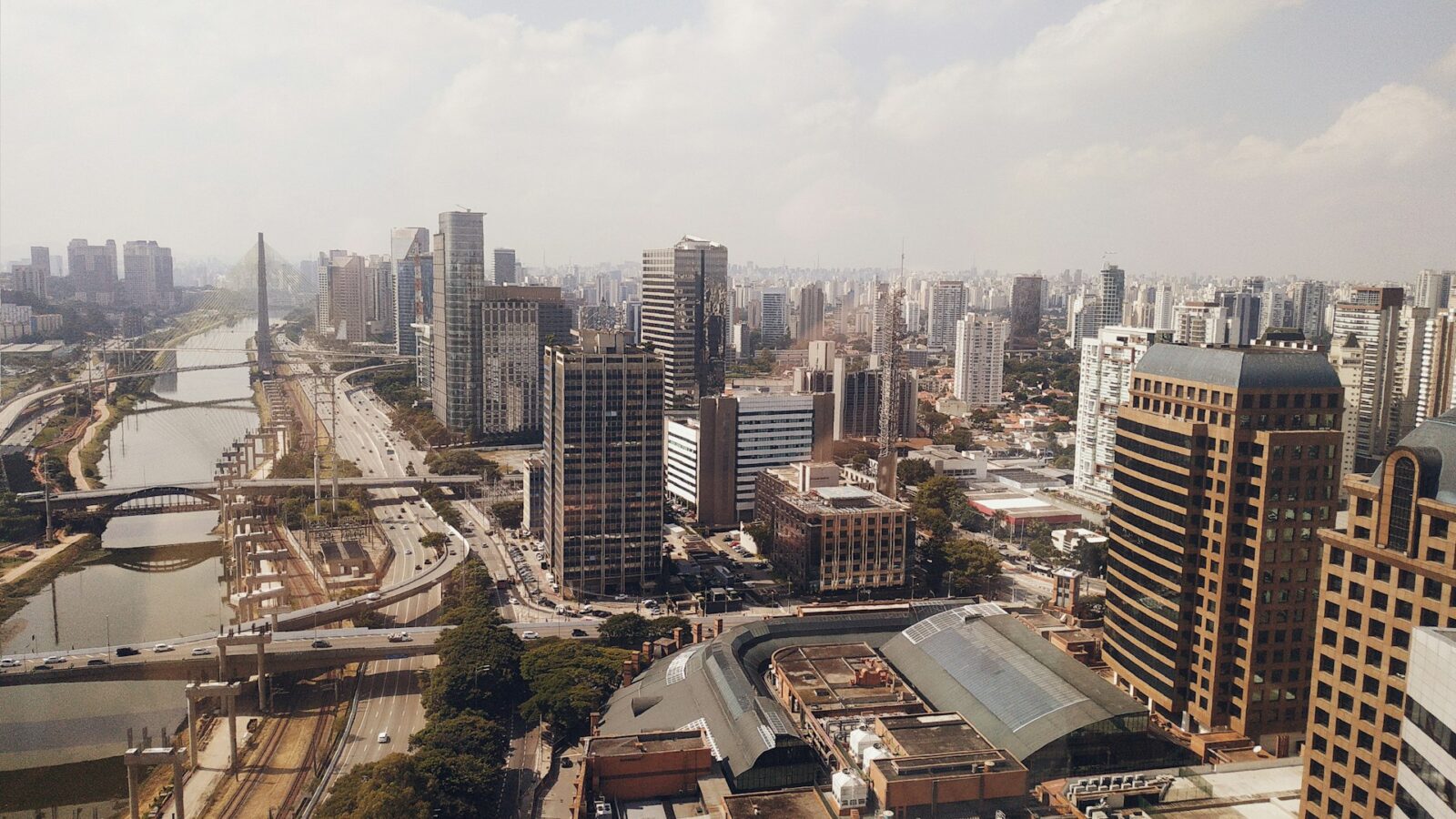



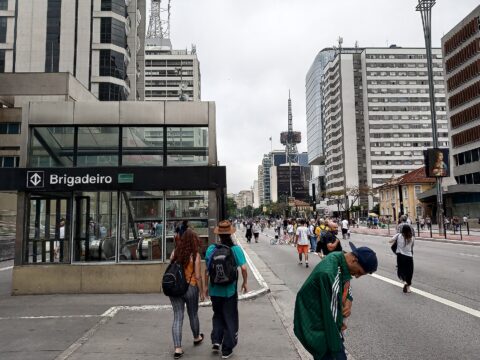
Brazil is the largest and most populous country in South America and one of China’s most important trading partners in Latin America. For people moving from China, Brazil offers a huge domestic market, an open, multicultural society and a warm climate. It also brings a Portuguese language barrier, heavy paperwork, a high tax burden and real safety issues.
This guide looks at Brazil from the point of view of someone relocating from China. It brings together what you need to know before you go: culture and etiquette, the economy and jobs, cost of living, healthcare, the Chinese community, visa and residence routes, safety, and the pros and cons of moving to Brazil. Every figure carries a year and a source. Rules change quickly, so always check the latest official Brazilian announcements before you apply.
Why Brazil: an overview
Brazil has about 213.4 million people (IBGE, 1 July 2025). São Paulo, the largest city, has about 11.9 million residents and Rio de Janeiro about 6.73 million. The official language is Portuguese, the currency is the real (BRL) and the capital is Brasília. Brasília time is UTC−3, 11 hours behind Beijing; Brazil abolished daylight saving time in 2019.
Two things are drawing more Chinese people to Brazil. First, Chinese companies keep investing in energy, power, cars, e-commerce and logistics, which creates bilingual jobs and business opportunities. Second, travel is easier: China has waived visas for Brazilians since 1 June 2025, and since 11 May 2026 Brazil lets Chinese ordinary passport holders visit without a visa for short stays (currently valid until 31 December 2026). Visiting first and deciding later is now much cheaper.
Culture and etiquette
Brazilians are warm, outgoing and value personal relationships. These points will help you settle in faster:
- Greetings: friends hug and kiss on the cheek; in business a handshake is fine at first. People usually address each other by first name.
- Time: arriving half an hour late to a private party is normal, but be on time for business meetings, government offices and medical appointments.
- Language: Portuguese is essential. English works in big-city business circles, but at the police, the notary, the hospital or a letting agent you will need Portuguese. Brazilians speak Portuguese, not Spanish, and using Spanish can come across badly.
- Paperwork culture: unlike China’s one-stop online services, many Brazilian procedures still rely on notarised signatures at a cartório and paper documents. You need a personal tax number (CPF) to open a bank account, get a phone contract or shop online.
- Small talk: football, music and churrasco (barbecue) are safe topics. Brazil is a multiracial society, so avoid jokes about skin colour or regional origin.
Economy and jobs
Brazil is Latin America’s largest economy. According to IBGE, GDP grew 2.3% in 2025 (3.4% in 2024) and unemployment fell to 5.6%, the lowest since comparable data began in 2012. The World Bank’s October 2026 outlook expects growth to slow to about 2.1% in 2026.
The national minimum wage for 2026 is R$1,621 a month. According to Numbeo (October 2026), the average net monthly salary in São Paulo is about R$4,460. Compared with China, income tax, social security contributions and corporate taxes are all heavier, labour law strongly protects employees and dismissing staff is expensive.
The main fields where Chinese people work or run businesses in Brazil are:
- import/export, wholesale and retail (concentrated around Rua 25 de Março and Brás in São Paulo);
- restaurants, supermarkets and services;
- management, technical, translation and admin roles at Chinese companies;
- accounting, legal, immigration and property services for the Chinese community.
Working after entering visa-free or as a tourist is illegal: you need the right work residence first. For job channels, recognition of qualifications and employment contracts, see our Brazil work and jobs guide.
Cost of living
In São Paulo, a single person spends about R$3,630 a month before rent. Add a one-bedroom flat outside the centre and the total is about R$5,700; in the centre it is close to R$7,000. Rio de Janeiro is similar, while rents in north-eastern cities such as Recife and Fortaleza and in smaller inland cities are much lower.
Compared with China, imported electronics, cars, branded clothing and some processed foods cost more because of high import duties, while fruit, beef, coffee and local produce are cheaper. Landlords often ask for a guarantor (fiador), a deposit or rent-guarantee insurance, so newcomers usually rent short-term first. For city comparisons, see cost of living in Brazil.
Healthcare
Brazil has a unified public health system, the SUS (Sistema Único de Saúde). The constitution makes healthcare a universal right, and anyone in Brazil, foreigners included, can use public facilities and emergency care.
In practice, public waiting times are long and quality varies widely between regions. Middle-class families and expats in big cities usually buy private health plans (plano de saúde), and São Paulo and Rio have excellent private hospitals. Private plan prices rise steeply with age, so families bringing parents should budget for this early.
Before leaving, do a medical check-up in China, update your vaccinations and ask your doctor for an English or Portuguese note on any regular medication. Yellow fever vaccination is generally recommended for some regions such as the Amazon. In Brazil, dial 192 for an ambulance (SAMU), 193 for the fire brigade and 190 for the police.
Chinese community
According to the São Paulo State Legislative Assembly (ALESP), citing an estimate by the Chinese Consulate General in São Paulo in August 2026, about 280,000 Chinese people and their descendants live in Brazil. Around 70% (about 196,000) live in São Paulo state, mainly in Liberdade, Brás and Bom Retiro in São Paulo city, and more recently in Vila Olímpia and Brooklin, where many employees of Chinese companies live.
The traditional Chinese economy centres on wholesale and retail around Rua 25 de Março and the Galeria Pagé. As Chinese investment grows in infrastructure, logistics, energy and technology, the share of engineers and professionals is rising. Rio de Janeiro, Curitiba and Porto Alegre also have sizeable Chinese communities. Associations, hometown groups, Chinese schools and Chinese-language media are active and are key sources of information, housing and jobs for newcomers.
Be wary of high-interest loans, “status fixing” services and nominee shareholdings arranged through hometown contacts. Handle all residence and company paperwork in your own name through a properly licensed lawyer or accountant, and keep written contracts.
For associations, Chinese restaurants and supermarkets, see the Chinese community in Brazil.
Visa and residence routes at a glance
Brazilian residence rules are set by the Migration Law (Lei 13.445/2017) and resolutions of the National Immigration Council (CNIg). The most common routes for Chinese citizens are:
| Route | For whom | Main conditions (as of October 2026) |
|---|---|---|
| Short-term visa waiver | Tourism, business trips, transit | Up to 30 days in total, no extension, no work; valid until 31 Dec 2026 |
| Electronic visitor visa (eVisa) | Tourism or business longer than 30 days | Up to 90 days per entry, 180 days a year; apply online (check eligible purposes on the official platform) |
| Work residence (VITEM V) | Employees hired by a Brazilian company | Employer obtains a residence authorisation, then you apply for the visa |
| Study (VITEM IV) | University, language courses, exchanges | Admission letter, proof of funds; renewed yearly |
| Investment (VITEM IX) | Business owners, investors | At least R$500,000 in a company (R$150,000 for innovation); or at least R$1 million in property (R$700,000 in the North and Northeast) |
| Retirement | People with a steady pension | Income of at least US$2,000 a month |
| Digital nomad (VITEM XIV) | Remote workers for foreign employers | Foreign income of at least US$1,500 a month or savings of at least US$18,000; one year, renewable once |
| Family reunion (VITEM XI) | Spouses, children, parents of Brazilian citizens or residents | Proof of relationship (legalised and translated) |
For document checklists, where to apply and fees, see our Brazil visa guide. If you plan to qualify through property investment, read buying property in Brazil. We will report policy changes, such as any extension of the visa waiver, in our news section.
Safety
Safety is the concern most often raised about moving to Brazil. According to the 20th Brazilian Public Security Yearbook, Brazil recorded 40,775 intentional violent deaths in 2025, or 19.1 per 100,000 people. That is 8.2% lower than in 2024 and the lowest rate since the series began in 2012, but still far higher than in China. Levels vary greatly between states, and between neighbourhoods in the same city.
- Don’t use expensive phones on the street or wear eye-catching jewellery;
- use licensed ride-hailing at night rather than walking alone;
- use cash machines inside shopping centres or banks and be alert to “express kidnappings”;
- Chinese shops handle a lot of cash and are frequent robbery targets: keep little cash on site, use PIX instant transfers and cards, and take out business insurance.
If you are robbed, do not resist; your safety comes first. Report it to the police afterwards and contact the Chinese embassy or consulates in Brazil, or the Chinese Ministry of Foreign Affairs 24-hour consular protection hotline +86-10-12308.
On leisure and entertainment: Brazil licensed fixed-odds sports betting from 2025, but Provisional Measure 1.394 of 25 September 2026 banned the operation, offer and advertising of fixed-odds betting nationwide, ending existing licences 30 days after publication; Congress still has to convert the measure into law. Land-based casinos are still broadly not legal. For whether local gambling is legal and how it affects Chinese citizens, see gambling laws in Brazil.
Pros and cons
Pros
- Large market and many Chinese companies, with plenty of trade and bilingual jobs
- Many residence routes, with moderate thresholds for investment, retirement and digital nomads
- Short path to citizenship (usually 4 years), and Brazil accepts multiple nationality
- Universal public healthcare (SUS), open to foreigners
- Warm climate and an inclusive society
Cons
- Serious crime problems that require constant vigilance
- Portuguese is unavoidable
- Complex, heavy taxes and high compliance costs for companies
- Slow bureaucracy; documents need legalisation and sworn translation
- Volatile exchange rate; real-denominated assets can lose value
FAQ
What do I need to emigrate to Brazil?
There is no single set of “immigration requirements”; it depends on your route. A Brazilian employer can sponsor a work residence; capital can qualify you through a company or property investment; a steady pension opens the retirement route; remote workers can apply as digital nomads. Almost every route requires a valid passport, a police clearance certificate and legalised birth or marriage documents.
Do Chinese citizens need a visa for Brazil?
Between 11 May and 31 December 2026, Chinese ordinary passport holders can visit Brazil visa-free for tourism, business or transit for up to 30 days in total, with no extension. Longer stays need an eVisa or visitor visa; work, study and long-term residence always require the matching visa.
Can I keep Chinese nationality if I naturalise in Brazil?
Brazil accepts multiple nationality, but China’s Nationality Law does not recognise dual nationality: a Chinese citizen settled abroad who voluntarily acquires a foreign nationality automatically loses Chinese nationality. Before naturalising, check the impact on your hukou, social security and property in China; see dual nationality and Chinese law.
How do I manage money in Brazil?
Your first step on arrival is to get a CPF tax number, then open a local bank account. PIX, the central bank’s instant payment system, is accepted even at street stalls, so you rarely need cash. For account opening, transfers and currency rules, see banking in Brazil. If you are comparing South American countries, read our Argentina guide and the South America overview.
Sources
- IBGE – População estimada do país chega a 213,4 milhões de habitantes (estimativas 2025) (accessed October 2026)
- World Bank – Brazil Overview (updated Oct 2026) (accessed October 2026)
- Vermelho – PIB, emprego e agro impulsionam economia brasileira em 2025, diz IBGE (media report on IBGE data) (accessed October 2026)
- Jovem Pan – Lula publica decreto que aumenta salário mínimo para R$ 1.621 em 2026 (media) (accessed October 2026)
- Numbeo – Cost of Living in São Paulo (updated 2 Oct 2026) (accessed October 2026)
- Assembleia Legislativa de São Paulo (ALESP) – São Paulo concentra maior comunidade chinesa do país (accessed October 2026)
- InfoMoney – Mortes violentas caem 8,2% no país em 2025 (Anuário Brasileiro de Segurança Pública, media report) (accessed October 2026)
- 光明网 – 中国驻巴西使馆提醒:巴西对中国公民实行免签政策(2026年5月10日) (accessed October 2026)
- Fragomen – Brazil: Temporary Visa-Free Entry for Chinese Nationals (law firm alert, May 2026) (accessed October 2026)
- IMI Daily – The 7 ways to get residency in Brazil (secondary source) (accessed October 2026)
- Oliveira Lawyers – Resolução CNIg/MJSP nº 45/2021 (digital nomad), English translation (accessed October 2026)
- Planalto – Lei nº 13.445/2017 (Lei de Migração) (accessed October 2026)
- Itamaraty (Concórdia) – Entendimento por troca de notas sobre a isenção de vistos, por reciprocidade, a cidadãos chineses (1 May 2026) (accessed October 2026)
- Planalto – Medida Provisória nº 1.394, de 25 de setembro de 2026 (proíbe apostas de quota fixa) (accessed October 2026)
- Planalto – Lei nº 14.790/2023 (apostas de quota fixa), compiled text (accessed October 2026)