
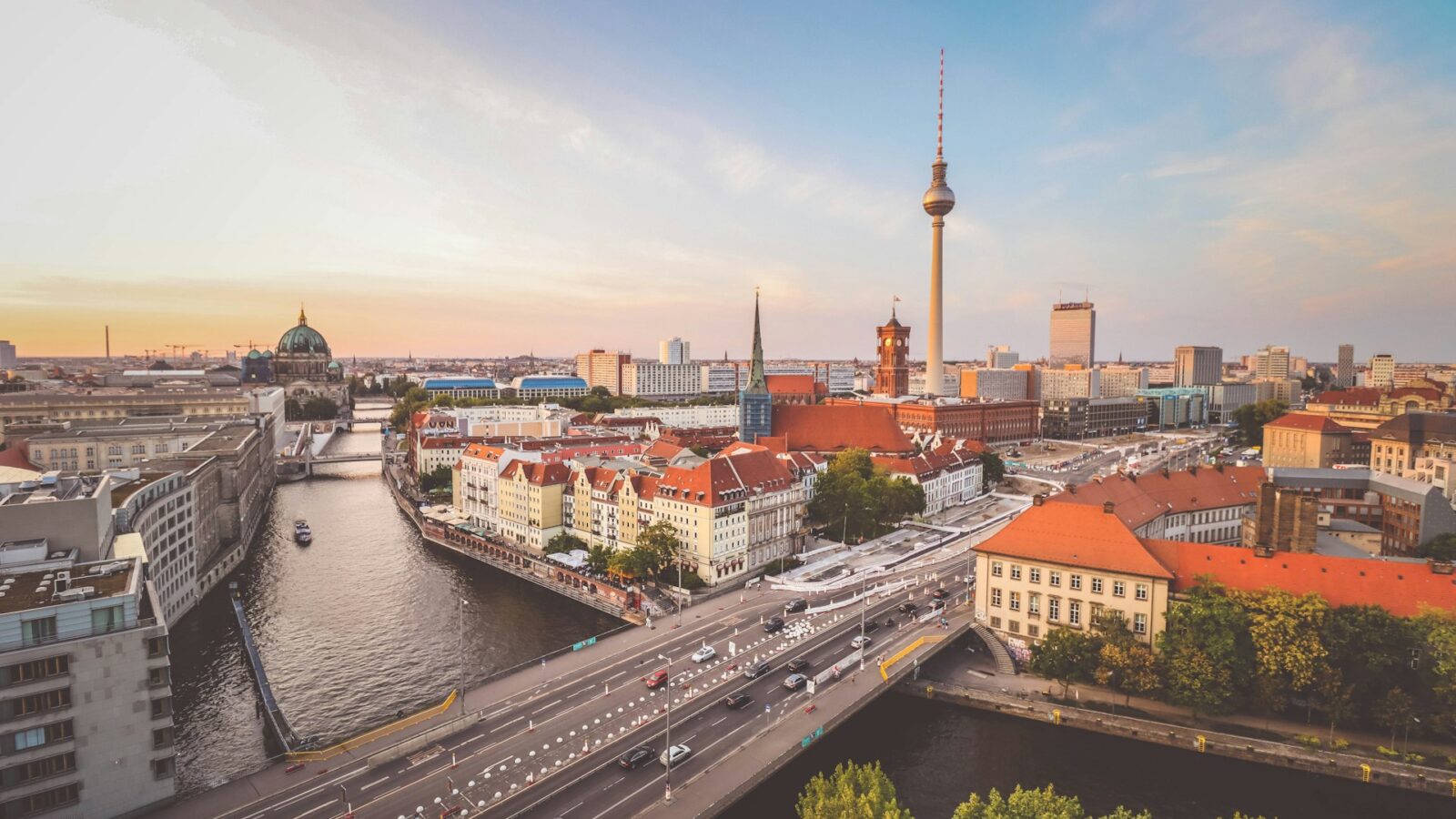



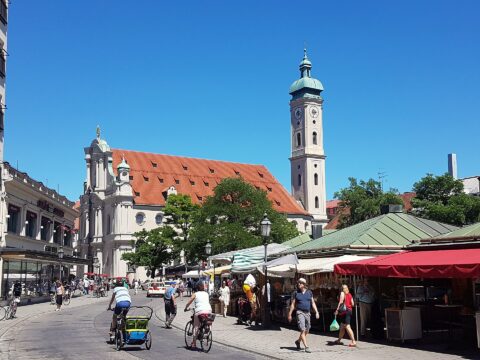
Germany is Europe’s largest economy and one of China’s closest partners in Europe. A strong manufacturing base, largely tuition-free universities and a large skills gap make it a popular destination for engineers, students and employees of Chinese companies. In recent years Germany has repeatedly eased skilled immigration, introducing new EU Blue Card thresholds and the Opportunity Card, while raising integration requirements for citizenship.
This guide looks at Germany from the angle of someone moving from China: culture and etiquette, the economy and jobs, the cost of living, health insurance, the Chinese community, the main visa routes and safety, with comparisons to life at home, to help you decide whether moving to Germany suits you. All figures carry a source and date; official German websites take precedence.
Why Germany
According to estimates by the Federal Statistical Office (Destatis) based on the 2022 census, Germany had about 83.3 million inhabitants on 30 June 2026, including about 12.37 million foreign nationals. The population has fallen slightly over the past year, and labour shortages are the main reason the government keeps opening skilled immigration routes.
Destatis figures on foreign nationals show 168,660 Chinese citizens living in Germany on 31 December 2025. This does not include ethnic Chinese who have become German citizens or hold other passports. Chinese students are among the largest groups of international students in Germany, and many stay to work after graduating.
Culture and etiquette
Germans value rules, punctuality and direct communication. If you will be even a few minutes late, let people know in advance. Meetings are well prepared and matter-of-fact, and voicing disagreement is seen as professional, not rude. Compared with China’s relationship-first culture, Germany relies on written procedures: almost everything needs an appointment (Termin) and paperwork.
- Quiet Sundays: most shops close on Sundays and public holidays; keep noise down on Sundays and at night, so no DIY or washing machines in flats.
- Recycling and bottle deposits: waste is sorted into paper, packaging, organic and residual; many drinks bottles carry a deposit (Pfand) refunded by machines in supermarkets.
- Forms of address: at work, start with “Herr/Frau + surname” and the formal “Sie” until you are invited to use first names.
- Cash: cash is still widely used; some small restaurants and bakeries take only cash or German debit cards.
One formality is compulsory after arrival: registering your address (Anmeldung) at the local registration office, generally within two weeks of moving in. Without the registration certificate, opening a bank account, getting a tax ID or signing a phone contract becomes difficult.
Economy and jobs
Germany’s economy rests on manufacturing and exports. Cars, machinery, chemicals, electrical engineering and pharmaceuticals are traditional strengths, and many “hidden champion” mid-sized firms are based in Bavaria, Baden-Württemberg and North Rhine-Westphalia. Trade between China and Germany is close, and many Chinese companies have European headquarters or branches in Düsseldorf, Frankfurt, Hamburg and Munich.
For job seekers from China, engineering, IT, healthcare and the natural sciences offer the best chances. In 2026 the general EU Blue Card salary threshold is €50,700 a year, and €45,934.20 for shortage occupations and recent graduates (degree less than three years old). People without an offer can apply for the Opportunity Card (Chancenkarte), which allows up to a year of job searching in Germany with up to 20 hours of work a week.
German is the key to the German job market. International companies and research institutes in big cities often work in English, but in mid-sized firms, healthcare and the public sector, B1–B2 German is often the real requirement. You can check whether your degree is recognised in the official anabin database or on the official Make it in Germany portal.
Sectors, job-search channels and salaries are covered in our Germany work and job-search guide.
Cost of living
Germany is cheaper than the UK or Switzerland, but rents in big cities have risen sharply, and finding a flat is the most common problem for newcomers. According to Numbeo’s crowd-sourced data from October 2026, a one-bedroom flat in central Munich costs about €1,500 a month and in central Berlin about €1,321; a single person’s monthly costs excluding rent are around €1,050–1,080 in both cities. Public transport is relatively cheap: the nationwide Deutschlandticket costs €63 a month.
German rents are quoted as “cold” (Kaltmiete) or “warm” (Warmmiete), the latter including heating and service charges. The deposit is at most three months’ cold rent. Landlords usually ask for proof of income, a credit report (SCHUFA) and address registration, so newcomers often start in a short-term furnished flat. See our Germany renting guide.
Healthcare
Health insurance is compulsory in Germany: every resident must have statutory (GKV) or private (PKV) cover. Statutory insurance is paid jointly by employer and employee as a percentage of salary and covers doctors, hospitals and most medicines; spouses and children can often be covered free of charge. Employees above an income threshold, the self-employed and civil servants can choose private insurance, priced by age and health.
- GP first: for non-urgent problems see a family doctor (Hausarzt), who refers you to specialists; specialist appointments can take weeks.
- Emergencies: call 112 for an ambulance; at night and at weekends call 116117 for the on-call doctor service in non-emergencies.
- Visa requirement: you must prove adequate health insurance when applying for a visa and a residence permit.
Choosing statutory or private insurance has a big impact on long-term costs and family cover; see our Germany insurance guide.
Chinese community
The Chinese community in Germany is made up mainly of students, engineers, employees of Chinese companies and restaurant workers. Hamburg was one of the first German cities with Chinese residents: Chinese seamen were living in the port district in the early 20th century. Today Berlin, Frankfurt, Düsseldorf, Munich, Hamburg and Cologne have the most Chinese residents, with Asian supermarkets, Chinese restaurants and Chinese schools.
Most universities have a Chinese Students and Scholars Association, and many cities have Chinese business associations, professional networks and weekend Chinese schools. Compared with the UK or North America, the community is smaller and more spread out, so in smaller cities German is even more important for settling in. See Chinese community in Germany.
The Chinese Embassy is in Berlin, with consulates-general in Hamburg, Munich, Frankfurt and Düsseldorf handling passports, travel documents, notarisation and other consular services.
Visa and residence routes at a glance
Ordinary PRC passport holders need a visa for Germany: a Schengen visa (type C) for stays of up to 90 days, and a German national visa (type D) obtained before departure for study, work or family reunion beyond 90 days, which is then converted into a residence permit at the foreigners’ authority after arrival.
| Route | Who it suits | Main requirements | Leads to settlement? |
|---|---|---|---|
| Schengen visa | Tourism, family visits, business | Fee €90; up to 90 days in any 180 | No |
| Student visa | Bachelor’s, master’s, PhD | APS review; blocked account at least €11,904 a year (2026) | Switch to work permit after graduating |
| EU Blue Card | Highly qualified professionals | Salary ≥ €50,700 (€45,934.20 for shortage occupations) | After 21–27 months |
| Skilled worker visa | People with recognised degrees or vocational qualifications | Concrete job offer, recognised qualification | Yes |
| Opportunity Card | Skilled workers looking for jobs in Germany | 6+ points or fully recognised qualification; €1,091 a month in funds | Switch after finding a job |
| Family reunion | Spouses and children of residents | Spouses usually need A1 German; housing and income | Yes |
Documents, fees and where to apply are covered in our Germany visa guide; settlement conditions are in Germany residence and settlement. If you are still comparing European countries, start with our Europe overview or compare with our UK guide.
Allow time in China for several formalities before you go: authentication of degree certificates and recognition in Germany (plus the APS review for students), notarised birth and marriage documents, passport renewal, and a criminal record certificate where the visa requires one. Since China joined the Apostille Convention, most public documents for Germany can be apostilled. For degree authentication see our degree authentication guide.
Germany has allowed dual citizenship since 27 June 2024, but China does not recognise dual nationality: Chinese citizens who settle abroad and voluntarily acquire foreign nationality automatically lose Chinese nationality. Before naturalising, read Dual nationality and China’s Nationality Law.
Safety
Germany is generally safe, and most cities are fine to move around by day and night. The main risks are pickpocketing at stations, on the underground and at tourist sights, and night-time problems around some big-city stations. Bicycle theft is very common, so use a good lock.
Scams targeting Chinese residents include calls impersonating the Chinese embassy or Chinese police and courts, fake flat adverts asking for a deposit before viewing, and visa-agent fraud. Never pay before viewing a flat, and hang up on any caller asking for codes or transfers. In an emergency call 110 for police or 112 for ambulance and fire; for consular help contact the Chinese Embassy’s consular protection line.
For leisure, casinos and sports betting in Germany are regulated by the states and an interstate treaty, and online gambling has a strict licensing system. Whether gambling is legal and how it affects Chinese nationals is explained in Germany gambling laws.
Pros and challenges
Pros
- Public universities largely tuition-free; strong engineering and science
- Large skills gap; Blue Card holders can settle after as little as 21 months
- Compulsory health insurance with broad cover; solid social security
- Central location; residence permit holders can travel short-term in Schengen
Challenges
- Language barrier: daily life and most jobs need German
- Hard to find flats in big cities; bureaucracy runs on appointments and paper
- High tax and social contributions reduce take-home pay
- Short winter days, shops closed on Sundays, slower pace of life
FAQ
Do I need German to move to Germany?
The EU Blue Card usually does not require German, and many tech and research jobs use English. But everyday formalities, work in mid-sized firms, and settlement and citizenship need German, and spouses joining a partner usually need A1. Aim for at least A2 before you leave.
How much does it cost to live in Germany each month?
According to Numbeo data from October 2026, a single person in Berlin spends about €1,055 a month excluding rent, or roughly €2,000–2,400 including a one-bedroom flat; Munich is more expensive. Rents in smaller cities are much lower.
How much does studying in Germany cost?
Most public universities charge no tuition, only a semester fee of a few hundred euros (some states, such as Baden-Württemberg, charge non-EU students tuition). For the visa you must prove living costs; the 2026 blocked account requirement is at least €11,904 a year.
How long until I can become a German citizen?
The current rule is generally five years of lawful residence plus language, self-sufficiency and integration requirements; the former three-year fast track (section 10(3) of the Nationality Act) was repealed in 2025.
Sources
- Destatis: Population by sex and citizenship (intercensal estimates based on 2022 census) (accessed October 2026)
- Destatis: Ausländische Bevölkerung nach ausgewählten Staatsangehörigkeiten (accessed October 2026)
- Make it in Germany: EU Blue Card (accessed October 2026)
- Make it in Germany: Opportunity Card (Chancenkarte) (accessed October 2026)
- Make it in Germany: Studying in Germany (accessed October 2026)
- 德国驻华使领馆:签证和入境 (accessed October 2026)
- 德国驻华使领馆:申根签证 (accessed October 2026)
- European Commission: Applying for a Schengen visa (accessed October 2026)
- Numbeo: Cost of Living in Berlin (updated 8 Oct 2026) (accessed October 2026)
- Numbeo: Cost of Living in Munich (updated 8 Oct 2026) (accessed October 2026)
- 外交部:中国驻德国大使馆 (accessed October 2026)
- Wikipedia: German nationality law (secondary source) (accessed October 2026)
- 中国领事服务网:中国驻德国使领馆 (accessed October 2026)
- Gesetze im Internet: Bundesmeldegesetz §17 (Anmeldung binnen zwei Wochen) (accessed October 2026)
- Gesetze im Internet: BGB §551 (Mietsicherheit höchstens drei Monatsmieten) (accessed October 2026)
- Gesetze im Internet: AufenthG §2 Abs. 3 (Lebensunterhalt Studierende, BAföG-Bedarf) (accessed October 2026)
- Gesetze im Internet: BAföG §13 (Bedarf: €475 + €380 Wohnen; §13a: +€102 KV, +€35 PV) (accessed October 2026)
- Gesetze im Internet: AufenthG §18c (Niederlassungserlaubnis für Fachkräfte) (accessed October 2026)
- Gesetze im Internet: AufenthG §30 (Ehegattennachzug) (accessed October 2026)
- Gesetze im Internet: Staatsangehörigkeitsgesetz §10 (Abs. 3 weggefallen) (accessed October 2026)