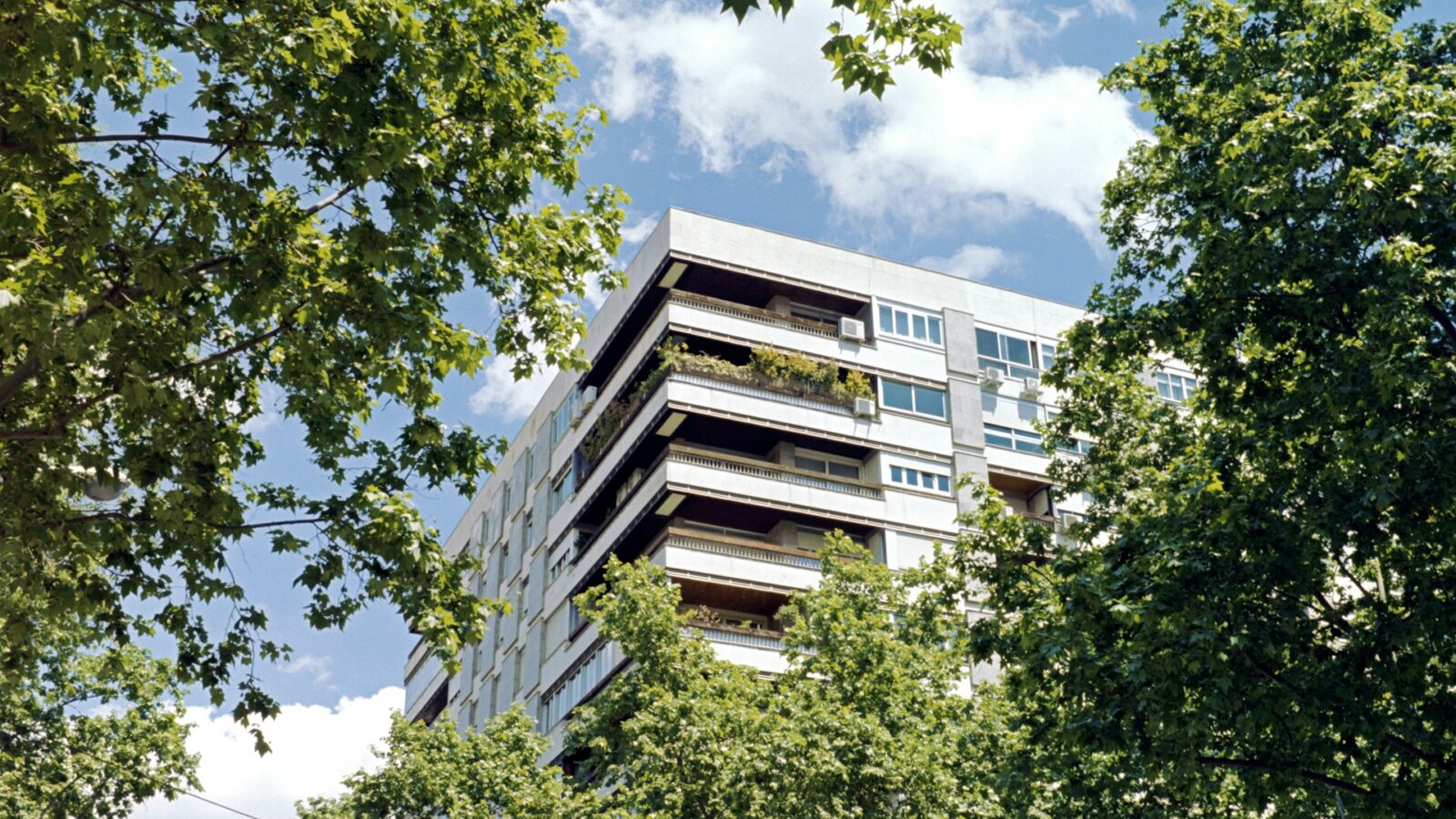
The first thing to accept about renting in Spain is that good flats are scarce, competition is fierce and prices are rising fast. According to the property portal idealista, the average asking rent in Spain in September 2026 was €15.1 per square metre per month, up 5.6% year on year. In Madrid city it reached €23.4 per square metre, so a 60 m² flat costs about €1,400 a month, or a little over RMB 10,000, which is close to rents in central Beijing or Shanghai.
The good news is that Spanish tenancy law protects tenants quite strongly: the legal deposit for a home is one month’s rent, agency fees must by law be paid by the landlord, and leases are protected for at least five years. But housing decrees changed repeatedly in autumn 2026, and some of the new rules still need parliamentary validation. This guide follows the order of a move from China: rent levels, neighbourhoods popular with Chinese residents, deposit and contract rules, documents, rental websites and the most common scams, so you can prepare before you land.
Rent prices in Spain: city by city in 2026
Spanish rents are usually quoted per square metre per month. The table uses idealista data for September 2026 and converts it to the monthly rent of a 60 m² flat (a typical one- or two-bedroom). RMB figures use the European Central Bank reference rate of 23 October 2026, €1 = RMB 7.466, and are estimates only; actual listings vary widely by floor, condition and whether the flat is furnished.
| City/region | Monthly rent (€/m²) | Year-on-year | Est. rent for 60 m² (€) | In RMB |
|---|---|---|---|---|
| Madrid city | 23.4 | +4.8% | c. 1,404 | c. 10,480 |
| Barcelona city | 20.1 | -0.8% | c. 1,206 | c. 9,000 |
| Palma (Mallorca) | 19.6 | +7.3% | c. 1,176 | c. 8,780 |
| San Sebastián | 18.4 | -2.5% | c. 1,104 | c. 8,240 |
| Málaga | 16.5 | +3.9% | c. 990 | c. 7,390 |
| Valencia region (overall) | 13.2 | — | c. 792 | c. 5,910 |
| Andalusia (overall) | 14.1 | — | c. 846 | c. 6,320 |
| Spain | 15.1 | +5.6% | c. 906 | c. 6,760 |
Compared with China, rent takes a much larger share of income in Spain. Many newcomers start by renting a room in a shared flat (alquiler de habitaciones), which costs far less than a whole flat, but read the contract carefully: see the 2026 rules on room rentals below.
Where Chinese residents live: Usera in Madrid
esMadrid, the Madrid City Council tourism portal, describes Usera as the neighbourhood with the largest concentration of the Chinese community in Spain: about a quarter of Madrid city’s 35,985 Chinese residents live there, along with Chinese restaurants, supermarkets and the Chinese New Year parade. For newcomers whose Spanish is still limited, living near the community makes daily life easier and is relatively affordable. The chart compares rents across Madrid districts in September 2026:
Note that rents in Usera rose 8.5% in a year, Carabanchel 10.4% and Villaverde 14.5%: the cheaper southern districts are catching up fast. In Barcelona the city average in September 2026 was €20.1 per m², and the northern district of Nou Barris, at about €15.4, is one of the cheaper options. Barcelona and its surroundings also have neighbourhoods with many Chinese residents, but we found no official statistics, so visit in person and weigh commuting and schools. For the bigger picture, start with our Spain relocation guide.
Lease rules: term, rent increases and the 2026 changes
Residential leases in Spain are governed by the Urban Leases Act (Ley de Arrendamientos Urbanos, LAU, Law 29/1994). The core rules are:
- Minimum protected term: the term can be agreed freely, but if it is shorter than 5 years (7 if the landlord is a company or other legal entity), it renews automatically year by year until it reaches 5 or 7 years; the tenant only needs to give 30 days’ notice not to renew.
- Early exit by the tenant: after 6 months, the tenant may leave with at least 30 days’ written notice.
- Rent in advance: the landlord may not demand more than one month’s rent in advance (LAU art. 17).
- Rent increases: only on the contract anniversary and only as agreed; if the contract says nothing, the rent does not rise. The legal reference index is the IRAV, the annual rental-contract update index published by Spain’s National Statistics Institute (INE).
Between late September and October 2026 the government issued a series of housing decrees. Royal Decree-laws 26/2026 and 27/2026 of 29 September were voted down by Congress on 2 October and lapsed. After parliament was dissolved, the government re-issued substantially the same content on 6 October as Royal Decree-laws 28/2026 and 29/2026. RDL 29/2026 has been in force since 8 October 2026. Its main points:
- Until 31 December 2027, if the rent is already above the reference price index cap, no annual increase is allowed; otherwise, without a new agreement, the increase may not exceed 2%.
- Tenants on qualifying long-term leases can ask for up to two extra years (if they have paid on time).
- Landlords may not require tenants to buy rent-default insurance, nor pass on property taxes such as IBI.
- Room rentals are brought under the LAU, and the rents for all rooms in a flat may not exceed the rent for the whole flat.
- A tenant tax credit: tenants with a taxable base below €33,007.20 can deduct 10% of rent paid from the state share of income tax; the maximum base is €11,630 (so at most about €1,163 a year) for taxable bases up to €23,007.20, tapering above that.
Important: RDL 28/2026 and RDL 29/2026 still have to be validated by Congress’s Permanent Deputation (Diputación Permanente) within the legal deadline, or they will be repealed. RDL 28/2026 (automatic five-year renewals and more) is due to take effect on 15 November 2026. Spain holds a general election on 29 November 2026, so the rules may change again. Before signing, check the current text in the BOE or ask a local housing office.
Deposits, guarantees and agency fees: the legal limits
Many Chinese tenants report that “one month’s agency fee plus a three-month deposit” is common in Spain. In fact, Spain’s consumer ministry singled out such unfair clauses in May 2026. The law says:
| Item | Legal rule | Basis |
|---|---|---|
| Deposit (fianza) | One month’s rent for a residential lease, paid in money (bank transfer included); two months for non-residential use | LAU art. 36 |
| Additional guarantee (garantía adicional) | At most two more months for a long-term lease; at most one month for a temporary-housing lease | LAU art. 36; RDL 29/2026 |
| Agency and contract fees | Paid by the landlord; cannot be passed to the tenant under any name | LAU art. 20 (as amended by Ley 12/2023) |
| Rent in advance | At most one month | LAU art. 17 |
| Return of deposit | Statutory interest accrues if not returned within one month of handing back the keys | LAU art. 36 |
| Deposit lodging | The landlord must lodge the deposit with the regional body; in the Madrid region, the Agencia de Vivienda Social, within 30 working days of signing | Madrid Decree 181/1996 |
So for a long-term flat at €1,200 a month, the most you can legally be asked for at signing is a €1,200 deposit + up to €2,400 additional guarantee + €1,200 first month’s rent, a total of no more than €4,800 (about RMB 35,840). If someone asks for an “agency fee” or more cash than this, be on guard. In Madrid, tenants can ask the Agencia de Vivienda Social to confirm that their deposit has been lodged; see the Madrid region’s deposit page. If you are sending the deposit and first month’s rent from China, check your personal FX quota and purpose declaration in advance with our guide to forex and transfers from China.
Rent control: which areas are “stressed zones”
Under the 2023 Right to Housing Act (Ley 12/2023), regional governments can ask for municipalities to be declared stressed residential market zones (zona de mercado residencial tensionado). In those zones, the rent on a new lease generally may not exceed the last rent of the previous contract on that home in the past five years, and large landlords (generally owners of more than ten homes) are also capped by the state reference price index.
According to the Housing Ministry, as of October 2026 stressed zones had been declared in Catalonia (about 271 municipalities, including Barcelona), Navarre, the Basque Country, Asturias and Galicia. The Madrid, Valencia and Andalusia regions have not declared any, so rents in Madrid are essentially set by the market. To check a specific address, use the Housing Ministry’s stressed-zone lookup.
Documents you need to rent in Spain
Spanish law has no single official list of documents for renting. These are what landlords and agents most often ask for; the more complete your file, the better your chances:
- Passport and residence document: your entry visa or foreigner identity card (TIE).
- Foreigner Identity Number (NIE): according to the Interior Ministry, the NIE is a personal, unique number for foreigners with economic, professional or social ties to Spain, applied for at immigration offices, police stations or Spanish consulates abroad. Many landlords and utility companies ask for it.
- Proof of income: a Spanish employment contract and recent payslips (nóminas); tax returns if self-employed; scholarship or family-support evidence for students.
- Spanish bank account: for monthly rent direct debits.
Newcomers without a local income record are often asked for an extra guarantee or a bank guarantee (aval bancario). To match documents to your visa stage, see our Spain visa and residence guide; if you are coming on a work visa, our guide to working in Spain covers employment contracts.
Right after signing: municipal registration (empadronamiento)
After moving in, register at the town hall (padrón). It underpins healthcare, school enrolment and residence renewals. In Madrid city, non-EU citizens need a residence document (or a valid passport if they have none) and a current lease of at least 6 months, signed by all parties and showing the owner’s details and the property’s cadastral reference (referencia catastral). Non-EU citizens without permanent residence must renew the registration every two years or it lapses. So make sure the landlord agrees to your registration and that the contract details are complete.
Rental websites in Spain and how to find a flat
The main rental portals in Spain are idealista and Fotocasa; Habitaclia is widely used in Catalonia, and there is also pisos.com. Rooms in shared flats can be found in the “habitaciones” sections of these sites. Many listings also circulate in Chinese WeChat groups and community forums; they are convenient but unmoderated, so verify even more carefully. A suggested process:
- Bridge stayStay in a hotel or short let for 2–4 weeks while you view flats and handle paperwork
- Search onlineSet alerts on the portals; good flats often go within a day or two
- View in personGo yourself or send someone you trust, and check the landlord’s identity and ownership
- Review the leaseCheck term, increase clause, deposit amount and registration consent; get a translation if needed
- Pay and signPay the deposit and first month by bank transfer and keep receipts
- Register and move inPhotograph the condition of the flat, do the padrón and transfer utilities
For temporary accommodation on arrival, see hotels and short stays in Spain; to put rent in context, compare the cost of living in Spain.
Things to watch: the most common rental scams
According to media reports, Spain’s National Police economic and technology crime unit warns that fake listings often carry real photos, a precise location and a low price, while the property may not exist at all. Scammers claim “lots of people are interested” to push you to pay quickly by Bizum or bank transfer, and once the money is gone it is rarely recovered. Common tricks include:
- Payment before viewing: “I’m abroad, pay the deposit and I’ll post you the keys” is the classic fake-landlord script.
- Suspicious links: “booking a viewing” or “payment platform” links sent by text or chat apps may be phishing.
- Illegal fees: agents charging tenants agency or contract fees, or deposit plus guarantee above the legal limit.
- “Temporary” leases to dodge tenant protection: a “temporary” contract with no real temporary reason (such as a work posting or short course). Under RDL 29/2026 a temporary lease needs a real, provable reason and as a rule may not exceed 12 months; an unjustified term over 12 months, or more than two successive contracts between the same parties for the same home, turns it into an ordinary habitual-residence lease from the first contract.
- Unauthorised sublets: subletting needs the owner’s written consent; otherwise you may be asked to leave at any time and cannot register.
Practical tip: before paying, ask to see the landlord’s ID and the land-registry record (nota simple, available for a fee from the Property Registry), pay only by traceable bank transfer, never pay for a flat you have not seen, put every agreement in the contract and keep your chat history.
Rent or buy?
Because long-term leases are well protected, many newcomers rent for the first year or two, get to know the city and community, and only then consider buying. If you plan to settle for good, read our guide to buying property in Spain, and insure your rented home’s contents and liability, as explained in our Spain insurance guide. If you are still comparing southern Europe, see our guide to renting in Portugal.
FAQ
Do I need an NIE to rent in Spain?
No single legal rule says you must have an NIE to rent, but in practice most landlords, agents and utility and internet companies ask for it, and you also need it for a bank account and municipal registration. Apply as early as you can.
The landlord wants a three-month deposit. Is that legal?
The legal deposit on a long-term residential lease is one month’s rent, plus at most two months of additional guarantee, so deposit and guarantee together cannot exceed three months’ rent. For temporary-housing leases the additional guarantee is at most one month. Agency fees cannot be charged to the tenant.
How soon do I get my deposit back?
The landlord may deduct unpaid rent or damage, and the balance should be returned at the end of the lease; if it has not been returned one month after you hand back the keys, statutory interest starts to accrue. A jointly signed check-out condition report reduces disputes.
Sources
- BOE – Ley 29/1994 de Arrendamientos Urbanos (consolidated text, updated 7 Oct 2026) (accessed October 2026)
- BOE – Royal Decree-law 29/2026 of 6 October (social function of housing, affordable housing) (accessed October 2026)
- BOE – Royal Decree-law 28/2026 of 6 October (stability of habitual-residence leases) (accessed October 2026)
- BOE – Resolution of 24 July 2026: stressed rental zones declared in Q2 2026 (accessed October 2026)
- Ministry of Housing and Urban Agenda – Stressed residential market zones (accessed October 2026)
- Ministry of Social Rights, Consumer Affairs and Agenda 2030 – Abusive clauses in rental contracts (May 2026) (accessed October 2026)
- Comunidad de Madrid – Rental deposits (fianzas) (accessed October 2026)
- Comunidad de Madrid – The home rental process (accessed October 2026)
- Madrid City Council – Municipal register: registration and change of address (accessed October 2026)
- Ministry of the Interior – Foreigner Identity Number (NIE) (accessed October 2026)
- esMadrid (Madrid City Council tourism portal) – Chinese Madrid (accessed October 2026)
- idealista – September 2026 rent report: +5.6% year on year (accessed October 2026)
- idealista – Rent prices by district, Madrid city (September 2026) (accessed October 2026)
- idealista – Rent prices by district, Barcelona city (September 2026) (accessed October 2026)
- European Central Bank – EUR/CNY reference rate (accessed October 2026)
- LegalToday – Housing decree-laws: repeal, re-approval and validation (legal media, backup source) (accessed October 2026)
- Provivienda Observatory – What the new housing decrees change (NGO, backup source) (accessed October 2026)
- Legálitas – Key points of Ley 12/2023 on the right to housing (law firm, backup source) (accessed October 2026)
- Última Hora – National Police warn about rental scams (April 2025, media report) (accessed October 2026)