Healthcare in Spain revolves around the public National Health System (SNS). If you work in Spain and pay social security contributions, are a dependant of someone who does, or are a legal resident whose entitlement has been recognised by the Social Security Institute (INSS), you get an individual health card (tarjeta sanitaria) from your autonomous community, register with a family doctor at your local health centre (centro de salud), and pay essentially nothing at the point of care. The main out-of-pocket cost is a co-payment on prescription medicines, set by income. As of October 2026, the latest government figures show an average wait of 121 days for surgery and 102 days for a first specialist appointment.
Newcomers from China usually start with private insurance: the non-lucrative residence, student and digital nomad visas all require health insurance from an insurer authorised to operate in Spain. Once you start working and are registered with social security, you join the public system automatically. Many Chinese families keep both public cover and a private policy, using the private one for shorter waits and Chinese-speaking doctors. Below we cover who is eligible, how to get the card, what it costs, where to go and what to do in an emergency, with euro amounts also converted to RMB (ECB reference rate of 27 October 2026: EUR 1 ≈ CNY 7.43).
How the Spanish healthcare system works
The central Ministry of Health (Ministerio de Sanidad) sets a common basic portfolio of services, but hospitals and health centres are run by Spain’s 17 autonomous communities, for example SERMAS in Madrid, CatSalut in Catalonia and SAS in Andalusia. Health cards, booking apps and waiting times therefore differ by region, and you must re-register if you move between regions.
Unlike China, where you can walk into a big hospital and book a specialist, Spain uses a family-doctor gatekeeper model: you first see a GP (médico de cabecera / médico de familia) at your health centre, who refers you to hospital specialists when needed. Children are seen by a paediatrician. At night and on holidays you go to the emergency department (urgencias) or call the emergency number.
Spain spent about EUR 101.7 billion on public healthcare in 2024, 62.1% of it on hospital and specialist services. In the Ministry of Health’s 2025 Health Barometer (second wave), overall satisfaction with the system was 6.02 out of 10, and 61.4% of people who hold private insurance said they would get better treatment in the public system for a serious illness. In short, public hospitals are clinically strong; the weak point is waiting.
Can foreigners use public healthcare?
Spain does not give free healthcare to everyone on arrival. For Chinese citizens, the usual situations are as follows (as of October 2026):
| Status | Public system? | Notes |
|---|---|---|
| Employed or self-employed (work permit, EU Blue Card, etc.) | Yes | Entitled once registered with and contributing to social security; spouse and dependent children can be beneficiaries |
| Non-lucrative residence (not working) | Not for the visa | The consulate requires public or private insurance covering everything the public system covers; after one year you can look at the “convenio especial” |
| Student visa | Usually not | Insurance from an insurer authorised in Spain, with cover similar to the public basic portfolio, for the whole stay |
| Digital nomad (remote work) | Depends | No private policy needed if you prove Spanish social security cover; otherwise private insurance is required |
| Parents joining via family reunification | Usually not | In practice INSS usually expects private insurance; this has been disputed in the courts for years |
| Tourists and short stays | No | Emergency departments will treat you, but may bill you afterwards; buy travel medical insurance |
On the legal side, Royal Decree-law 7/2018 restored the principle of universal coverage. On 11 March 2026, Royal Decree 180/2026 set out the procedure for foreigners without legal residence to apply for public healthcare (in force from 13 March); one condition is that the person has no obligation to be covered through another route and holds no valid stay visa. The new rule mainly targets irregular migrants: newcomers on a legal visa should still arrange insurance according to their visa type. For visa document requirements, see our Spain visa guide.
Visa insurance is not just any travel policy. For the non-lucrative and digital nomad visas, the Consulate General in Beijing requires a policy from an insurer authorised to operate in Spain that covers all risks covered by the Spanish public system. Many insurers and agents stress “no co-payments, no waiting periods” (sin copagos ni carencias); confirm the current requirement with the consulate or visa centre before you apply.
Getting your health card: from arrival to a family doctor
In Madrid, a first health card has two preconditions: you are registered as a resident in the Community of Madrid (empadronamiento), and INSS has recognised your right to healthcare; foreigners also need a residence permit that is valid or being renewed. The application is free and can be made in person at your health centre; the card arrives at the centre after about 3 to 4 weeks. Other regions work similarly, with different names and online portals.
- Register your addressOnce you have a flat, register at the town hall (empadronamiento); see the renting guide
- Get social security statusYour employer registers you when you start work; the self-employed register themselves; non-working residents apply to INSS for recognition
- Go to your health centreBring your passport/residence card (TIE) and registration certificate, apply for the card and choose a GP
- Collect the cardAfter about 3–4 weeks at the health centre; foreigners’ cards expire and must be updated after renewing residence
- Download the regional appUse your region’s app or website to book GP appointments and see e-prescriptions
For renting and address registration, see our Spain renting guide; for social security registration when you start a job, see the Spain work guide. The official Madrid health card information is on the Community of Madrid e-government site.
What does it cost?
If you are entitled, GP visits, tests, hospital stays and surgery in the public system are in principle free at the point of use. What you actually pay for is outpatient medicines. Royal Decree-law 11/2026 of 12 May 2026 (in force 14 May, ratified by Congress on 28 May) reset the co-payment bands, based on individual annual income:
| Annual income (EUR) | Workers’ share | Workers’ monthly cap | Pensioners’ share |
|---|---|---|---|
| Under 9,000 | 40% | EUR 8.23 (about CNY 61) | 10% |
| 9,000–18,000 | 40% | EUR 18.52 (about CNY 138) | 10% |
| 18,000–35,000 | 45% | EUR 61.75 (about CNY 459) | 10% |
| 35,000–60,000 | 45% | No cap | 10% |
| 60,000–100,000 | 50% | No cap | 10% |
| 100,000 and over | 60% | No cap | 60% |
Note: although the decree is in force, pharmacies apply the new bands only after the next income cross-check (cruce de rentas), expected in November 2026; until then everyone keeps their previous percentage. Pensioners also have monthly caps (EUR 8.23 to 61.75, by income). For the “reduced contribution” medicines used for many chronic conditions, workers pay at most EUR 4.98 a month. People on the minimum living income, non-contributory pensions and some other groups are exempt.
If you do not work and do not qualify any other way, after one year of actual residence in Spain and with address registration you can sign a “special agreement” (convenio especial) with your regional health service: EUR 60 a month under 65 (about CNY 446) and EUR 157 a month from 65 (about CNY 1,167), with no co-payments or waiting periods, but it excludes outpatient medicines, which you pay in full.
Compared with China: according to the National Health Commission’s statistical bulletin, in 2025 the average hospital outpatient visit in China cost CNY 357.7 and the average hospital admission CNY 9,768.9, and out-of-pocket spending made up 27.1% of total health expenditure. In Spain’s public system these costs are largely funded by taxes; your main out-of-pocket cost is medicines.
Waiting lists in public hospitals
Waiting is the biggest weakness of Spanish public healthcare. According to the Ministry of Health’s waiting-list information system (SISLE), on 31 December 2025, 853,509 people were waiting for surgery, for an average of 121 days, and 21.6% had waited more than six months; about 4 million were waiting for a first specialist appointment, for an average of 102 days. Waits vary widely by specialty:
Emergencies and serious conditions such as cancer are prioritised; the queues mainly affect non-urgent surgery and specialist follow-ups. If you are used to same-day hospital appointments in China, adjust your expectations.
Private hospitals and private health insurance
Private healthcare is widespread in Spain. According to insurance research body ICEA (as reported in the media), health insurance premiums exceeded EUR 13.5 billion in 2025, covering about 12.8 million people; in the first half of 2026 premiums reached about EUR 7.25 billion, up 6.91% year on year, and the three largest insurers, SegurCaixa Adeslas, Sanitas and Asisa, held 60.2% of the market.
Advantages of private cover
- Book specialists directly with short waits
- Private hospitals often offer single rooms
- Insurer directories let you search for Chinese- or English-speaking doctors
- Meets the insurance requirement of most residence visas
Watch out for
- Premiums rise with age and some insurers restrict older applicants
- Pre-existing conditions may be excluded or have waiting periods
- Many people still return to the public system for serious illness
- Policies usually do not cover, or only partly reimburse, medicines
For how to choose and compare policies, see our Spain insurance guide. A full check-up in China before you leave, plus a summary of your medical records and medicines, will also save trouble in Spain; see our pre-departure medical check-up guide.
Where to find Chinese-language medical help
Spain has no official “Chinese hospital”, but there are reliable routes:
- Telephone interpreting in the public system: Madrid’s health centres offer remote telephone interpreting, expanded in July 2024 to 65 languages including Mandarin and Cantonese, available 24 hours a day. Ask the doctor or reception: “necesito un intérprete de chino”.
- Private insurer directories: the main insurers’ directories can usually be filtered by language, and Chinese-run clinics and traditional Chinese medicine practices exist in areas such as Usera in Madrid and in Barcelona; before choosing, check that the doctor is registered with the local medical association (Colegio de Médicos).
- Chinese community associations: they can recommend doctors and help with interpreting; see our Spain Chinese community page.
In Spain, antibiotics and other prescription medicines can only be bought with a doctor’s prescription, and pharmacies will not sell them otherwise. Do not buy unidentified “medicines from China” through WeChat groups either: there are legal and health risks.
Pharmacies, emergencies and emergency numbers
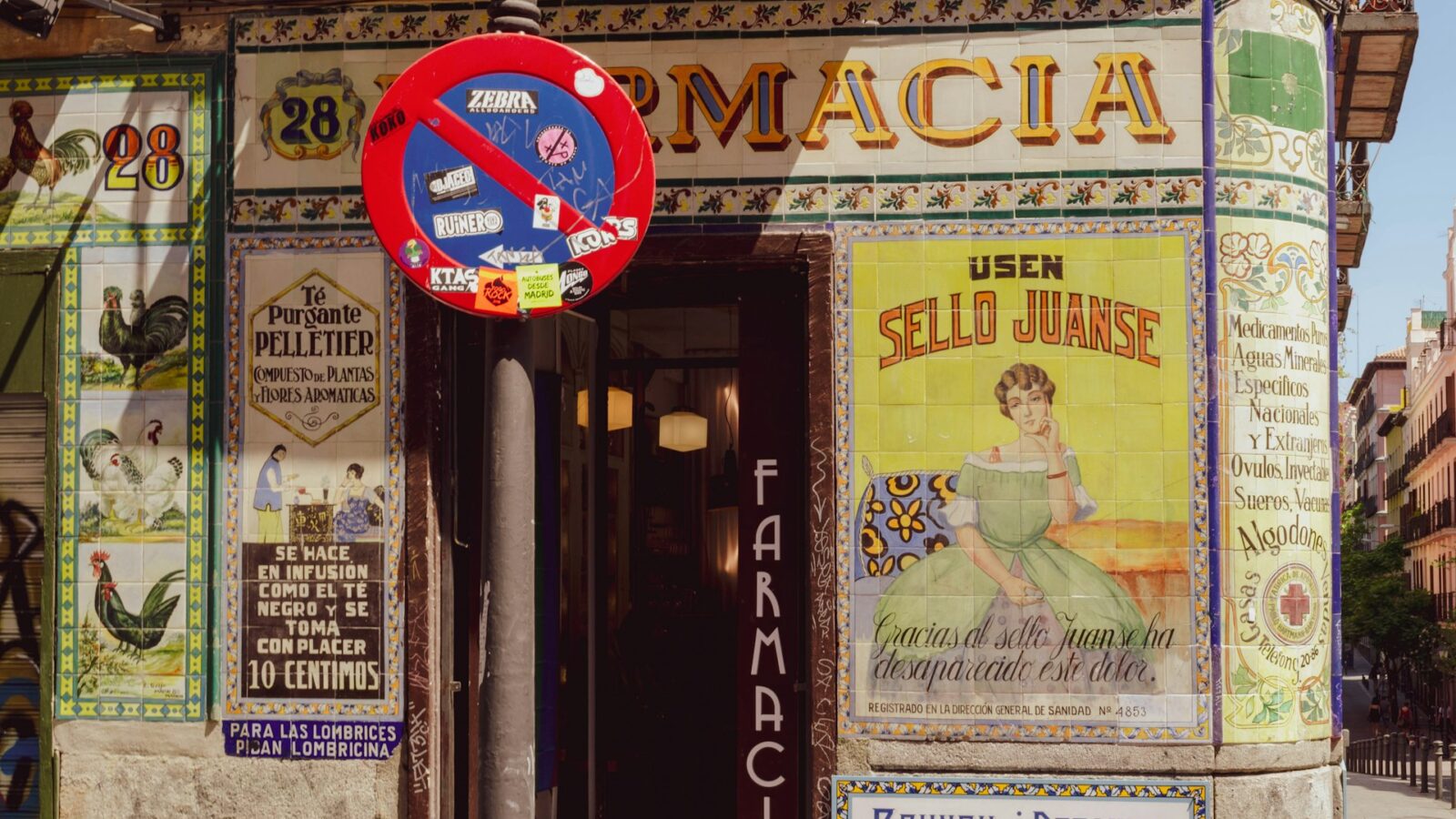
Spanish pharmacies (farmacia) display a green cross, and pharmacists can advise on minor ailments. At night and on holidays there are duty pharmacies (farmacia de guardia), listed on pharmacy doors and town hall websites. With a health card, your GP issues an electronic prescription and you collect the medicine by showing the card at any pharmacy.
- 112: Spain’s single emergency number (medical, fire, police); you can ask for English.
- 061: regional medical emergency / health advice line in some communities, for example CatSalut Respon in Catalonia.
- China’s Global Emergency Call Centre for Consular Protection (12308): +86-10-12308 or +86-10-65612308, 24 hours. Note: 12308 never calls you to ask for money; hang up on such calls.
For safety advice, see our Spain safety guide. To compare with other countries, see healthcare in Portugal, healthcare in France and healthcare in the United States; for more on life in Spain, go back to our Spain country guide.
Spain vs China at a glance
| Item | Spain | China |
|---|---|---|
| Access | GP first, referral to specialists | Book hospital specialists directly |
| Cost of care | Public GP and hospital care essentially free; workers pay 40–60% of medicine prices by income | Out-of-pocket after insurance; average hospital outpatient visit CNY 357.7 (2025) |
| Doctors | 6.51 registered doctors per 1,000 (INE 2025, includes non-practising) | 3.78 practising (assistant) physicians per 1,000 (2025) |
| Main pain point | Average surgery wait of 121 days | Crowded big hospitals, hard-to-get appointments |
| Language | Spanish; telephone interpreting in some regions | Chinese |
Note: the two countries count doctors differently, so treat the comparison as indicative.
FAQ
I have just arrived and do not work yet. What if I get sick?
Use the private insurance you bought for your visa and go to a doctor or private hospital in your insurer’s directory; for emergencies go to urgencias or call 112. Once you start working and are registered with social security, apply for a health card to join the public system.
Can my parents use public healthcare when they visit or join me?
Not on a short visit; they need travel medical insurance. Parents who come through family reunification are in practice usually asked to hold private insurance; after a year of residence in Spain, check whether they qualify for the convenio especial (EUR 157 a month from age 65, medicines excluded).
Can I see a doctor in Chinese?
The public system works in Spanish, but health centres in Madrid and elsewhere offer telephone interpreting that includes Mandarin and Cantonese; in the private sector you can search insurer directories for Chinese-speaking doctors.
How much does private insurance cost?
Prices depend on age, city and level of cover, so there is no single figure. A policy for a visa must cover all risks covered by the public system and come from an insurer authorised in Spain; get several quotes and compare.
Sources
- Ministerio de Sanidad – Convenio especial de prestación de asistencia sanitaria (accessed October 2026)
- Ministerio de Sanidad – Acceso universal a la sanidad pública (accessed October 2026)
- BOE – Real Decreto 180/2026, de 11 de marzo (accessed October 2026)
- BOE – Real Decreto-ley 11/2026 (aportación farmacéutica) (accessed October 2026)
- BOE – Convalidación del Real Decreto-ley 11/2026 (accessed October 2026)
- Ministerio de Sanidad – Informe SISLE-SNS, 31 dic 2025 (accessed October 2026)
- Ministerio de Sanidad – Gasto sanitario público 2024 (accessed October 2026)
- Ministerio de Sanidad – Barómetro Sanitario 2025 (2ª oleada) (accessed October 2026)
- INE – Profesionales Sanitarios Colegiados 2025 (accessed October 2026)
- Comunidad de Madrid – Tarjeta sanitaria (accessed October 2026)
- Comunidad de Madrid – Teletraducción en centros de salud (65 idiomas) (accessed October 2026)
- Consulado General de España en Pekín – Visado de residencia no lucrativa (accessed October 2026)
- Consulado General de España en Pekín – Visado de estudios (accessed October 2026)
- Consulado General de España en Pekín – Visado de teletrabajo (nómada digital) (accessed October 2026)
- Ajuntament de Barcelona – Useful telephone numbers (accessed October 2026)
- El Español – ICEA data on health insurance premiums (media, backup) (accessed October 2026)
- Xinhua – China 2025 Statistical Bulletin on Health Development (NHC) (accessed October 2026)
- Chinese Embassy in Singapore – Warning on scams impersonating the 12308 hotline (accessed October 2026)
- European Central Bank – EUR/CNY reference rate (accessed October 2026)
- Ministry of Health press release: pharmaceutical co-payment reform (12 May 2026) (accessed October 2026)
- Cuestiones Laborales: new co-payment bands apply from November (media) (accessed October 2026)