


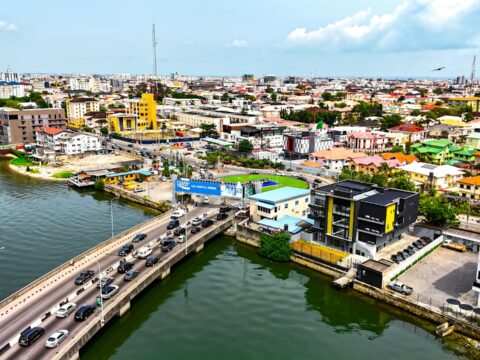
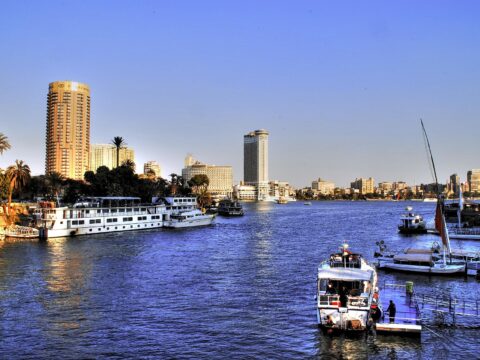
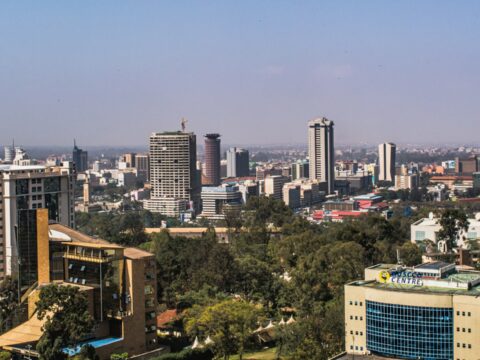

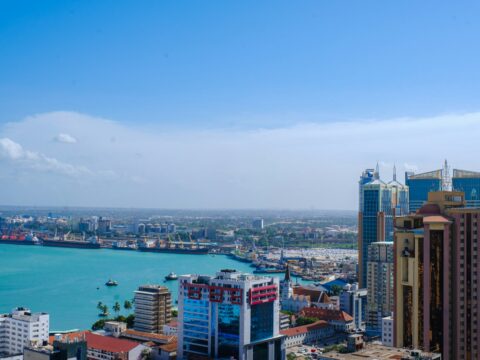


When Chinese people think of going to Africa, many picture engineering projects and overseas postings, but the Chinese who live in Africa long term today are far from just construction workers. There are traders running factories and wholesale markets in Lagos and Johannesburg, entrepreneurs in logistics, e-commerce and restaurants in Nairobi and Dar es Salaam, retirees who bought homes in Mauritius and students learning Arabic in Cairo. Africa’s young population and fast-growing markets, and the strong presence of Chinese goods and companies, are why many people consider moving to Africa.
But Africa is a continent of more than fifty countries, and entry rules, residence systems, safety and living conditions vary enormously, so “going to Africa” is never one decision. This guide compares the eight countries covered on this site – South Africa, Nigeria, Egypt, Kenya, Mauritius, Tanzania, Zambia and Madagascar – from a Chinese citizen’s point of view: entry rules, long-stay routes, cost of living, Chinese communities, safety and climate, to help you decide which African country suits you and what to prepare before you leave.
The eight countries at a glance
| Country | Entry on an ordinary Chinese passport | Main long-stay routes | Chinese community (estimate) | Monthly cost level |
|---|---|---|---|---|
| South Africa | Visa required, no visa on arrival; online ETA for short visits since August 2026 | Points-based general work visa, critical skills, intra-company transfer, remote work, retirement | ~300,000–400,000 (academic and media estimates) | Medium |
| Nigeria | Visa required; visa on arrival abolished in May 2025 in favour of an online e-Visa | STR visa + residence permit (CERPAC), temporary work permit | ~40,000 (Chinese ambassador’s estimate, 2017) | Medium |
| Egypt | Visa required; online e-Visa (US$30 single entry) or visa on arrival at airports | Work permit + residence, investor/business residence, study | ~8,000 (MOFCOM guide, 2025) | Low |
| Kenya | No traditional visa, but an Electronic Travel Authorisation (eTA) is required in advance (from US$30) | Class D work permit, Class G business permit, Class K resident permit | Conservatively over 50,000 (MOFCOM guide, 2025) | Medium-low |
| Mauritius | Visa-free (China–Mauritius mutual visa exemption agreement, since 2013) | Occupation Permit (professional, investor, self-employed), retirement residence, property-linked residence | ~20,000 ethnic Chinese (MOFCOM guide, 2025) | Medium-low |
| Tanzania | Visa required; online e-Visa, ordinary visa US$50, up to 90 days | Class A (investor), Class B (employed), Class C (students etc.) residence permits | ~30,000 (MOFCOM guide, 2025) | Medium-low |
| Zambia | Visa-free, up to 90 days in any 12 months | Employment permit, investor’s permit, residence permit | ~15,000–30,000 (our estimate) | Medium-low |
| Madagascar | Visa required; e-Visa or visa on arrival (the mutual exemption agreement covers only diplomatic and service passports) | Transformable visa, then worker, investor or family residence | ~50,000 overseas Chinese (MOFCOM guide, 2025) | Low |
Most African countries have no reliable statistics on their Chinese populations; the figures above come from different sources and years and are only a rough indication of scale.
Which African countries are visa-free for Chinese citizens?
Of the eight countries on this site, Mauritius and Zambia are visa-free for ordinary Chinese passports. Mauritius applies the China–Mauritius mutual visa exemption agreement in force since 2013, with the length of stay set by the entry stamp; Zambia lists China among visa-exempt countries, allowing ordinary visitors up to 90 days in any 12-month period. Kenya abolished traditional visas, but all non-exempt travellers must apply online for an Electronic Travel Authorisation (eTA) in advance – in practice still a prior approval.
The others all require a visa, though most can be obtained online: Egypt has an official e-Visa at US$30 for a single entry; Tanzania’s ordinary e-Visa costs US$50; Nigeria scrapped visas on arrival in May 2025 in favour of its official e-Visa platform, and an electronic landing card must be completed in advance; South Africa launched its Electronic Travel Authorisation (ETA) on 12 August 2026, with China among the first pilot countries. The latest entry rules for each country can be checked on China Consular Service.
Apply for e-Visas and eTAs only on official government websites. The top search results are often mark-up agencies and sometimes phishing sites. Neither visa-free entry nor e-Visas allow you to work; working on tourist status can lead to detention, fines and deportation.
Long-term residence: most people go the work-permit route
Unlike Europe or North America, African countries rarely offer an “immigrant visa” for ordinary applicants. The vast majority of Chinese living long term in Africa hold work or residence permits tied to an employer or company – such as Nigeria’s STR visa plus residence permit, Kenya’s Class D work permit, Tanzania’s Class B residence permit or Zambia’s employment permit. People who set up their own business usually apply for an investor’s permit and must meet minimum investment and local-staff requirements.
A few countries offer more flexible options: Mauritius has a retirement residence permit for people aged 50 and over (transferring at least US$2,000 a month, according to the Economic Development Board) and an investor Occupation Permit requiring at least US$100,000; South Africa has remote-work and retirement visas; Kenya’s Class K permit is for people aged 35+ with a steady foreign income. Degree certificates, police certificates and other documents needed for work permits and company registration are usually notarised and legalised in China first – see How to get a police certificate.
Cost of living compared
According to Numbeo’s crowd-sourced data, monthly spending for one person (living costs plus a city-centre one-bedroom flat) is below Shanghai in all eight cities: Cairo is cheapest, Johannesburg and Lagos the most expensive. In Chinese yuan:
Keep in mind that these averages do not fully reflect what foreigners actually spend. For safety reasons many Chinese choose walled, guarded compounds, and also pay for generators, water purification, private hospitals and international schools, so real costs can be well above the figures shown. Imported goods in Lagos are expensive, and inflation and exchange rates are volatile. For budgeting and currency exchange, see Personal foreign exchange and moving money abroad.
Chinese communities in Africa
South Africa has Africa’s largest Chinese population, estimated by academics and media at 300,000 to 400,000; Johannesburg’s Cyrildene Chinatown and the country’s Chinese shopping malls have a long history. In Nigeria, Kenya, Tanzania and Zambia, Chinese residents work mainly in engineering, manufacturing, trade and services, and Lagos, Nairobi, Dar es Salaam and Lusaka all have Chinese restaurants, supermarkets and chambers of commerce. Mauritius has a Chinese community over a century old, largely of Hakka descent, which forms a distinct group from recent arrivals.
The number of Chinese contract workers in Africa has fallen sharply over the past decade: SAIS-CARI data show a peak of about 264,000 in 2015 and about 91,000 at the end of 2024, with Egypt (8,170) and Nigeria (6,035) in the top five. As contract workers decline, the share of Chinese running their own businesses and settling long term is rising.
Safety
Safety is the factor to weigh most seriously when choosing an African country. In September 2026 Chinese nationals were kidnapped in Johannesburg and the Chinese Embassy in South Africa issued a safety alert; the Chinese Embassy in Nigeria updated its regional travel risk levels in September 2026; and during protests in Madagascar in 2025 a Chinese shopping mall was looted. Mauritius and Zambia are comparatively calm, but burglary, robbery and scams targeting foreigners are common in cities across the region.
Avoid going out alone at night, don’t flaunt wealth or carry large amounts of cash, choose housing with security, register with China Consular Service and the “China Consular” app, and follow embassy alerts.
Health risks matter too: malaria is present in most of sub-Saharan Africa, and some countries require a yellow fever vaccination certificate from travellers arriving from endemic areas. Consult an International Travel Healthcare Centre in China about vaccines and preventive medication before you leave; for health check requirements, see Medical check-ups and vaccinations before going abroad.
Climate
Climates vary widely. Johannesburg, Nairobi, Lusaka and Antananarivo sit at altitude and are mild all year with cool mornings and evenings; Lagos and Dar es Salaam are hot and humid with distinct rainy seasons; Cairo is dry with hot summers; Mauritius has a subtropical maritime climate with tropical cyclones to watch for each summer. South Africa is in the southern hemisphere, so its seasons are the reverse of China’s.
Pros and cons
Pros
- Fast-growing markets where Chinese goods, engineering and manufacturing know-how are competitive
- Mauritius and Zambia are visa-free; Kenya, Egypt and others can be done online
- Average living costs below Shanghai
- Many Chinese companies, offering postings and start-up opportunities
- Mauritius offers retirement and investor residence with fairly transparent rules
Cons
- High security risks in some countries, including robberies and kidnappings targeting Chinese
- Residence usually tied to work or investment; permanent residence and citizenship are hard
- Volatile currencies and restrictions on moving money out
- Limited healthcare; malaria and other diseases to guard against
- Some countries bar foreigners from small retail and similar trades
Which African country is best for you?
- Business, manufacturing or wholesale: South Africa has a mature market and well-developed financial and legal systems – see Moving to South Africa; Nigeria has a huge population and market but higher risk – see Moving to Nigeria.
- Start-ups, logistics or tourism in East Africa: Kenya is the regional hub – see Moving to Kenya; Tanzania’s port of Dar es Salaam serves landlocked neighbours – see Moving to Tanzania.
- Retirement, buying a home or stability: Mauritius is visa-free, relatively safe and offers retirement and property-linked residence – see Moving to Mauritius.
- Mining, agriculture or engineering: Zambia is visa-free and home to many Chinese mining companies – see Moving to Zambia.
- Tight budget or location matters: Egypt has the lowest costs and links the Middle East and Europe – see Moving to Egypt; Madagascar is cheap but its politics and security need close watching – see Moving to Madagascar.
For passports, notarisation and currency exchange before you go, see the Leaving China checklist, and follow visa and security changes in our news.
FAQ
What are the requirements for moving to Africa?
Most African countries have no direct immigrant visa. Usually an employer applies for your work permit, or you invest and set up a company and apply for an investor’s permit, and then obtain residence. Work permits typically require proof of qualifications and experience, a police certificate and a medical check, and some countries require the employer to show the job cannot be filled locally. Permanent residence generally requires many years of continuous legal residence.
Which African countries are visa-free for Chinese citizens?
Of the eight countries on this site, Mauritius and Zambia are visa-free for ordinary Chinese passports; Kenya requires an eTA in advance; Egypt, Tanzania, Nigeria, South Africa and Madagascar require visas, most of which can be applied for online as e-Visas or electronic travel authorisations.
Is daily life easy for Chinese people in Africa?
In big cities such as Johannesburg, Lagos and Nairobi, Chinese supermarkets, restaurants and business associations are easy to find, but Chinese-language services are far less developed than in Europe, North America or South-East Asia. Work and daily life are mainly in English; Arabic is used in Egypt, and French is common in Madagascar and Mauritius.
Can I send money I earn in Africa back to China?
Yes, but some countries have strict currency controls or foreign-exchange shortages that cause transfer delays and wide exchange-rate spreads. Before setting up a company, learn the local rules on foreign exchange and profit repatriation, open accounts with licensed local banks, and avoid underground money changers. For South Africa, see Opening a bank account in South Africa.
Sources
- SAIS China Africa Research Initiative: Data – Chinese workers in Africa (accessed October 2026)
- Chinese MFA: List of mutual visa exemption agreements (accessed October 2026)
- South African Government: Minister Leon Schreiber at the launch of the Electronic Travel Authorisation (12 Aug 2026) (accessed October 2026)
- Guangming Online: Kidnappings of Chinese nationals in Johannesburg; embassy safety reminder (6 Sep 2026) (accessed October 2026)
- Migration Policy Institute: Living In Between – The Chinese in South Africa (2012) (accessed October 2026)
- Fragomen: Nigeria – Visa-on-Arrival cancellation and eVisa rollout (May 2025) (accessed October 2026)
- Chinese Embassy in Nigeria: Travel risk levels and safety reminder (2 Sep 2026) (accessed October 2026)
- Egypt e-Visa Portal (Ministry of Interior): FAQ (accessed October 2026)
- MOFCOM Country Guide: Egypt (2025) (accessed October 2026)
- Kenya eTA (Department of Immigration Services): FAQs (accessed October 2026)
- Kenya Department of Immigration Services: Work permits (accessed October 2026)
- MOFCOM Country Guide: Kenya (2025) (accessed October 2026)
- residency.mu (EDB Mauritius): Retired non-citizens aged 50+ (accessed October 2026)
- residency.mu (EDB Mauritius): Occupation Permit – investment of USD 100,000 (accessed October 2026)
- MOFCOM Country Guide: Mauritius (2025) (accessed October 2026)
- Tanzania Immigration Department e-Services: Visa guidelines (accessed October 2026)
- MOFCOM Country Guide: Tanzania (2025) (accessed October 2026)
- Zambia Department of Immigration: Nationals who do not require a visa (accessed October 2026)
- Zambia Department of Immigration: For visitors (accessed October 2026)
- MOFCOM Country Guide: Madagascar (2025) (accessed October 2026)
- UK FCDO: Madagascar entry requirements (accessed October 2026)
- Numbeo: Cost of living in Johannesburg (shown in CNY) (accessed October 2026)
- Numbeo: Cost of living in Lagos (shown in CNY) (accessed October 2026)
- Numbeo: Cost of living in Cairo (shown in CNY) (accessed October 2026)
- Numbeo: Cost of living in Nairobi (shown in CNY) (accessed October 2026)
- Numbeo: Cost of living in Port Louis (shown in CNY) (accessed October 2026)
- Numbeo: Cost of living in Dar es Salaam (shown in CNY) (accessed October 2026)
- Numbeo: Cost of living in Lusaka (shown in CNY) (accessed October 2026)
- Numbeo: Cost of living in Antananarivo (shown in CNY) (accessed October 2026)
- Numbeo: Cost of living in Shanghai (accessed October 2026)