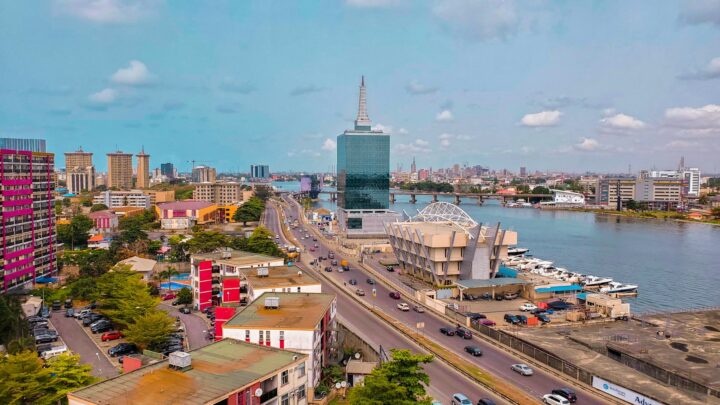
For Chinese citizens, work in Nigeria mostly comes from Chinese engineering, manufacturing, telecoms and trading companies. The open local job market leaves little room for foreigners. The lawful route follows one main line: the employer holds an Expatriate Quota, you enter on an STR work visa, and you then obtain a CERPAC residence card. A short-visit e-Visa cannot be converted to work or residence status inside Nigeria.
Pay needs a careful look. The legal minimum wage is still ₦70,000 a month (about RMB 348), and the formal-sector median is estimated at only ₦120,000 to ₦150,000, so local pay is clearly below typical Chinese levels. Before signing, the key questions are what currency you are paid in, who covers the permit fees, and how housing, security and your trip home are handled. This guide converts at RMB 1 ≈ ₦201 (4 November 2026) and US$1 ≈ ₦1,345 (3 November 2026). Rules and fees are as of November 2026.
Job market: where Mandarin is needed
Official unemployment is low (4.3% in Q2 2024), but that does not mean jobs are easy to find: 93.0% of employment in the same quarter was informal. Formal jobs cluster in Lagos, Abuja and Port Harcourt.
Mandarin-speaking roles are mainly on Chinese-run projects, in four broad groups:
- Construction and engineering: project managers, engineers, commercial and finance staff.
- Free-zone manufacturing: production management, equipment technicians, procurement.
- Telecoms and technology: solutions, delivery, customer support.
- Trade and retail: sales management, store operations, Chinese-English translation.
Two points matter. First, the quota system is built around skills transfer. Since 2025 each expatriate post must have at least two Nigerian understudies with a bachelor’s degree or HND, so it is hard to argue that a pure translator or general admin post needs a foreigner. Second, Mandarin-speaking local talent is growing: more than 5,000 Nigerians were studying in China in 2025, according to Chinese figures. Our view is that technical and management skills win quota posts; Mandarin alone is not enough.
For a country overview, the Chinese community and security, start with our Nigeria moving guide.
Chinese companies in Nigeria
China-Nigeria trade reached about US$22.3 billion in the first ten months of 2025. Chinese direct investment in Nigeria was about US$670 million, up some 130%, though the report does not state the period (News Agency of Nigeria, January 2026). The table lists only companies and zones with public sources, mainly local media. It does not mean they are hiring.
| Company or zone | Activity in Nigeria (public reports) |
|---|---|
| CCECC | In Nigeria since the early 1980s; Lagos-Ibadan, Abuja-Kaduna and Kaduna-Kano railways |
| CRCC | Parent company of CCECC; some reports list the same railways under its name |
| China Harbour (CHEC) | Lekki Deep Sea Port, Abuja-Keffi Expressway expansion |
| CGCOC | In Nigeria since 1983; water supply, Abuja ring expressways |
| PowerChina | In Nigeria since 2002; Zungeru hydropower and others |
| Huawei | In Nigeria since 1999; innovation centre in Lagos launched in 2025 |
| Lekki Free Zone | 53 enterprises, about 4,000 workers (CCECC official, December 2024) |
| Ogun-Guangdong Free Trade Zone | 173 companies (zone chairman), over 10,000 direct jobs (NCSP director general), both via The Guardian |
Work visas and residence for PRC citizens
Work status starts with the employer. The Ministry of Interior handles quotas and business permits, and the Nigeria Immigration Service (NIS) handles visas and residence. Since May 2025 the process has moved to the Expatriate Administration System (EAS), which links immigration, employment and tax records.
- Confirm the quotaThe employer obtains a quota from the Ministry of Interior for specific posts and numbers. Slots usually last 4 to 10 years, after which a Nigerian should take over
- Prepare documentsOffer letter or contract, quota approval, passport valid for 6+ months, police clearance, medical certificate, CV
- Apply for the STR visaSubmit at a Nigerian mission abroad. The file is first reviewed at NIS headquarters in Abuja; KPMG estimated about 10 working days in 2025
- Enter and get a CERPACApply online, typically within 90 days of arrival, and give biometrics
- Start work and renewA CERPAC lasts one to two years and renews with the quota and contract. Changing employers generally needs fresh approval
NIS also runs e-CERPAC for classes R2A (quota-based employees) and R3A (free-zone employees), which it says is issued before arrival so that no regularisation is needed afterwards. See our Nigeria visa guide and the Nigeria Immigration Service e-CERPAC page, and ask your employer which channel it uses.
| Item | Amount (as of November 2026) | Notes |
|---|---|---|
| CERPAC (employed foreigners) | $2,000 or $3,750 (about RMB 13,400 to 25,100) | The NIS website still lists $2,000; an NIS spokesman confirmed in February 2026 that the residence permit fee has been $3,750 since August 2025, including $1,000 of insurance |
| Quota verification fee | ₦300,000 to ₦500,000 (about RMB 1,490 to 2,490) | For expatriates already in Nigeria, depending on whether the permit predates June 2025; figures from an unnamed NIS source quoted by ThisDay |
| Temporary Work Permit (TWP) | $200 to $1,100 (about RMB 1,340 to 7,360) | Sources conflict: 2025 announcements gave $600 for 3 months and $1,100 for 6; KPMG said in 2026 that online permits of up to 3 months cost $200 |
| Expatriate insurance | $400 to $1,000 a year | Depends on permit type and length |
| Overstay fine | $15 a day | Over 3 months to 1 year: 5-year ban; over 1 year: permanent blacklisting |
A TWP is only for short specialist work such as installation, maintenance or training, and needs prior NIS approval. The 6-month TWP cannot be renewed. Fees are paid upfront and are not refunded on rejection, so the contract should say who pays.
Do not work long term on a business visa or TWP. In August 2025 local media reported that NIS was investigating five Chinese employees of a ceramics company in Ogun State. Several were reported to hold a TWP or business visa while working as sales managers or an interpreter. These are allegations: the report carries no company response, and no public outcome has been found. On the Chinese side, the Regulations on Overseas Labour Cooperation say nobody may run overseas labour dispatch without a qualification, nobody may send workers abroad under the name of business, tourism or study, and workers may not be charged deposits. Refuse anyone who asks for money first or tells you to “land now and sort the papers later”. Do not leave your passport with anyone long term, and keep copies.
Salary levels: local pay and Mandarin roles
Nigeria has no official average wage figure. The chart shows market estimates and advertised ranges, mostly gross monthly pay. We found no reliable public data on pay for Chinese staff posted to Nigeria, so we give no estimate.
₦250,000 to ₦400,000 is about RMB 1,240 to 1,990. If you are offered naira, work out the currency risk: the official rate was ₦1,442.92 to the dollar on 26 November 2025 and about ₦1,345 on 3 November 2026, a move of around 7% in a year.
Under the 2024 amendment the minimum wage is reviewed every three years. In October 2026 the labour minister wrote to the unions that the next review falls due on 1 June 2027 and that renegotiating now would be premature. Employers with fewer than 25 staff are not bound by this floor.
Personal income tax: the 2026 rules
The Nigeria Tax Act 2025 took effect on 1 January 2026, with these bands:
| Annual chargeable income | Rate |
|---|---|
| First ₦800,000 | 0% |
| Next ₦2.2 million | 15% |
| Next ₦9 million | 18% |
| Next ₦13 million | 21% |
| Next ₦25 million | 23% |
| Above ₦50 million | 25% |
For example, chargeable income of ₦24 million a year (about RMB 119,000) means tax of about ₦4.47 million, an effective rate of about 18.6% before any reliefs. The old Consolidated Relief Allowance is gone, replaced by a rent relief of 20% of annual rent paid, capped at ₦500,000. Foreign-currency pay is converted at the official CBN rate on the payment date.
If you meet any residence test, such as 183 days in Nigeria, you are taxed on worldwide income, and residents with foreign employers must also declare. China and Nigeria signed a double taxation agreement in 2002. Article 15 sets the conditions for exempting short employment, such as 183 days or fewer; ask a tax adviser whether it applies. For salary accounts, see our Nigeria banking guide.
Contracts and labour law compared with China
| Item | Nigeria | China |
|---|---|---|
| Annual leave | At least 6 working days after 12 months | 5 days for 1 to 10 years of service, 10 for 10 to 20, 15 for 20+ |
| Maternity | May leave work 6 weeks before birth with a certificate; no work for 6 weeks after; at least 50% pay with 6+ months of service | 98 days |
| Probation | Not required by law; usually 3 to 6 months | Depends on contract length, up to 6 months |
| Notice | 1 day up to 3 months; 1 week under 2 years; 2 weeks under 5 years; 1 month from 5 years | 30 days’ written notice from the employee |
| Redundancy | “Last in, first out”; payment depends on negotiation or contract | One month’s pay per year of service |
- Hours: the Labour Act sets no uniform weekly limit. Normal hours are agreed or collectively bargained, and anything beyond is overtime. Six or more hours of work require at least one hour of breaks, and there is one rest day in every seven.
- Sick leave: up to 12 paid working days a year with a medical certificate.
- Written terms: the employer must provide written terms within 3 months of starting, covering duties, pay, hours, leave and notice.
- Pension: employers pay 10% and local staff 8%. The PenCom FAQ says expatriates fall outside the compulsory scheme but may join voluntarily. In July 2026 PenCom proposed raising the rates, and this is still under consultation.
The notice rules and similar protections cover a “worker” as the Labour Act defines it, and section 91 excludes people exercising administrative, executive, technical or professional functions. Managers and engineers rely far more on their contracts. Yours should state pay currency and where it is paid, permit and insurance costs, housing, return flights, notice period, governing law and dispute resolution. China’s Labour Contract Law does not apply automatically.
Job sites and preparing to go
- Job boards: Jobberman, MyJobMag, Hot Nigerian Jobs, LinkedIn and Indeed. They mainly serve local candidates, but searching “Chinese Translator” or “Mandarin” shows demand and advertised pay.
- Chinese company websites and recruitment in China: posted roles usually come this way, with clearer status and protection.
Once you have an offer, ask the employer for the quota approval or post description, and check that the company name and job title match. You can also compare our South Africa work guide.
Prepare your degree and police documents early. Nigeria is not listed as a party to the Hague Apostille Convention (HCCH, November 2026), so Chinese documents generally need consular legalisation, not just an apostille. See our guides to the police certificate and degree authentication.
A July 2022 notice from the Chinese Embassy in Nigeria and the Consulate General in Lagos said kidnapping was rife and told Chinese staff and companies to register with the missions, strengthen site security and avoid unnecessary travel. Weigh security alongside pay.
FAQ
Can I switch to a work visa after arriving on a tourist or business visa?
Do not count on it. NIS says short-visit e-Visas cannot be converted to residence or work permits inside Nigeria, so get the right visa before you travel. Law firms also note that a CERPAC requires an STR visa.
How much tax will I pay in Nigeria?
From 2026 there are six progressive bands from 0% to 25%, with the first ₦800,000 tax-free. Income at or below the ₦70,000 monthly minimum wage is exempt. Employers usually withhold tax, but the annual return is a joint responsibility of employer and employee.
Do I have to redo the paperwork if I change jobs?
Generally yes. NIS says changing employers usually requires a new quota approval, and the CERPAC is tied to the employer and quota. Before you resign, check that the new employer has a free slot.
Sources
- ThisDay: Minimum Wage Review Due In June 2027, FG Tells Labour (16 Oct 2026) (accessed November 2026)
- National Bureau of Statistics: Nigeria Labour Force Statistics Report, 2024 Q2 (accessed November 2026)
- Nigeria Immigration Service: e-CERPAC (accessed November 2026)
- Nigeria Immigration Service: CERPAC (accessed November 2026)
- Nigeria Immigration Service: Information Centre FAQ (accessed November 2026)
- Nigeria Immigration Service: Nigeria Visas (including TWP) (accessed November 2026)
- Federal Ministry of Interior: Citizenship and Business (accessed November 2026)
- KPMG Nigeria: Federal Ministry of Interior Announces Major Reforms (21 Apr 2025) (accessed November 2026)
- KPMG in Nigeria / Legal 500: Modernising Mobility (26 Mar 2026) (accessed November 2026)
- PwC Nigeria: New immigration rules in Nigeria from 1 May 2025 (accessed November 2026)
- Resolution Law Firm: Requirements for Work Permits and Visas in Nigeria (16 Jan 2025) (accessed November 2026)
- ThisDay: How Cost of Residential Permit Aid Expatriates’ Illegally Stay in Nigeria (6 Feb 2026) (accessed November 2026)
- ThisDay: report on an NIS case (24 Aug 2025) (accessed November 2026)
- DLA Piper Africa: FAQs on payroll taxes and employer liability (2026) (accessed November 2026)
- PwC Tax Summaries: Nigeria, Individual, Residence (reviewed 29 May 2026) (accessed November 2026)
- China MFA treaty database: China-Nigeria double taxation agreement (2002) (accessed November 2026)
- Labour Act of Nigeria (Cap. L1 LFN 2004) (accessed November 2026)
- Labour Act, section 91 (interpretation) (accessed November 2026)
- Deloitte: International Employment Law Guide, Nigeria (Sep 2025) (accessed November 2026)
- National Pension Commission: CPS FAQ (2018) (accessed November 2026)
- Nairametrics: PenCom to increase pension contribution rates (22 Jul 2026) (accessed November 2026)
- SCP Law: The 2024 Minimum Wage Act (31 Jul 2024) (accessed November 2026)
- The Guardian Nigeria: What Is the Average Salary in Nigeria? (accessed November 2026)
- MyJobMag: Average salaries in Nigeria (citing the MaxisHR 2026 survey, updated 28 Oct 2026) (accessed November 2026)
- Jobberman: Admin & Office job listings (accessed November 2026)
- Pulse Nigeria: Best Nigerian job websites (7 Aug 2025) (accessed November 2026)
- Nairametrics: Top Chinese construction companies operating in Nigeria (3 Mar 2026) (accessed November 2026)
- News Agency of Nigeria: China-Nigeria relations in 2025 (2 Jan 2026) (accessed November 2026)
- Nairametrics: Lekki Free Trade Zone hosts 53 enterprises (16 Dec 2024) (accessed November 2026)
- The Guardian Nigeria: NCSP DG visits Ogun-Guangdong FTZ (accessed November 2026)
- The Guardian Nigeria: Huawei opens innovation hub in Lagos (accessed November 2026)
- Chinese Embassy in Nigeria and Consulate General in Lagos: security notice (7 Jul 2022) (accessed November 2026)
- gov.cn: Regulations on the Administration of Overseas Labour Cooperation (accessed November 2026)
- gov.cn: Regulations on Paid Annual Leave for Employees (accessed November 2026)
- gov.cn: Special Rules on the Labour Protection of Female Employees (accessed November 2026)
- Shanghai HRSS Bureau: Labour Contract Law of the PRC (accessed November 2026)
- HCCH: Apostille Convention Status Table (accessed November 2026)
- The Money Converter: CNY/NGN (4 Nov 2026) (accessed November 2026)
- Legit.ng: Naira appreciates against US dollar, citing CBN data (27 Nov 2025) (accessed November 2026)
- Trading Economics: USD/NGN (3 Nov 2026) (accessed November 2026)