
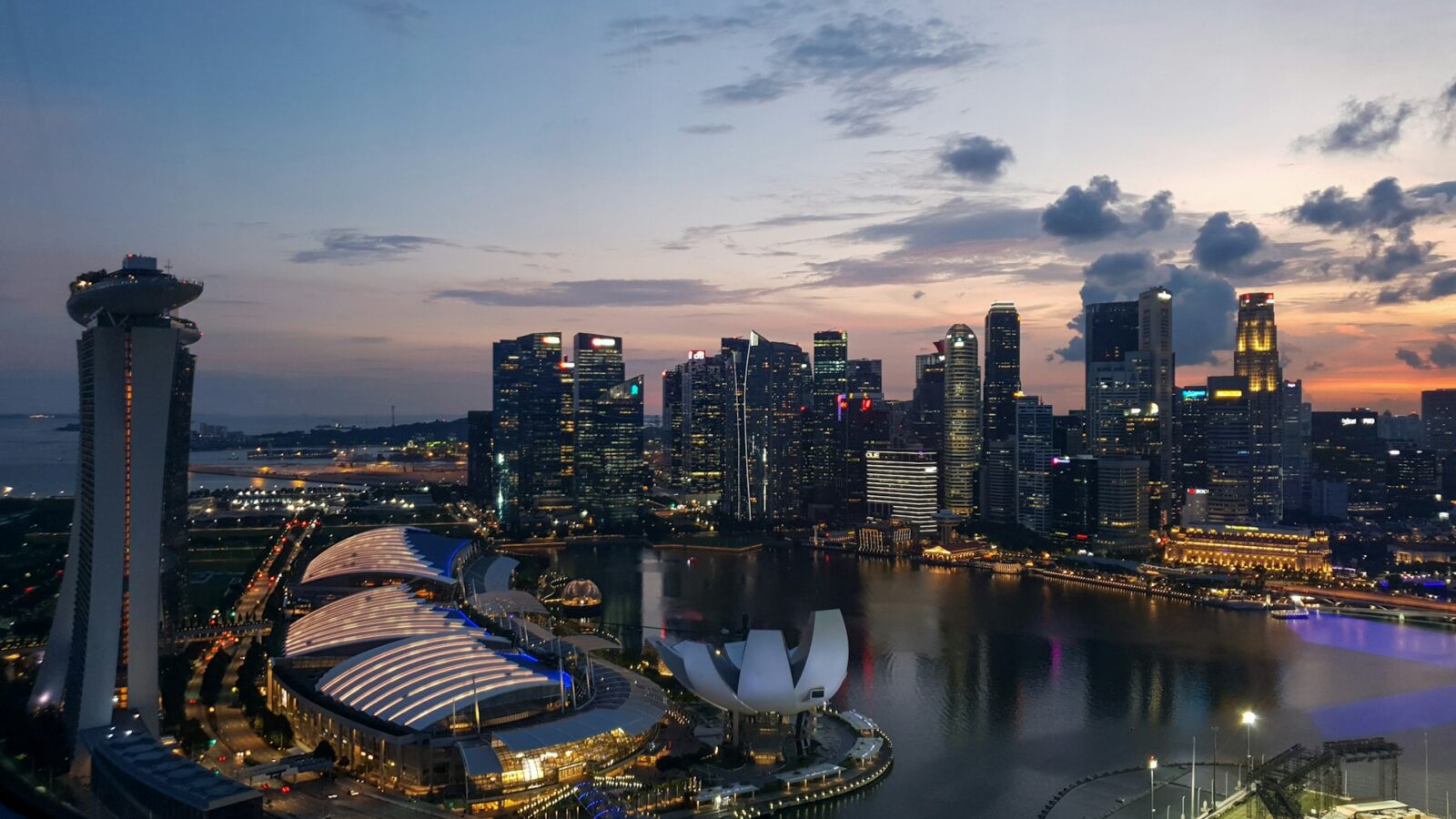

Singapore is one of the closest and easiest places for people from China to settle in. Ethnic Chinese make up more than seven in ten residents, Mandarin is an official language, the time zone is exactly the same as Beijing, and flights from major Chinese cities take four to six hours. For many Chinese families, Singapore stands for efficient government, strong schools, safe streets and an international job market.
It is also one of the most expensive cities in the world, and the bar to stay long term is high. There is no “buy a flat, get residency” route; nearly all long-term stays come through work, study, family ties or a very large investment. This guide looks at Singapore from the perspective of a PRC citizen: culture, economy, healthcare, the Chinese community and visa routes, so you can judge whether moving to Singapore is right for you.
Why Singapore
According to the Department of Statistics’ Population Trends 2026, Singapore had about 6.21 million people at the end of June 2026, including about 4.23 million citizens and permanent residents and about 1.98 million non-residents (foreigners on passes). Ethnic Chinese make up 73.9% of residents. The government’s Population in Brief 2025 shows that about 35,000 people were granted permanent residence and about 23,000 were granted citizenship in 2024, so the city-state is still taking in newcomers.
For PRC citizens the main attractions are clear: almost no language or food barrier; visa-free entry for up to 30 days on an ordinary passport since 9 February 2024, so you can visit before deciding; an English-speaking workplace and a bilingual school system that appeals to parents; and a dense cluster of regional headquarters in finance, technology and biomedical sciences.
Culture and etiquette
Singapore is a multiracial society of Chinese, Malays, Indians and Eurasians. It has four official languages – English, Mandarin, Malay and Tamil – and English is the language of government, law and business. You will hear Mandarin everywhere, but official documents, contracts, school lessons and most office communication are in English, so most new arrivals from China need to work on their English.
Singapore’s Chinese communities trace their roots to Hokkien, Teochew, Cantonese, Hakka and Hainanese groups, and everyday speech mixes in dialect and “Singlish”. Chinese New Year and the Mid-Autumn Festival are widely celebrated, while Hari Raya and Deepavali are also public holidays; respecting other religions’ customs and food rules is basic etiquette.
Singapore enforces its rules strictly. Smoking in no-smoking zones, littering or eating on the MRT can all lead to fines, and drug offences are punished very severely. Learn the local rules when you arrive rather than assuming that “small things” are tolerated as they might be at home.
Economy and jobs
China’s Ministry of Commerce (MOFCOM) country guide for Singapore (2025 edition) puts 2024 GDP at about US$547.4 billion, with real growth of 4.4%, GDP per capita of about US$90,700 and an overall unemployment rate of about 2%. Key industries include electronics, petrochemicals, precision engineering, biomedical sciences, marine engineering, finance and insurance, trade, logistics, ICT and tourism. The guide also notes that Singapore has for many years been the largest source of new foreign investment into China.
Foreigners need a work pass from the Ministry of Manpower (MOM). Professionals usually apply for an Employment Pass (EP); in 2026 the minimum monthly salary is S$5,600 (S$6,200 in financial services), rising with age to S$10,700 for applicants aged 45 or above. Mid-level skilled staff apply for an S Pass, with a minimum of S$3,300 a month. MOM has announced that both thresholds will rise again for new applications from 1 January 2027. EP applications must also pass the COMPASS points framework, which looks at salary, qualifications and the employer’s local hiring.
In short, Singapore wants competitive professionals rather than general labour. If you work in a mid- to high-level role in China and can work in English, your chances are much better. Pass types and documents are covered in our guide to working in Singapore.
Cost of living
Housing is the biggest expense. Numbeo data updated in early October 2026 put a one-bedroom flat in the city centre at about S$3,804 a month and about S$2,731 outside the centre, while a single person’s monthly costs excluding rent were about S$1,509. Foreigners cannot buy new HDB flats, so most rent private condominiums or rooms in HDB flats.
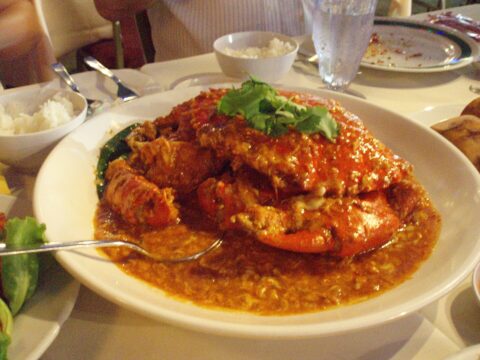
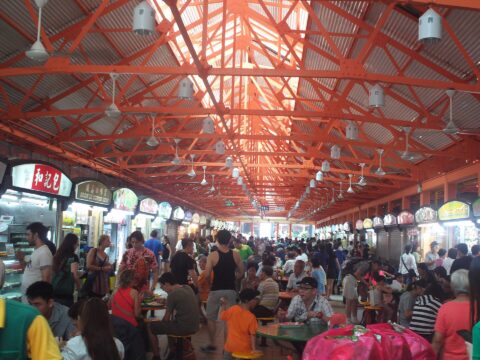
A meal at an inexpensive restaurant costs about S$15, and hawker centres are usually cheaper still – the best way to keep food costs down. If you have children, international school fees are another major cost to plan for. See our detailed Singapore cost of living guide for a full budget.
On buying, foreigners purchasing private homes pay a steep Additional Buyer’s Stamp Duty (60% since April 2023), so almost all newcomers rent until they become permanent residents. Leases usually run one to two years with a deposit of one to two months’ rent; signing through a licensed agent helps you avoid unauthorised sub-letting and fake listings.
Money tip: the standard annual foreign-exchange quota of US$50,000 per person is often not enough to cover a year of rent, school fees and living costs in Singapore. Learn the rules and plan your transfers before you leave – see moving money out of China.
Healthcare
Singapore’s healthcare is known for high quality and efficiency. According to the MOFCOM guide, it is built on the savings-based “3M” system – MediSave, MediShield and MediFund – which combines personal accounts, basic insurance and government help.
The key point is that these subsidies and schemes are mainly for citizens and permanent residents. Foreigners on work or dependant passes usually pay unsubsidised rates at public hospitals, far more than in China. Private health insurance is therefore close to essential: some employers provide group cover, but it is often limited and family members usually need their own policy. Before buying, compare inpatient, outpatient and pre-existing-condition terms, and check whether treatment in China is covered.
Chinese community
Singapore has one of the highest shares of ethnic Chinese of any country outside China: Population in Brief 2025 puts it at 75.5% of citizens. Traditional organisations such as the Singapore Chinese Chamber of Commerce and Industry and the clan associations remain active, and there are Chinese-language newspapers, radio and TV channels.
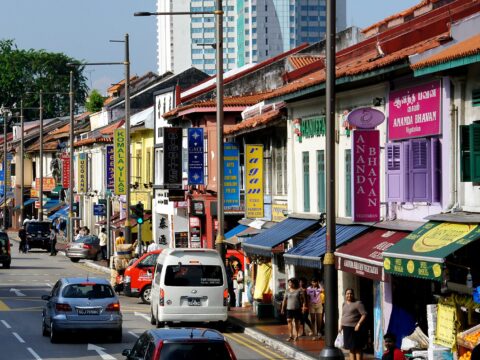
Over the past two or three decades, students, professionals and accompanying parents from mainland China have formed a “new immigrant” community, and Chinese restaurants and grocery shops can be found in Chinatown, Jurong East, Serangoon and elsewhere. Local Chinese and new arrivals still differ in accent, habits and outlook, so settling in takes time. For associations, media and hometown groups, see our guide to the Chinese community in Singapore.
Visa and residence routes at a glance
PRC ordinary passport holders can visit Singapore visa-free for up to 30 days but must submit the SG Arrival Card online within three days before arrival. To live there long term you need one of the following routes:
| Route | For whom | Main requirement (2026) |
|---|---|---|
| Employment Pass (EP) | Professionals, managers, highly skilled staff | At least S$5,600 a month (S$6,200 in finance) and a COMPASS pass |
| S Pass | Mid-level skilled staff | At least S$3,300 a month; subject to employer quota and levy |
| ONE Pass | Top earners and outstanding talent | At least S$30,000 a month, or outstanding achievement in arts, sport or academia |
| Student’s Pass | Full-time students | Admission to an approved institution; issued by ICA |
| Dependant’s Pass / Long-Term Visit Pass | Spouses and children of pass holders | EP or S Pass holders earning at least S$6,000 a month can sponsor a spouse and children under 21 |
| Global Investor Programme (GIP) | Established entrepreneurs, family offices | Investment from S$10 million; grants permanent residence directly |
Permanent residence (PR) applications are handled by the Immigration & Checkpoints Authority; the fee is S$100 and most cases are processed within six months. For documents, fees and procedures, see our Singapore visa guide; official information is on the ICA website and the MOM website.
Safety
Singapore is regularly described as one of the safest countries in the world, and walking around at night is generally safe. But the MOFCOM guide notes a sharp rise in scams: about 51,500 scam cases in 2024, up 10.6% year on year, with losses of about S$1.11 billion. Phone scams in which callers pose as Singapore officials, Chinese police or embassy staff are a particular risk for PRC citizens.
On leisure and entertainment, Singapore’s two integrated resorts include casinos, but entry for locals is restricted and online gambling is tightly controlled. Whether gambling is legal and how the rules affect Chinese citizens is explained in Singapore gambling laws.
Pros and cons
Pros
- Chinese-majority society; Mandarin widely spoken; familiar food
- Same time zone as Beijing, frequent flights home
- Very safe, efficient and transparent government
- High-quality, bilingual (English and Mandarin) education
- Relatively low personal income tax; mature finance and business environment
Cons
- Rent and living costs are among the highest in the world
- Work pass thresholds rise every few years; strong competition
- Limited subsidies for foreigners in healthcare and housing
- No low-cost investment route to residence
- Singapore does not allow dual citizenship for adults; naturalising means giving up Chinese nationality
If you are weighing Singapore against its neighbour, compare our Malaysia relocation guide and weigh it against your budget and career plans.
FAQ
Is moving to Singapore a good idea?
For families with professional skills, working English and a solid budget, Singapore offers a very high quality of life and security. If your budget is limited or you hope to gain residence by buying property or making a modest investment, Singapore is not a good fit.
What are the requirements to immigrate to Singapore?
There is no single “immigrant visa”. Most people first live in Singapore legally on a work pass, Student’s Pass or Dependant’s Pass and then apply for permanent residence once eligible; high-net-worth individuals can consider the Global Investor Programme.
Do Chinese citizens need a visa for Singapore?
PRC ordinary passport holders can stay up to 30 days visa-free for short visits and must submit the SG Arrival Card within three days before arrival. Work, study or long stays require the relevant pass.
Can I use WeChat Pay and Alipay in Singapore?
Some merchants accept them, but daily life runs on local bank cards and local e-payments. Opening a local bank account soon after arrival makes life much easier – see our guide to banking in Singapore.
Sources
- Singapore Department of Statistics – Population Trends 2026 (accessed October 2026)
- National Population and Talent Division – Population in Brief 2025 (accessed October 2026)
- 商务部《对外投资合作国别(地区)指南:新加坡》(2025年版) (accessed October 2026)
- Embassy of the Republic of Singapore in Beijing – Visa information (accessed October 2026)
- ICA – Visa requirements for entering Singapore (accessed October 2026)
- Ministry of Manpower – Employment Pass eligibility (accessed October 2026)
- Ministry of Manpower – S Pass eligibility (accessed October 2026)
- ICA – Apply for Permanent Residence (accessed October 2026)
- Numbeo – Cost of Living in Singapore (updated 2 Oct 2026) (accessed October 2026)