Healthcare is one of the first things to sort out when you move from China to Singapore. Standards are high and the system is well organised, but public subsidies are mainly for citizens and permanent residents (PRs). Chinese nationals on a Work Permit, S Pass, Employment Pass (EP) or Dependant’s Pass count as “non-residents”: they pay non-resident rates at public polyclinics and hospitals and cannot join MediShield Life, the national basic health insurance scheme. In short, seeing a doctor in Singapore is easy, but it is not cheap for foreigners, and private medical insurance is close to essential.
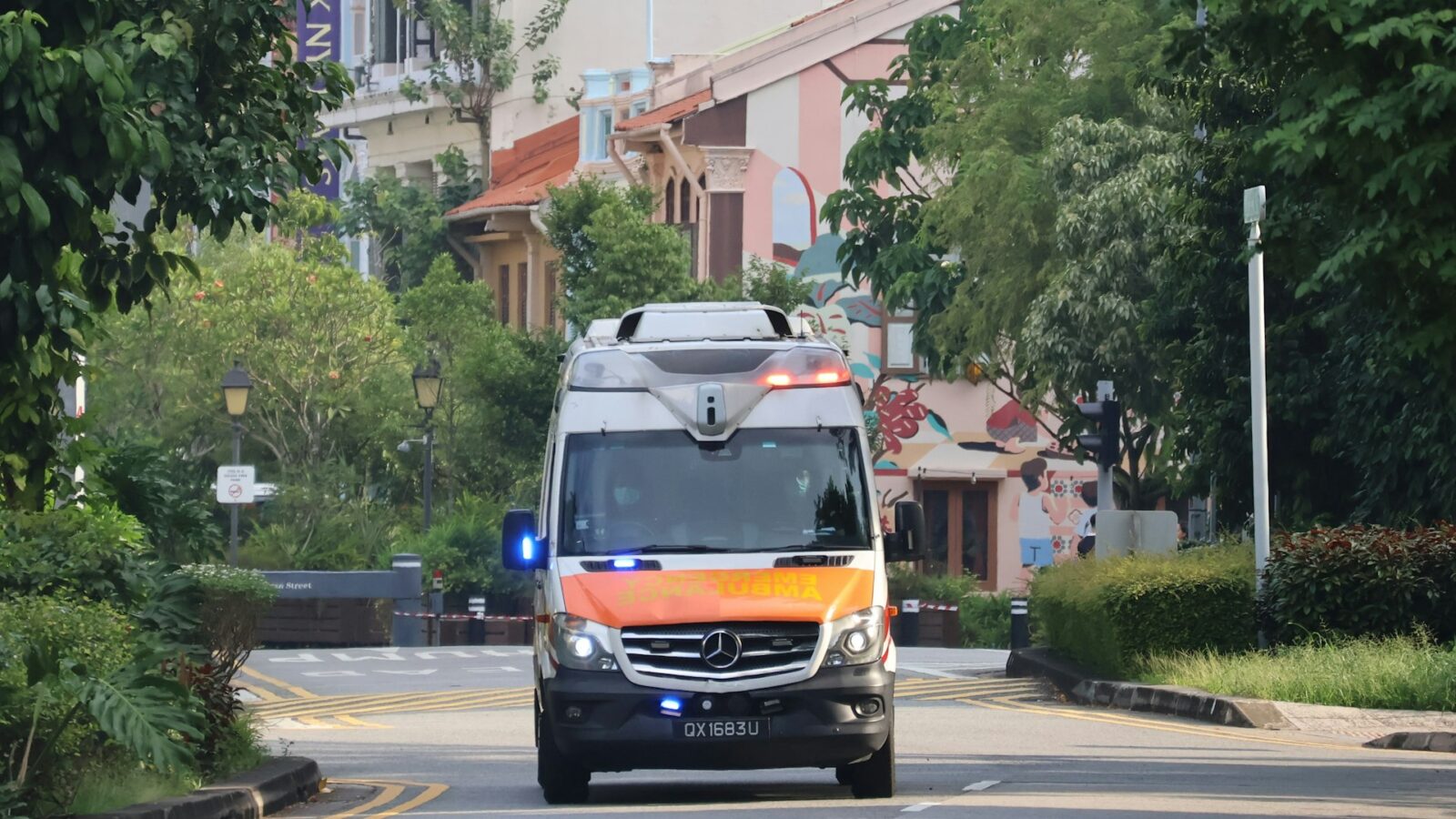
The patient journey is also different from China. At home many people walk straight into a top-tier hospital and book a specialist; in Singapore you first see a general practitioner (GP) or a government polyclinic, who refers you to a hospital specialist if needed. Hospital emergency departments are for genuine emergencies, and 995 is the ambulance number. Using official fees as of October 2026, this guide explains public versus private hospitals, what foreigners actually pay, which insurance employers must buy, where to find Chinese-speaking doctors and TCM practitioners, and the rules for pharmacies and bringing medicines in. RMB figures use SGD 1 = about CNY 5.20 (Wise mid-market rate, 29 October 2026).
How Singapore’s healthcare system works
Singapore has both public and private providers. According to the Department of Statistics, in 2023 there were 19 acute general hospitals: 10 public, 8 private and 1 not-for-profit, plus 10 community hospitals and 1 public psychiatric hospital. There were about 29 doctors per 10,000 population (2024, preliminary).
Public institutions are organised into regional healthcare clusters. In 2017 the Ministry of Health (MOH) announced a regrouping into three clusters (Central, Eastern and Western), built around the National Healthcare Group (NHG), SingHealth and the National University Health System (NUHS). Each cluster runs hospitals, specialist centres and polyclinics; there have been later adjustments, so check MOH for the current set-up.
For primary care, MOH counts 26 government polyclinics and more than 2,000 private GP clinics. Polyclinics are heavily subsidised for citizens, so they are often busy and appointments are recommended. Private GP clinics are everywhere, in HDB estates and shopping malls, and for a cold or fever most foreigners simply go to the nearest one.
Can foreigners get healthcare subsidies?
No. MediShield Life covers only Singapore citizens and PRs. MediSave is part of the Central Provident Fund (CPF), which foreign employees generally do not contribute to, so it is not available either. Foreigners are charged “non-resident” rates at public institutions; some hospitals label this category “Others”. Fees drop considerably once you become a PR, which is one practical reason many people apply.
The table shows published fees at several public institutions as of October 2026 (SGD; non-resident prices include 9% GST):
| Item | Citizen | PR | Non-resident | Non-resident in RMB |
|---|---|---|---|---|
| Polyclinic adult consultation (National University Polyclinics) | S$19.60 | S$43.50 | S$83.71 | about CNY 435 |
| Polyclinic consultation (SingHealth Polyclinics) | S$19.60 | S$39.70 | S$90.36 | about CNY 470 |
| Specialist first visit (Singapore General Hospital, senior consultant) | S$33.40–77.93 (subsidised) | S$83.50 (subsidised) | S$288.78 | about CNY 1,502 |
| Class C open ward, per day (Changi General Hospital) | S$55 | S$135 | S$300 | about CNY 1,560 |
| Class A single room, per day (Changi General Hospital) | S$765.50 | S$765.50 | S$765.50 | about CNY 3,981 |
Ward rates are starting prices only; surgery, tests, medicines and doctors’ fees are extra. National University Polyclinics also asks non-residents for an S$85 deposit at registration.
To budget for housing, transport and other costs, see our cost of living in Singapore guide; for residence status and pass types, see the Singapore visa guide.
How to see a doctor in Singapore
There is no culture of booking a specialist yourself at a public hospital; specialist care normally needs a referral. The usual path for foreigners:
- See a GP firstGo to a nearby private GP clinic or a polyclinic; polyclinic appointments are best booked through the HealthHub app
- Bring ID and insuranceCarry your pass card and passport and give your insurance details; some policies settle directly
- Medicine or referralMinor illnesses are treated and dispensed at the clinic; for further tests the doctor writes a referral to a public or private specialist
- Specialist clinicNon-residents with a referral to a public specialist still pay non-resident rates; private specialists can be booked directly
- Admission and billingChoose a ward class on admission; foreigners usually pay a deposit, and the insurer reimburses or pays the hospital
In your first week, pick a regular GP clinic near home and save your policy number and your insurer’s 24-hour hotline on your phone. When you fall ill, you will not be scrambling.
Medical insurance: which passes require employer cover
The Ministry of Manpower (MOM) requires employers to buy and maintain medical insurance for every S Pass holder, covering inpatient care and day surgery (including non-work-related illness), with an annual claim limit of at least S$60,000 (about CNY 312,000). The cost cannot be passed on to the employee. This standard applies from 1 July 2023 and also covers Work Permit holders, including migrant domestic workers; the previous minimum was S$15,000. Stage 2 rules from 1 July 2025 standardised allowable exclusions, introduced two premium bands (age 50 and below, above 50) and require insurers to pay hospitals directly once a claim is admissible.
Employment Pass holders are not covered by this requirement. In a written parliamentary answer dated 7 May 2026, MOM said it does not intend to require employers to buy medical insurance for EP holders, because their higher salaries mean they can afford their own cover. If you are on an EP, ask before signing what the company group policy covers: the limit, outpatient care and dependants. Dependant’s Pass holders and the self-employed especially need their own international health insurance.
Relying on the employer’s statutory minimum is risky: a major operation and a week in a public hospital at non-resident rates can easily run into tens of thousands of dollars. Consider extra private cover for outpatient, specialist and family care; see our insurance in Singapore guide.
For the legal text and latest changes, check the Ministry of Manpower website. For working conditions under each pass, see working in Singapore.
Public or private hospital?
Public hospitals
- Strong in emergencies and complex cases, fully equipped
- Usually cheaper than private hospitals even at non-resident rates
- Fee schedules are published on each hospital’s website
Private hospitals
- Faster appointments, choice of doctor, more comfortable rooms
- Considerably more expensive; confirm insurance cover in advance
- Many have international patient service teams
Well-known private hospitals include Gleneagles, Mount Elizabeth (Orchard and Novena), Raffles Hospital, Parkway East and Mount Alvernia. Major public hospitals include Singapore General Hospital, Tan Tock Seng, National University Hospital, Changi General and Khoo Teck Puat, as well as KK Women’s and Children’s Hospital, a common choice for children.
Finding a Chinese-speaking doctor
Ethnic Chinese are the majority in Singapore and Mandarin is widely used. In the 2020 Census, 29.9% of residents said Mandarin was the language they spoke most often at home, and another 8.7% used Chinese dialects. In practice many doctors and nurses can communicate in Mandarin, but not every doctor does, and medical terms and paperwork are mostly in English.
- How to find one: when booking, simply ask the clinic for a Mandarin-speaking doctor; large hospitals may also help arrange interpretation.
- Check credentials: all doctors must be registered with the Singapore Medical Council (SMC), which has a “Search for Registered Doctors” tool; TCM physicians and acupuncturists must be registered with the TCM Practitioners Board, searchable through MOH’s Professional Registration System.
- Traditional Chinese medicine: TCM is a regulated profession in Singapore and is popular for wellness and chronic conditions, but TCM visits are generally not part of the mandatory employer insurance, so check your policy.
Clan associations, hometown associations and WeChat groups often share doctor recommendations, but treat these as tips only and rely on the official registers.
Pharmacies and bringing medicines in
The Health Sciences Authority (HSA) sorts medicines into three classes. Prescription-only medicines must be prescribed by a doctor and are dispensed at clinics or bought at pharmacies with a prescription. Pharmacy-only medicines (for example some allergy and cough medicines) need no prescription but must be supplied in person by a pharmacist, who records your name, ID number and contact details. General sale list medicines such as paracetamol can be bought off the shelf at pharmacies, clinics and shops. Many antibiotics that are easy to buy in China are prescription-only in Singapore.
When you bring medicines from China, you may carry up to three months’ supply of personal medication that needs no approval. Medicines containing controlled substances (for example some sleeping pills and psychiatric drugs) need HSA approval, applied for online at least two weeks before arrival, with documents in English. It is worth getting a full check-up and an English medical summary before you leave; see our pre-departure medical check-up guide.
Emergency and helpline numbers
| Number | Service | Notes |
|---|---|---|
| 995 | Ambulance and fire | Emergencies only; SCDF does not charge for emergency conveyance, and patients go to the nearest designated hospital, not one of their choosing |
| 999 | Police | Crime and public-safety incidents |
| 1777 | Non-emergency ambulance | For hospital transport when it is not urgent; charged |
If a 995 call turns out to be a non-emergency, SCDF charges S$274 (about CNY 1,425) for each case it conveys to hospital. Public emergency departments also charge an attendance fee; at Changi General Hospital it is S$176 (from 1 September 2026, GST included). For colds and minor injuries, go to a GP first. For more practical safety advice, see our safety in Singapore guide.
Compared with healthcare in China
| Item | Singapore (foreigners) | China |
|---|---|---|
| First contact | GP first; specialists by referral | Register directly at a hospital, including specialist slots |
| Outpatient cost | Polyclinic consultation about CNY 435–470 (medicines extra) | Average hospital outpatient bill CNY 357.7 (including medicines and tests, 2025) |
| Inpatient cost | Class C bed at Changi General about CNY 1,560 a day, bed only | Average hospital inpatient bill CNY 9,768.9 (2025) |
| Doctor density | About 29 doctors per 10,000 people (2024) | 3.78 licensed (assistant) doctors per 1,000 people (2025) |
| Public insurance | Not eligible for national schemes; employer and private insurance | Employee or urban-rural resident basic medical insurance |
Chinese figures are from the National Health Commission’s 2025 Statistical Bulletin on Health Development (published August 2026). Overall, Singapore’s system is more orderly and waiting times more predictable, but foreigners pay far more out of pocket than at home. For what happens to your Chinese medical insurance and social security after you leave, see hukou and social security; you can also compare healthcare in Malaysia, healthcare in Japan and healthcare in the UAE.
FAQ
Can foreigners use government polyclinics?
Yes. Polyclinics see non-residents but charge non-resident rates: as of October 2026 an adult consultation costs about S$84 to S$90, medicines extra, and some polyclinics ask for a deposit. For minor illnesses a private GP is often quicker.
Who pays medical insurance for Work Permit and S Pass holders?
The employer. MOM requires employers to insure these workers with an annual claim limit of at least S$60,000 and forbids passing the premium on. Employees may share medical bills only under strict conditions, such as an amount no more than 10% of monthly salary, stated in the contract.
Do Employment Pass holders need their own insurance?
It is not mandatory, but strongly advised. In May 2026 MOM said it does not plan to require employers to insure EP holders, so check your company group policy and top up anything missing, including cover for family members.
Can I find Chinese-speaking doctors and TCM in Singapore?
Fairly easily. Mandarin is widely spoken and many clinics have Mandarin-speaking staff, so just ask when booking. TCM practitioners must be registered with the TCM Practitioners Board, and you can verify them in the official register before a visit.
To decide whether Singapore suits you and your family long term, go back to our Singapore overview; for housing, see renting in Singapore.
Sources
- MOH: Primary care services (accessed October 2026)
- MOH: Reorganisation of healthcare system into three integrated clusters (18 Jan 2017) (accessed October 2026)
- SingStat: Singapore in Figures – Health (accessed October 2026)
- MOH: MediShield Life (accessed October 2026)
- National University Polyclinics: Fees and charges (updated 1 Sep 2026) (accessed October 2026)
- SingHealth Polyclinics: Charges and payment (accessed October 2026)
- Singapore General Hospital: Outpatient charges (updated 1 Oct 2026) (accessed October 2026)
- Changi General Hospital: Inpatient charges (effective 1 Sep 2026) (accessed October 2026)
- Changi General Hospital: Emergency department charges (effective 1 Sep 2026) (accessed October 2026)
- MOM: Medical insurance requirements for S Pass holders (accessed October 2026)
- MOM: Written answer on medical insurance for Employment Pass holders (7 May 2026) (accessed October 2026)
- Fragomen: Enhanced medical insurance requirements for Work Permit and S Pass holders (law firm) (accessed October 2026)
- SCDF: Emergency medical services (accessed October 2026)
- Australian High Commission Singapore: List of hospitals (accessed October 2026)
- TCM Practitioners Board: Registration (accessed October 2026)
- Singapore Medical Council (Ask.gov.sg): Search for registered doctors (accessed October 2026)
- SingStat: Census 2020 – Language most frequently spoken at home (accessed October 2026)
- HSA: How therapeutic products are regulated (accessed October 2026)
- HSA: Travelling with medications to Singapore (accessed October 2026)
- Xinhua: NHC 2024 Statistical Bulletin on Health Development (accessed October 2026)
- The Paper: NHC 2024 Statistical Bulletin figures (accessed October 2026)
- Wise: SGD to CNY exchange rate history (29 Oct 2026) (accessed October 2026)
- Xinhua: NHC 2025 Statistical Bulletin on Health Development (28 Aug 2026) (accessed October 2026)
- National University Polyclinics: fees and charges (from 1 Sep 2026) (accessed October 2026)