
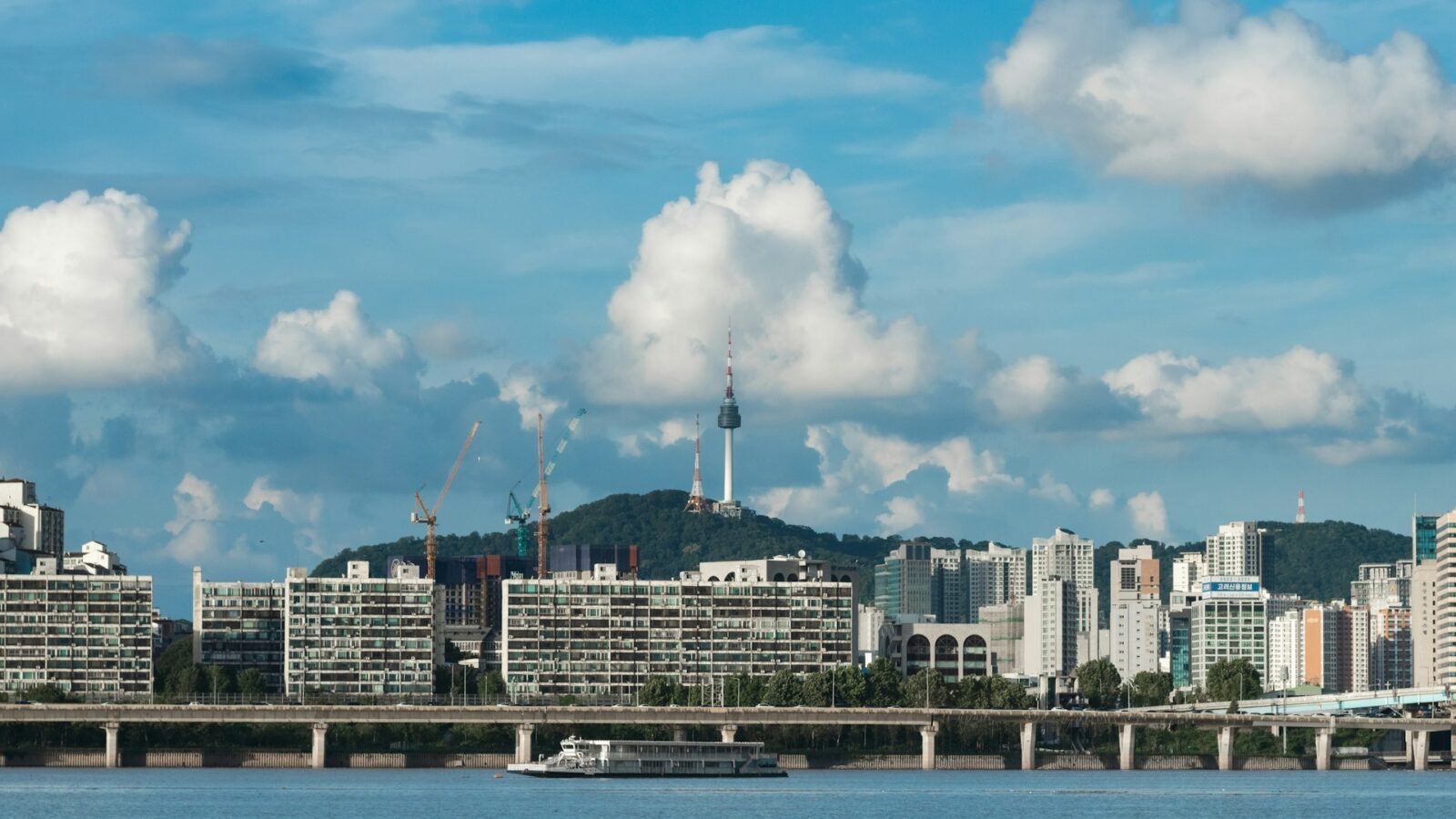



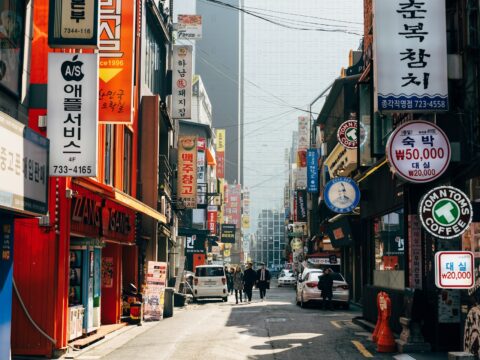
South Korea is one of the developed countries closest to China. Flights from Qingdao or Dalian to Seoul take little more than an hour, and Korean dramas, K-pop and Korean food mean many young Chinese already feel at home there. Chinese nationals have long been the largest group of foreign residents: according to Korea’s Ministry of Justice, about 980,000 Chinese nationals lived in Korea at the end of 2025, more than a third of all foreign residents, including many ethnic Koreans from China (Chaoxianzu).
For Chinese families, Korea offers advanced urban infrastructure, a fast pace of life, comprehensive health insurance, and food and online habits similar to home. Like Japan, though, Korea has no general “immigrant visa”. Most people first enter as students, workers or spouses and then move step by step towards long-term residence and permanent residency. This guide looks at Korea from a PRC citizen’s point of view: culture, economy, living costs, healthcare, the Chinese community and the visa routes, to help you decide whether moving to Korea is right for you.
Why choose South Korea
Korea had about 2.78 million foreign residents at the end of 2025, up 5% in a year, and foreigners now exceed 5% of the population. Korean society increasingly depends on foreign workers and students. Chinese people usually choose Korea because it is close and cheap to fly home from, even for a weekend; because Seoul and other big cities are extremely convenient for transport, internet and delivery; because Korean universities actively recruit Chinese students, making study the most common first step; and because ethnic Koreans from China can use dedicated visa arrangements to work and settle.
Be realistic, though: the job market is competitive, working hours are long, foreigners have limited options in local employment, and Korean language ability is almost always the deciding factor.
Culture and etiquette
Korean society is strongly shaped by Confucian values, and age and seniority determine how people speak. New acquaintances often ask your age; elders and superiors are addressed with honorifics, and things are handed over and drinks poured with both hands. Many Chinese feel Korea “looks a lot like China”, but the details differ:
- Names and honorifics: using a colleague’s given name at work is rude; people are addressed by surname plus job title.
- Dining culture: company dinners are common, and juniors turn away slightly when drinking in front of seniors.
- Household rules: rubbish must be sorted, food waste goes in special bags or card-operated bins, and apartment blocks are sensitive to noise.
- Real-name systems: phone contracts, bank accounts, online shopping and many apps require your alien registration card.
Compared with Japan, Koreans are more direct and life moves faster; “ppalli ppalli” (hurry, hurry) sums up daily life. People who learn Korean and make an effort to fit in find Koreans warm and loyal.
Economy and jobs
Korea is a highly industrialised economy with globally competitive semiconductor, automotive, shipbuilding, chemical and entertainment industries. The 2026 minimum wage is KRW 10,320 an hour, rising to KRW 10,700 in 2027, or about KRW 2.24 million a month on a 209-hour basis.
Foreigners working in Korea fall into roughly three groups. Professionals hold E-7 and similar professional visas sponsored by a Korean employer. Workers in manufacturing, agriculture, fishing and construction mostly enter on E-9 visas under the government-to-government Employment Permit System. Ethnic Koreans from China can work on the H-2 visit-work or F-4 overseas Korean status. Chinese students who graduate from Korean universities can switch to a job-seeker visa and then to a work visa once hired.
Job-hunting tip: large Korean companies look for TOPIK (Test of Proficiency in Korean) level 5 or 6. China–Korea trade, cross-border e-commerce, gaming and semiconductor-related firms value bilingual Chinese–Korean staff. Visa requirements are in our South Korea visa guide.
Cost of living
Seoul is mid-to-high cost among Asian cities. Rentals come in two main forms: jeonse, where you pay a very large deposit and no monthly rent, and wolse, with a smaller deposit plus monthly rent. Newcomers usually choose wolse, a goshiwon room or a studio. Reference figures for Seoul:
Rents in Busan, Daegu and Incheon are clearly lower than in Seoul. Delivery, transport and internet are cheap, while fruit, beef and eating out are expensive. City budgets and renting tips are in South Korea cost of living and Renting in South Korea.
Healthcare
Korea has a single National Health Insurance system run by the National Health Insurance Service (NHIS). Foreigners employed by a company join workplace insurance, with contributions split equally between employer and employee; the 2026 workplace rate is 7.19% of monthly pay. Since 16 July 2019, foreigners and overseas Koreans who are not covered through work must join regional insurance once they have stayed in Korea for six months, and this includes students, who currently receive a 50% premium reduction.
Once insured, you pay a share of treatment costs that varies by type of hospital; large hospitals usually require a referral. Call 119 for an ambulance and 112 for the police. Korean healthcare is efficient and appointments are easy to get; health check-ups and cosmetic procedures are common among foreigners too.
Regional insurance is calculated on income and assets, and if your calculated premium is below the national average, you are charged the average, so foreigners’ monthly premiums are not low. Long-term arrears can affect visa extensions. For private top-up cover, see our South Korea insurance guide.
The Chinese community
Korea’s Chinese community has an unusual structure. One part descends from overseas Chinese who settled in Incheon and Seoul in the late Qing and early Republican era; Incheon Chinatown still has historic buildings and old Chinese restaurants. The larger part arrived after China’s reform and opening, and ethnic Koreans from China make up a big share. Daerim-dong in Yeongdeungpo and Garibong-dong in Guro are home to many ethnic Koreans and Chinese, while the “lamb skewer street” near Konkuk University in Gwangjin is packed with Chinese restaurants.
University districts have large numbers of Chinese students, and each school’s Chinese student association is a key source of information. Chinese supermarkets, Chinese-speaking agents and Chinese app communities are easy to find, but beware of scams promising “visa services” or “guaranteed F-5 permanent residence”. Community organisations and resources are in Chinese community in South Korea.
Visa and residence routes
Ordinary PRC passport holders generally need a visa for Korea. Since 29 September 2025, Chinese tour groups of three or more organised by designated travel agencies can enter visa-free for up to 15 days. It was due to end on 30 June 2026; Korea’s Ministry of Justice has said it runs for the same period as China’s visa-free entry for Koreans, i.e. to 31 December 2026. Chinese tourists flying directly to Jeju can stay visa-free for 30 days, but may not travel on to the mainland. The main long-stay routes are:
| Route | Who it suits | Key points |
|---|---|---|
| Study (D-2) / language training (D-4) | Undergraduates, postgraduates, language students | The most common first step; part-time work allowed within the rules |
| Professional employment (E-7) | Qualified or experienced professionals | Korean employer sponsorship; job and salary requirements |
| Non-professional employment (E-9) | Manufacturing, agriculture and fishing workers | Recruited through the government Employment Permit System |
| Visit-work (H-2) / overseas Korean (F-4) | Ethnic Koreans from China | Dedicated statuses for overseas Koreans |
| Marriage migrant (F-6) | Spouses of Korean citizens | Genuine marriage and financial means must be shown |
| Points-based residence (F-2) and permanent residence (F-5) | Long-term residents with stable income | Apply once residence, income and Korean-language conditions are met |
Documents, fees and where to apply are in our South Korea visa guide; detailed conditions for moving from a long-stay visa to permanent residence are in South Korea residency and permanent residence. Official information is on HiKorea, Korea’s immigration portal.
Safety
Korea is generally safe, night-time travel is relatively low-risk and public spaces are widely covered by CCTV. The main risks are phone and investment scams, especially calls impersonating prosecutors, police or banks; summer typhoons and heavy rain; and winter smog and cold. In an emergency call 112 or 119; for immigration and everyday questions, the Immigration Contact Center is on 1345.
Public opinion in Korea towards China has fluctuated in recent years, and anti-China comments appear online from time to time. Chinese residents should obey local laws, stay out of political disputes, report discrimination or harm to the police, and contact the Chinese Embassy in Korea or the nearest consulate-general.
On leisure, Korean law bars its own citizens from most casinos: foreigner-only casinos coexist with Kangwon Land, the one casino open to Koreans. Whether local gambling is legal and how it affects PRC citizens is covered in South Korea gambling laws.
Pros and challenges
Pros
- Close to China with many flights, easy trips home
- Very convenient city life: internet, transport and delivery
- Universities actively recruit Chinese students
- Universal health insurance, with premium reductions for students
- Dedicated work and residence routes for ethnic Koreans from China
Challenges
- Korean is the key barrier to jobs and integration
- Competitive workplaces and long hours
- High Seoul rents; jeonse deposits often run to hundreds of millions of won
- Fluctuating public opinion towards China, occasional discrimination
- Korea generally does not accept dual nationality; naturalising means giving up PRC citizenship
FAQ
Is moving to South Korea a good idea?
It suits people willing to learn Korean, comfortable with a fast pace, and starting through study or professional work. If you just want residency quickly through investment, Korea is not the easiest option.
What are the requirements to immigrate to South Korea?
There is no single immigrant visa. You normally first obtain a long-stay visa for study, work or marriage, then switch to a residence or permanent-residence visa once you meet conditions on years of residence, income and Korean ability.
How much does a month in Seoul cost?
Numbeo puts a single person’s living costs excluding rent at about KRW 1.51 million a month, with a one-bedroom flat at about KRW 1.19 million in the centre or KRW 830,000 further out.
Can I keep Chinese citizenship if I naturalise in Korea?
No. China does not recognise dual nationality, and a Chinese citizen settled abroad who voluntarily acquires foreign nationality automatically loses Chinese nationality; Korea also generally requires new citizens to renounce their original nationality. See Dual nationality and PRC citizenship.
If you are also considering Japan, compare our Japan guide, or start from the Asia overview; policy updates appear in our news section.
Sources
- SeoulStart: Korea foreign resident figures (citing Ministry of Justice end-2025 data; secondary source) (accessed October 2026)
- Numbeo: Cost of Living in Seoul (updated October 2026) (accessed October 2026)
- News Seoul: Ministry of Employment and Labor sets 2027 minimum wage at KRW 10,700 (media report) (accessed October 2026)
- National Health Insurance Service (NHIS): Guidance for foreigners (accessed October 2026)
- National Health Insurance Service (NHIS): Contributions (accessed October 2026)
- Korea.net: Visa-free entry for Chinese tour groups from 29 September (Sept 2025) (accessed October 2026)
- SBS: Visa-free entry for Chinese tourists to be extended to end of December (23 June 2026, media report) (accessed October 2026)
- Travel Times Korea: Visa-free entry for Chinese groups to run to year-end (29 June 2026, media report) (accessed October 2026)
- Dazabi: Ministry of Justice extends group visa fee waiver for six countries to 31 Dec 2026 (media report) (accessed October 2026)
- Wikipedia: South Korea (population estimate and basic data) (accessed October 2026)
- Korea Immigration Service (Ministry of Justice): Group visa fee waiver for China and five other countries extended to end-2026 (1 July 2026) (accessed October 2026)
- Chinese Embassy in Japan: Extension of China’s unilateral visa-free policy to 31 Dec 2026, covering Korea and others (7 Nov 2025) (accessed October 2026)
- Korean Ministry of Justice: Immigration and Foreigner Policy Statistical Monthly, December 2025 (published 21 Jan 2026) (accessed October 2026)